
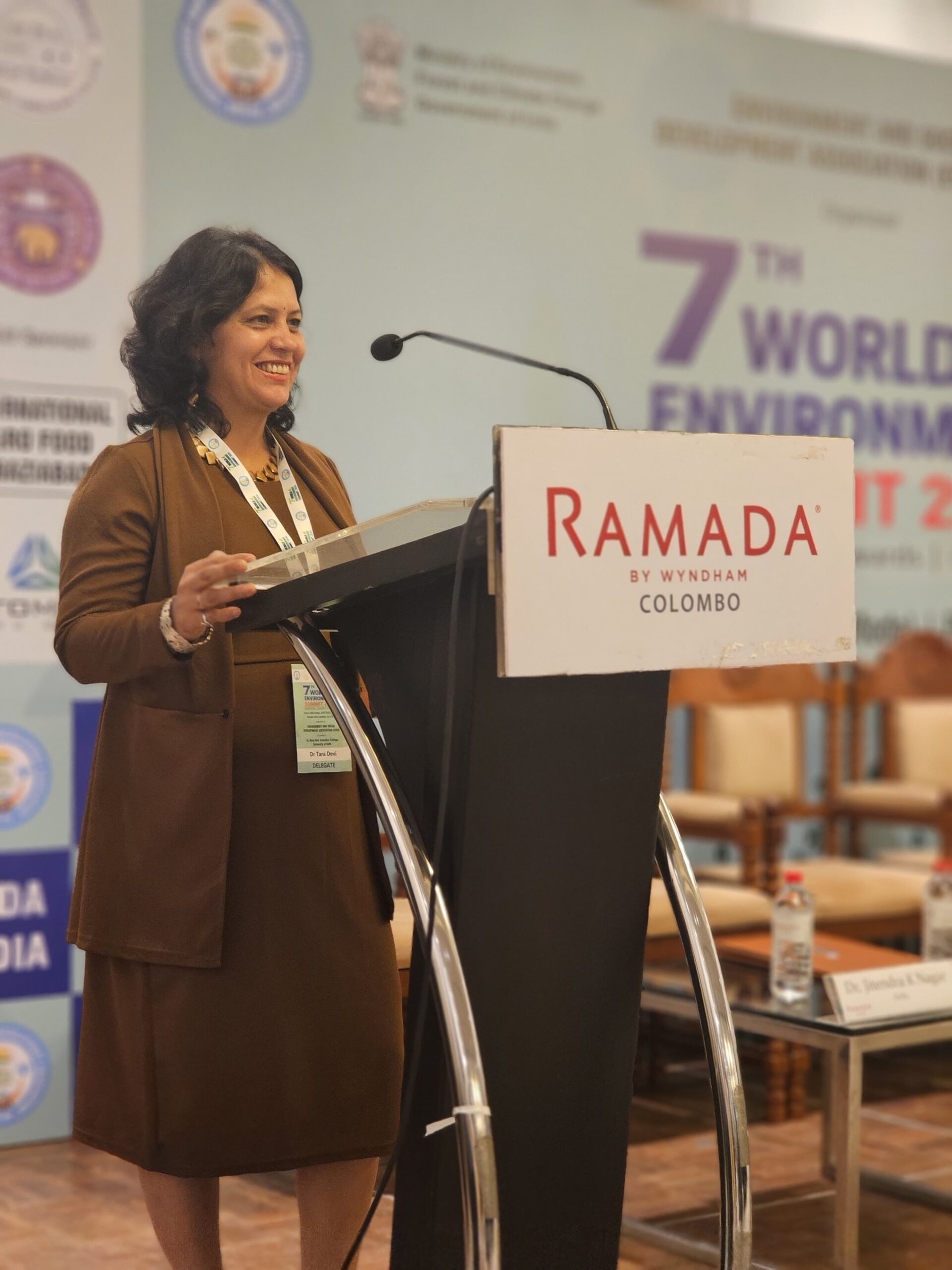
Mandi Botanist Dr Tara Devi Sen Presents Himalayan Plant-Based Water Conservation Research at World Environment Summit in Sri Lanka
Research highlights the role of Himalayan plants and traditional ecological knowledge in water conservation, watershed restoration and sustainable water security
Shimla:
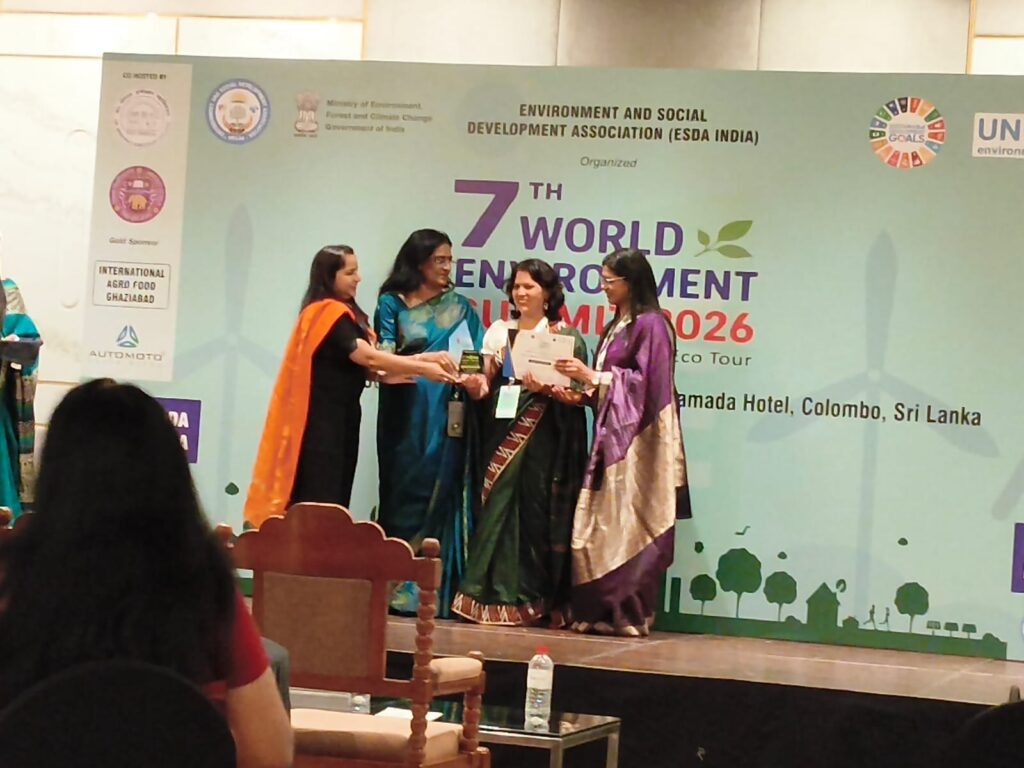
Dr Tara Devi Sen, Assistant Professor and Head of the Department of Botany at Vallabh Government College (VGC), Mandi, presented her research on Himalayan plant diversity and nature-based water conservation at the 7th World Environment Summit held in Colombo, Sri Lanka.
The international summit is witnessing the participation of 350 delegates from 18 countries through online and offline modes. Dr Sen delivered an invited talk focusing on the potential of Himalayan plants and traditional ecological knowledge in addressing water-related environmental challenges and developing sustainable approaches to water security.
Her presentation, titled “From Traditional Ecological Knowledge to Nature-Based Water Security: Harnessing Himalayan Plants for Water Conservation, Quality Improvement and Watershed Restoration,” explored how locally available plant species and traditional community knowledge can contribute to protecting water resources, restoring watersheds and strengthening ecosystem resilience.
Study Documents 24 Plant Taxa in Mandi District
The research focuses on Mandi district of Himachal Pradesh and combines field observations, interactions with 100 informants and a review of scientific literature. The study documented 24 plant taxa belonging to 18 families and examined the ecological contributions of trees, grasses, riparian vegetation, aquatic plants and wetland species.
According to the research, these plants play important roles in soil stabilisation, erosion control, sediment interception, nutrient retention and watershed protection. Their ecological functions can help maintain the health of water systems, particularly in environmentally sensitive Himalayan landscapes.
The study identified several ecologically significant plant species, including Quercus leucotrichophora, Cedrus deodara, Alnus nepalensis and species belonging to the genus Salix.
Among the documented taxa, Alnus nepalensis received the highest ecological priority score, followed by Salix species and Phragmites karka. The findings could help identify suitable native plants for watershed restoration and locally adapted conservation strategies.
Proposes Himalayan Plant-Based Water Security Framework
A key contribution of the research is the proposed Himalayan Plant-Based Water Security Framework, which integrates traditional ecological knowledge with scientific assessment and ecosystem-based conservation practices.
The framework emphasises the protection of water-recharge zones, restoration of riparian ecosystems and wetlands, assessment of water quality, ecological prioritisation of plant species and active participation of local communities.
The research also highlights the potential of aquatic and wetland plants to retain nutrients and support phytoremediation, a process through which plants help remove, contain or reduce certain contaminants in the environment. However, the study stresses that site-specific experimental validation is necessary before these approaches can be implemented on a large scale.
Connects Traditional Knowledge with Modern Science
Dr Sen’s research highlights the importance of combining traditional ecological knowledge with modern scientific methods to address challenges such as water scarcity, climate change, soil erosion and ecosystem degradation.
With more than 18 years of experience in wild food plant research, ethnobotany and biodiversity conservation, she has been documenting traditional knowledge and promoting the sustainable use of Himalayan biological resources.
Her invited presentation brought research from Mandi district to an international platform, underlining the potential of Himalayan plant diversity to support sustainable water management and ecosystem restoration.
The study also underscores the importance of community participation and the conservation of native plant species in developing locally appropriate solutions for long-term water security in the Himalayan region.