UNICEF Condemns Ongoing Ban on Girls’ Education in Afghanistan: Over 2.2 Million Adolescent Girls Denied Basic Rights.
New York:
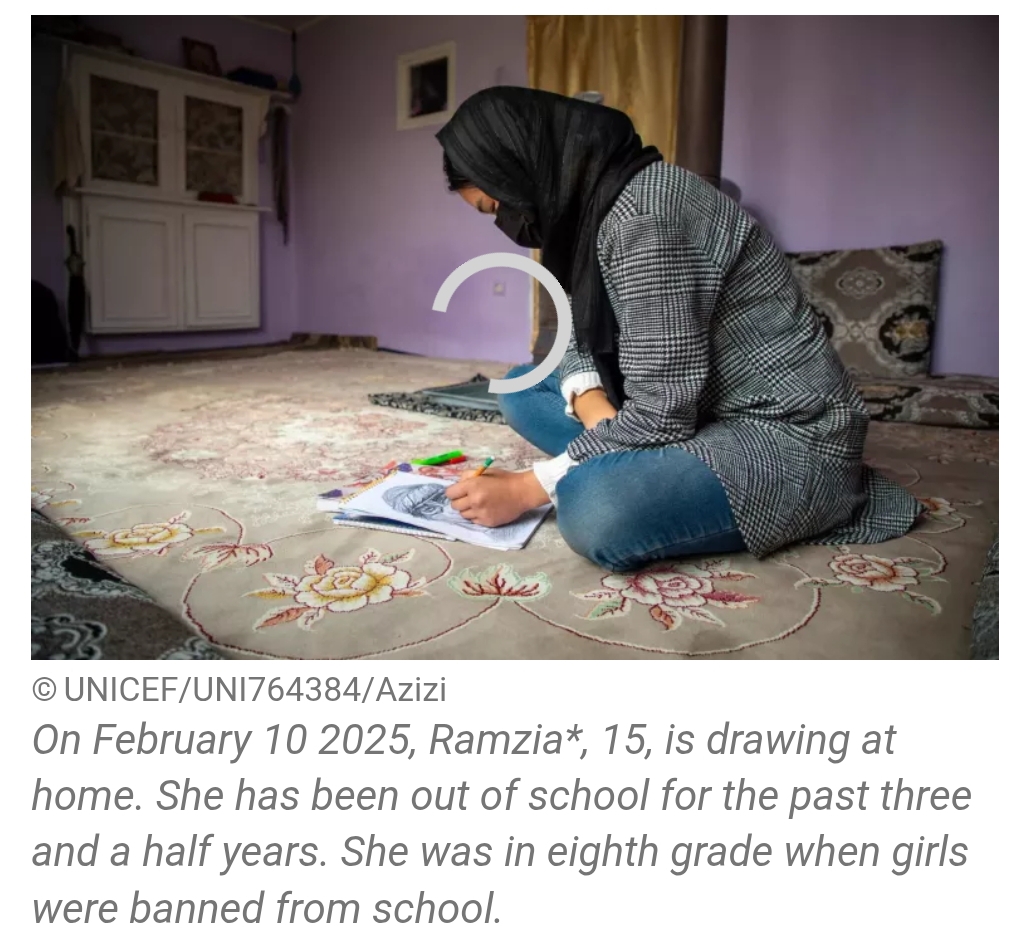
Four years into the education ban on adolescent girls in Afghanistan, the crisis has reached an alarming new level. UNICEF has issued a powerful and urgent appeal to the de facto authorities in Afghanistan, calling for the immediate lifting of the ban that bars girls from attending school beyond grade six.
According to UNICEF, by the end of 2025, more than 2.2 million adolescent Afghan girls will have been excluded from formal education. The situation is expected to deteriorate further as over 2 million Afghans have returned from neighboring countries this year, placing additional pressure on an already fragile education and humanitarian system.
A Nation in Crisis: Girls Left Behind
While children across the globe have resumed their education with the start of a new academic year, millions of Afghan girls remain locked out of classrooms—a denial of a fundamental human right and a “defining injustice of our time,” according to UNICEF.
“This ban is a profound threat to Afghanistan’s long-term stability and progress,” the statement said. “No nation can thrive when half its population is left behind.”
UNICEF underscored that education is not just about academics—it’s about empowering girls to become active participants in society, enabling personal growth, social development, and economic participation. The organization warned that depriving girls of education has far-reaching consequences, including rising mental health issues, early and forced marriages, and higher birth rates among adolescent girls.
Tragedy Compounded by Natural Disasters
The recent earthquake in Afghanistan, which claimed the lives of 1,172 children, has highlighted the critical role of female health and social workers in humanitarian response efforts. However, in a society with strict gender segregation, male aid workers cannot adequately address the needs of women and households—making the presence of educated, trained women essential.
UNICEF stressed that without access to education, future generations of female professionals—doctors, nurses, teachers, and aid workers—will simply not exist, undermining the country’s ability to respond to future crises and further destabilizing Afghan society.
Urgent Call for Action
UNICEF’s statement is a stark reminder of the human cost of gender-based discrimination. The organization is urgently calling on Afghanistan’s de facto authorities to reverse the ban and allow girls of all ages to attend school—from primary to secondary and beyond.
“This is not just a matter of education,” the agency emphasized, “but of human rights, national development, and the future of Afghanistan itself.”
As global attention shifts from one crisis to another, the plight of Afghan girls risks fading into the background. UNICEF’s renewed call serves as a critical reminder that the world must not look away, and that education for all—especially for girls—is not optional, but essential.