VGC Mandi Hosts Seminar Highlighting Bhagat Singh’s Legacy as a Revolutionary Journalist.
Shimla:
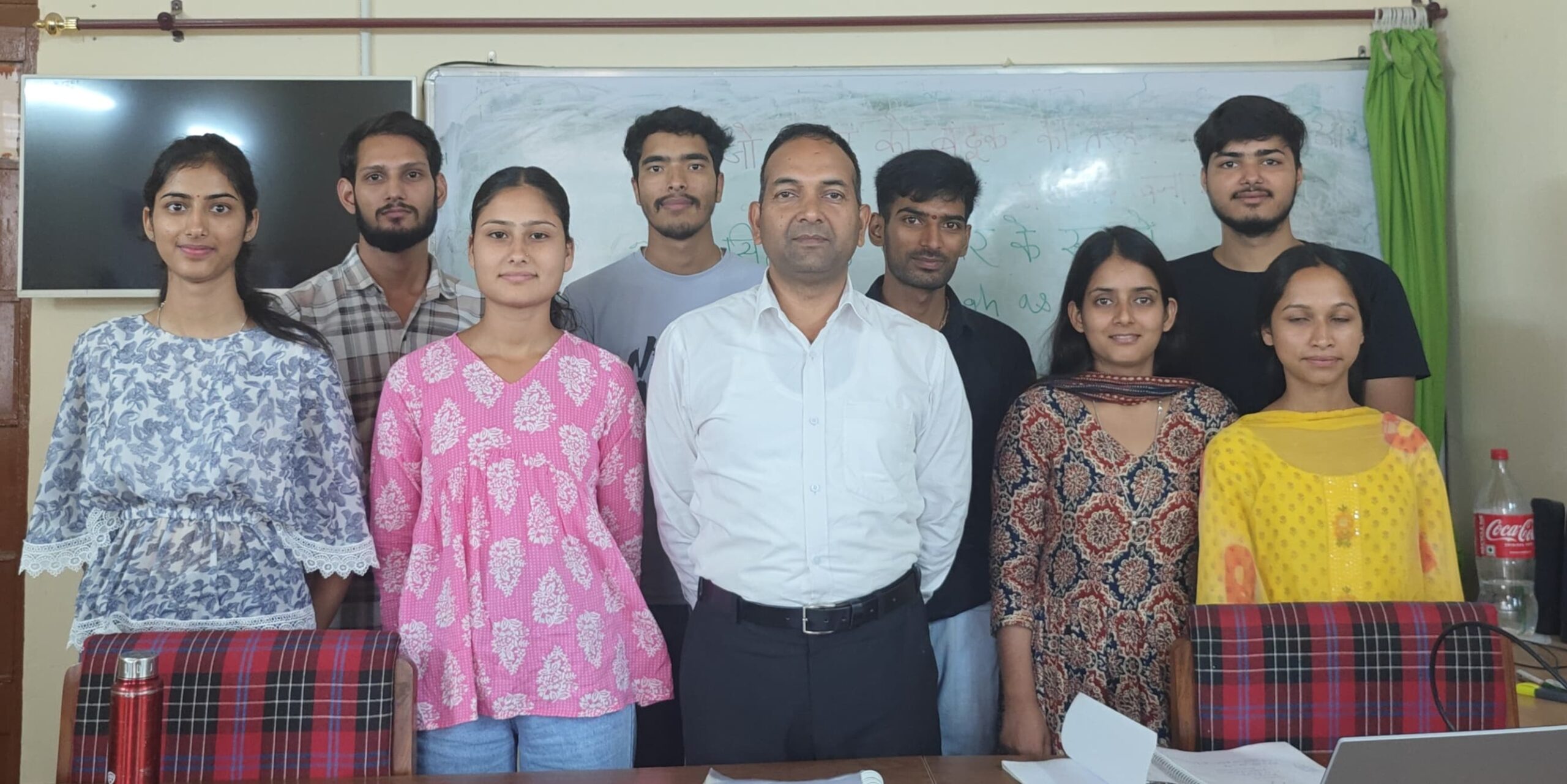
The Department of Journalism and Mass Communication at Vallabh Government College, Mandi successfully organized a high-level, one-day seminar on “Shaheed-e-Azam Bhagat Singh – As a Journalist” today. The event was widely appreciated for its depth and inspirational content.
The Principal of the College, Dr. Sanjeev Kumar, congratulated the faculty members and students of the department for the successful organization of the seminar. He emphasized that such intellectual events help the younger generation understand the lives and contributions of India’s great freedom fighters and thinkers, fostering positive change in society.
The seminar featured Flying Officer Dr. Chaman, Head of the Department, as the keynote speaker. He presented an in-depth and original research paper titled “Bhagat Singh as a Journalist: A Bold Advocate of Ideological Revolution.” In his address, Dr. Chaman highlighted that while Bhagat Singh is widely remembered as a courageous revolutionary and martyr, his invaluable contributions to journalism have not received the recognition they truly deserve.
Dr. Chaman elaborated that Bhagat Singh waged a formidable ideological struggle not just with weapons, but through his powerful writings against colonialism, social injustice, religious fanaticism, and capitalist exploitation. He wrote extensively in prominent newspapers such as Pratap, Kirti, Matwala, Arjun, and Aakda, where his articles reflected scientific reasoning, deep historical insight, and a keen awareness of societal transformation. The research paper offered a comprehensive evaluation of his journalistic ideology, writing style, objectives, and the social impact of his work.
The study aimed to provide a historical and ideological assessment of Bhagat Singh’s contributions to journalism, analyze his major writings, and establish the significance of his role as a journalist in India’s freedom movement. It also evaluated his courageous writing style, logical language, and scientific approach to provide guidance and inspiration for contemporary journalism and the younger generation.
The research adopted a historical-analytical methodology, including a detailed examination of Bhagat Singh’s original writings, contemporary newspapers, and authentic historical documents.
Dr. Chaman noted that Bhagat Singh’s journalistic excellence stemmed from his extensive study of works by Karl Marx, Lenin, and others, along with his mastery of Urdu, English, Hindi, and Punjabi. His guiding philosophy was “Revolution begins with ideas, and the spread of ideas begins with the pen.”
Bhagat Singh’s contributions spanned several key publications. In Kirti (Lahore), he wrote regularly on labor rights and peasant movements. In Pratap (Kanpur), he served as assistant editor, addressing issues such as anti-imperialism and Hindu-Muslim unity. His thought-provoking articles in Matwala (Kolkata) inspired revolutionary consciousness among youth, while his political commentaries in Arjun and Aakda strongly critiqued British rule.
To protect his identity, Bhagat Singh sometimes wrote under pseudonyms such as “Balwant,” “Vidrohi,” and “Agniban.” His writings combined fearless expression, scientific reasoning, and an unwavering commitment to social reform.
Dr. Chaman emphasized that for Bhagat Singh, journalism was not merely a tool for raising awareness, but the most powerful weapon for revolution. Articles, editorials, and commentaries served to enlighten and mobilize public consciousness. Unlike much of contemporary commercial journalism, his work was entirely dedicated to societal and national transformation, rooted in courage, factual accuracy, and ideological commitment. This sets a high benchmark for integrity and objectivity in modern journalism.
Dr. Chaman concluded “Bhagat Singh was not only a revolutionary and martyr but also a fearless journalist and a leader of ideological revolution. His writings ignited an unprecedented movement of thought and awareness during India’s freedom struggle.”
He ended his address with the powerful affirmation “Bhagat Singh proved that when the pen is armed with courage and ideas, it can be as formidable as a sword.”
The seminar also featured insightful contributions from students Jagruti Thakur, Dheeraj Kumar, Ankush Kumar, and Monu. A large number of students, including Rekha, Rohit Kumar, Ankush, Prerna Guleria, Nancy Rana, Rishabhdev, Deepak Bhardwaj, Ojasvi, Rahul, Rakhi, and Isha, attended the event with keen interest.