
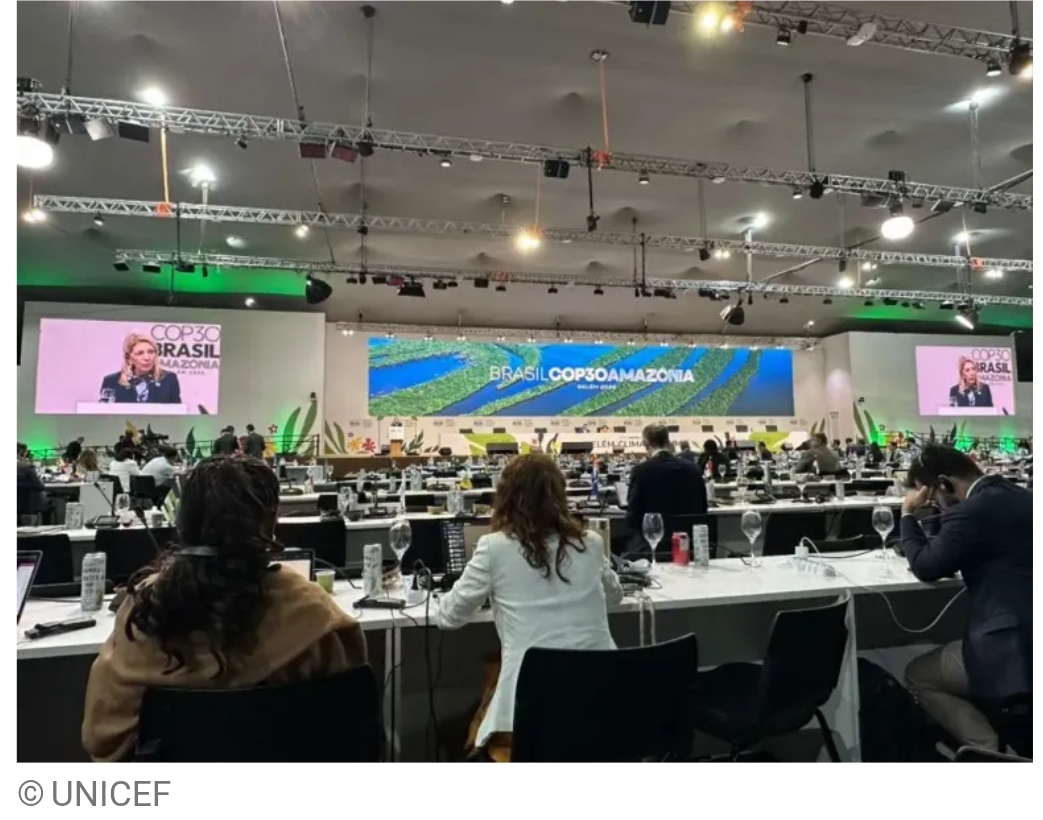
UNICEF Chief Catherine Russell at COP30: The Climate Crisis Is a Child Rights Crisis.
Belém, Brazil;
At the COP30 Leaders Summit in Belém, Brazil, UNICEF Executive Director Catherine Russell delivered a powerful address urging world leaders to recognize the climate crisis as a direct threat to children’s rights, survival, and future. Speaking during the General Plenary of Leaders, Russell called for urgent, child-centered climate action, warning that millions of young lives are already at risk from rising temperatures, pollution, and extreme weather.
“Children Live in a Hotter, More Polluted World”
“Children today live in a world that is hotter and more polluted than the one we grew up in,” Russell told heads of state and delegates, thanking President Luiz Inácio Lula da Silva and the COP30 Presidency for hosting the historic summit in the heart of the Amazon.
She emphasized that children are disproportionately affected by climate change, both physiologically and socioeconomically.
“Children make up one-third of the world’s population and half of all people living in extreme poverty,” she said. “Half the world’s children live in countries at extreme risk of climate chaos. And because children are smaller and their systems less developed, they are far more vulnerable to the effects of climate change than adults.”
The First Breath at Risk
Russell highlighted alarming evidence that the risks of climate change begin even before birth. For every one-degree Celsius increase in temperature, the likelihood of preterm or stillbirth rises by 5 percent, she said — linking global warming directly to maternal and infant health.
After birth, the dangers multiply.
“During heatwaves, children’s bodies heat up faster and sweat less efficiently, putting them at greater risk,” she explained. “They also breathe twice as fast as adults, which means they inhale more polluted air.”
According to UNICEF data, by the 2050s, children’s exposure to heatwaves will increase eightfold. Already, one in five children experiences at least double the number of extremely hot days each year compared to their grandparents’ generation.
A Clear Science, An Unclear Will
Russell underscored that while the science behind the crisis is clear, political and financial will remain uncertain.
“The science is clear about what needs to be done,” she said. “What is less clear is — will we meet the challenge? Will the world act to protect children?”
She called for rapid emissions reductions, stressing that a just energy transition would not only curb global warming but also save children’s lives.
“Reducing air pollution, which accounts for 15 percent of all under-five deaths, and investing in clean energy will create new opportunities for young people in the green economy,” she added.
Investing in Adaptation and Child Survival
UNICEF’s Executive Director urged countries to scale up funding for climate adaptation, loss and damage, and resilience — particularly in basic services that determine children’s survival:
- Health
- Education
- Water and sanitation
- Nutrition
- Social protection
“These are the systems that keep children alive, learning, and hopeful,” she said. “They must be protected and strengthened against the impacts of climate change.”
Progress and Hope Amid the Crisis
Russell acknowledged that progress is being made. Today, 70 percent of Nationally Determined Contributions (NDCs) — countries’ official climate action plans under the Paris Agreement — include child-sensitive commitments. Additionally, 70 governments have signed the Declaration on Children, Youth and Climate Action, signaling growing recognition of children’s unique needs within the global climate framework.
“We commend your leadership,” Russell told the assembly. “UNICEF stands ready to support your efforts to build a cleaner, safer, and fairer planet for every child.”
A Challenge to the World
In closing, Russell issued a challenge to world leaders to match commitments with action:
“Children need and deserve a cleaner, safer planet. The question for all of us is — will we meet the challenge?”
Her remarks were met with strong applause in the plenary hall, reflecting the growing consensus that the climate emergency is not just an environmental or economic issue, but a generational one.
Background
The 30th Conference of the Parties (COP30) is being hosted in Belém, Brazil, marking the first COP to be held in the Amazon region — a global climate hotspot. The summit has brought together leaders from over 190 nations to accelerate efforts toward the Paris Agreement goals and strengthen commitments to protect vulnerable populations from the worsening impacts of climate change.
UNICEF has been a leading advocate for child-centered climate action, calling for policies that address both the environmental and social dimensions of the crisis — from reducing emissions to investing in health, education, and social safety nets.