Violence in South Sudan Puts Hundreds of Thousands of Malnourished Children at Risk, UNICEF Warns.
JUBA, South Sudan:
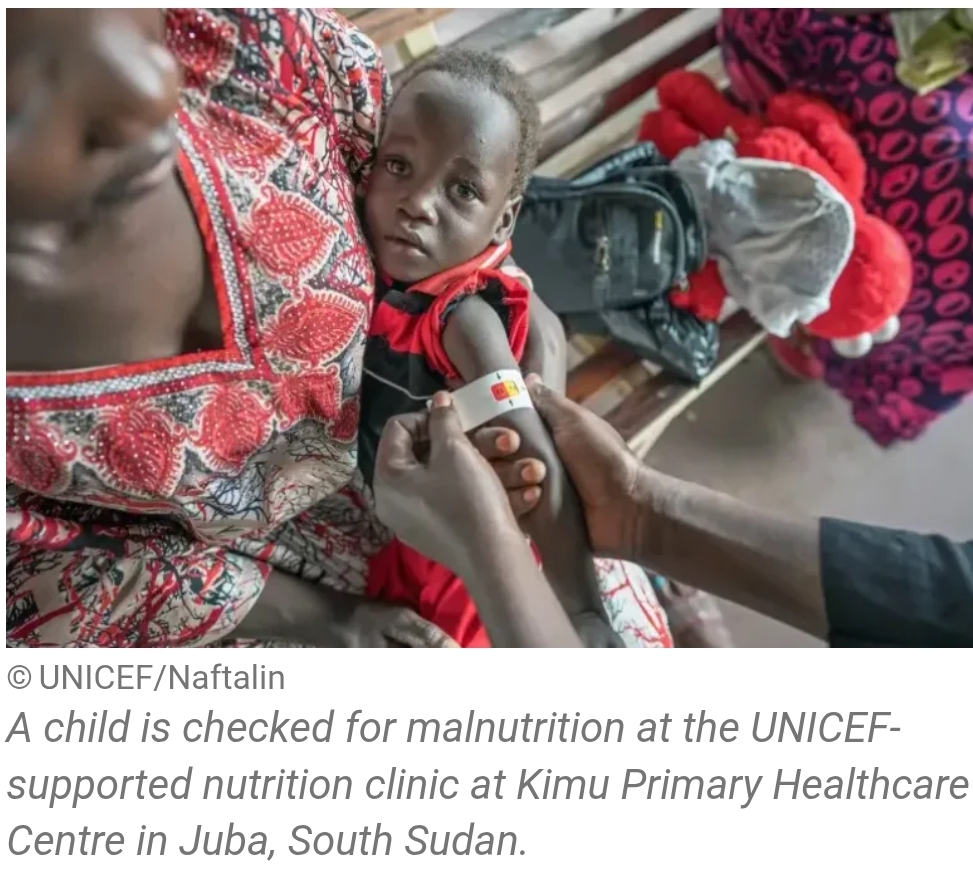
An escalation of violent clashes in South Sudan’s Jonglei State has placed more than 450,000 children at risk of acute malnutrition, as conflict-driven displacement disrupts already fragile health and nutrition services, UNICEF has warned.
According to the UN children’s agency, hostilities that intensified at the start of 2026 have forced at least 250,000 people from their homes, particularly in the northern and central parts of Jonglei. Many families have fled without access to food, clean water, or medical care, compounding the risk for children in a region that already records some of the highest malnutrition rates in the country.
“We are extremely concerned for women and children impacted by these violent clashes,” said Noala Skinner, UNICEF Country Representative in South Sudan. “We know that these areas have some of the highest levels of child malnutrition, and we know that a malnourished child without treatment is 12 times more likely to die.”
UNICEF has called on all parties to the conflict to immediately halt the violence and allow rapid, safe, and unimpeded humanitarian access to affected populations.
Aid Delivery Severely Restricted
Humanitarian operations in Jonglei have been severely hampered by insecurity and restrictions on movement by river, road, and air, preventing aid agencies from reaching displaced and vulnerable communities. UNICEF reports that six counties in Jonglei State have already run out of, or are close to running out of, therapeutic foods—a critical, life-saving treatment for children suffering from severe acute malnutrition.
The impact of the violence extends beyond Jonglei. Nationwide, UNICEF has recorded the closure of 17 health facilities due to insecurity, resulting in the suspension of essential nutrition services. In addition, 10 incidents of looting of health and nutrition supplies have been reported across the country, five of them in Jonglei State alone.
Emergency Response Underway
Despite the significant access challenges, UNICEF says it continues to respond where possible. Emergency water purification equipment, buckets, and soap have been dispatched to Duk County, where there are growing concerns about a potential cholera outbreak.
Further supplies have been sent to Akobo, including malaria treatment, therapeutic food for malnourished children, and emergency health kits sufficient to serve more than 10,000 people.
However, UNICEF cautioned that without improved access and sustained peace, humanitarian assistance will not be able to meet the rapidly growing needs.
“The lives of hundreds of thousands of children depend on immediate action,” Skinner said. “Without access, without services, and without peace, these children face an unacceptable risk of illness and death.”
South Sudan continues to grapple with a complex humanitarian crisis driven by conflict, climate shocks, and economic instability, leaving millions—especially children—highly vulnerable as violence once again escalates.