Rahul Gandhi Alleges ‘Grave Environmental Crime’ in Great Nicobar, Calls Mega Project a ‘Scam’.
Nicobar:
Senior Congress leader and Leader of Opposition Rahul Gandhi on Thursday launched a sharp attack on the government over its proposed development project in Great Nicobar Island, describing it as “destruction disguised as development” and one of the “biggest scams” against India’s natural and tribal heritage.
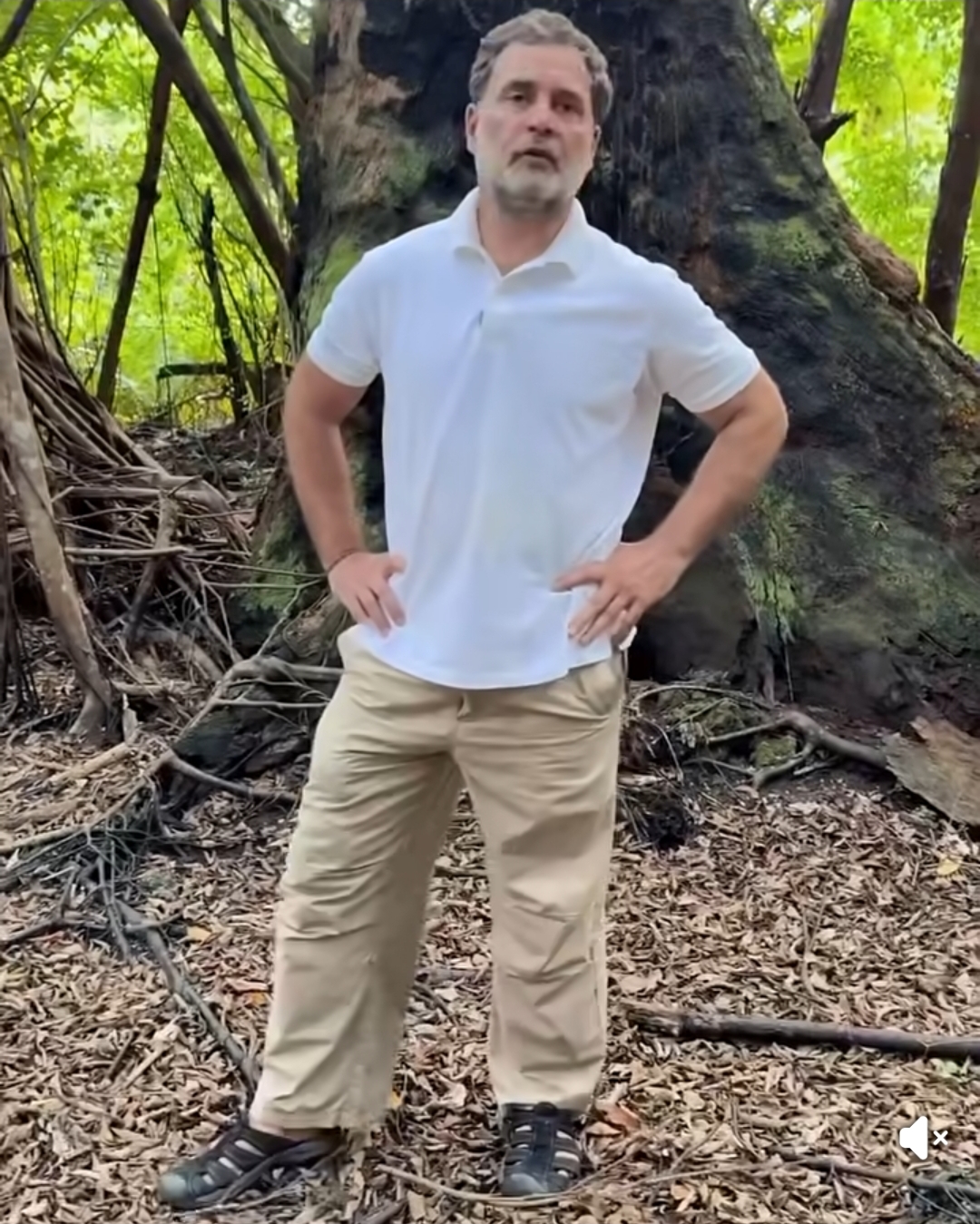
Gandhi, who said he recently traveled through the island, painted a vivid picture of its ecological richness. He described the region as home to “extraordinary forests” with ancient trees and ecosystems that have taken generations to evolve. According to him, the island’s biodiversity and untouched rainforests are now under severe threat due to large-scale development plans.
At the center of the controversy is the proposed Great Nicobar Development Project, which includes infrastructure expansion such as a transshipment port, airport, township, and power plant. Critics have raised concerns about its environmental and social impact, particularly the reported felling of millions of trees and diversion of around 160 square kilometres of pristine rainforest.
Gandhi alleged that indigenous communities and local settlers are being sidelined in the process. He emphasized that both Adivasi groups and other residents of the island are at risk of losing their homes, culture, and livelihoods. “Communities have been ignored while their homes are being taken away,” he said, calling the situation deeply unjust.
Framing the issue as not merely environmental but moral and national, Gandhi stated, “This is not development. It is destruction dressed in development’s language.” He further warned that the project could irreversibly damage one of India’s most ecologically sensitive regions.
The Congress leader called for public awareness and collective action, asserting that such projects can be halted if citizens recognize their consequences. “It must be stopped. And it can be stopped—if Indians choose to see what I have seen,” he said.
The government, however, has maintained that the project is crucial for strategic, economic, and infrastructural growth, especially given the island’s proximity to key international shipping routes.
The debate over development versus conservation in Great Nicobar Island continues to intensify, with environmentalists, policymakers, and political leaders sharply divided over the island’s future.