India–Kenya Trade Ties Strengthen as JTC Meet in Nairobi Records 24.9% Growth in Bilateral Trade.
Nairobi:
The 10th session of the India–Kenya Joint Trade Committee (JTC), held in Nairobi on April 27–28, concluded with both countries reaffirming their commitment to deepening bilateral trade and economic cooperation across multiple sectors.
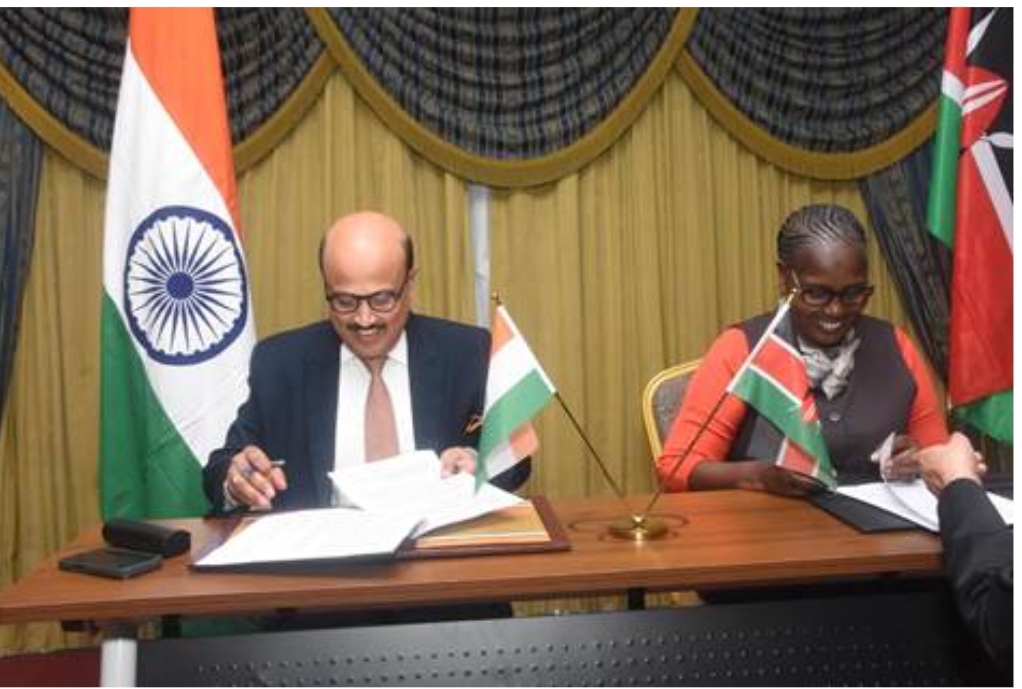
The meeting was co-chaired by , Commerce Secretary in India’s Ministry of Commerce and Industry, Rajesh Agrawal, and Principal Secretary in Kenya’s State Department for Trade, Ms. Regina Akotah Ombam.
Trade Growth and Key Sectors
Both sides highlighted robust growth in bilateral trade, which reached USD 4.31 billion in 2025–26—an increase of 24.91% from USD 3.45 billion in the previous fiscal year. India has emerged as one of Kenya’s key trading partners, with discussions focusing on diversifying trade and improving market access.
Key sectors identified for expansion include engineering goods, pharmaceuticals, agriculture, electronics, and digital technologies.
MoUs to Boost Trade Facilitation
Progress on trade facilitation initiatives was reviewed, including collaboration between the and the to strengthen standardisation and conformity assessment.
A significant agreement was also signed between the and the to enable the exchange of pre-arrival customs information, aimed at streamlining procedures and improving ease of doing business.
Additionally, the signed an MoU with the India–Kenya Chamber of Commerce and Industry to promote investment and industrial collaboration.
Local Currency Trade and Financial Cooperation
Both countries explored mechanisms to promote trade settlement in local currencies. Kenyan banks have already opened Special Rupee Vostro Accounts (SRVAs) with Indian banks, and discussions were held on expanding this framework and potentially adopting a Local Currency Settlement (LCS) system.
Sectoral Cooperation and Emerging Opportunities
The meeting underscored opportunities in engineering and manufacturing, including exports of automobiles, machinery, and construction equipment, as well as participation in trade exhibitions such as Autoexpo Kenya and The Big 5 Construct Kenya.
India also offered support for infrastructure development projects in Kenya, particularly in railways, including feasibility studies, project management, and supply of rolling stock for the Standard Gauge Railway. Collaboration in shipbuilding was also explored.
In pharmaceuticals, India emphasized its role as a major supplier of affordable generic medicines and proposed enhanced business-to-business engagement. Agricultural trade was discussed with a focus on addressing sanitary and phytosanitary barriers.
Renewable Energy and Digital Collaboration
India expressed readiness to support Kenya’s renewable energy goals, particularly in solar and wind projects. Kenya indicated its intention to sign the International Solar Alliance Framework Agreement in the near future.
Digital cooperation was another key area, with discussions on developing UPI-like payment systems, Bharat Connect, and digital public infrastructure to promote financial inclusion.
Capacity Building and Education
Capacity building emerged as a priority, with India offering training under the initiative in sectors such as mining, healthcare, education, and earth sciences. Both sides also explored collaboration in higher education, digital learning, and student mobility through the “Study in India” programme.
Business Engagement and Industry Dialogue
On the sidelines of the JTC, an India–Kenya Joint Business Forum brought together leading industry representatives from both countries, including the . The forum facilitated discussions on expanding trade and investment linkages across manufacturing, agriculture, infrastructure, pharmaceuticals, and digital services.
An additional interaction with the Indian business community in Kenya, organised by the India–Kenya Chamber of Commerce, provided insights into opportunities and challenges of doing business in the country.
Outlook
Both nations reiterated their commitment to building a diversified, balanced, and forward-looking economic partnership. They agreed to strengthen institutional mechanisms to address trade issues, enhance business engagement, and unlock new areas of cooperation.