India Must Build Resilient, Globally Integrated Healthcare Supply Chains: Union Minister Piyush Goyal.
Pharma sector must lead in R&D, new molecules, biosimilars and biotechnology; Government ready to support medical value travel and sector-specific infrastructure.
New Delhi:
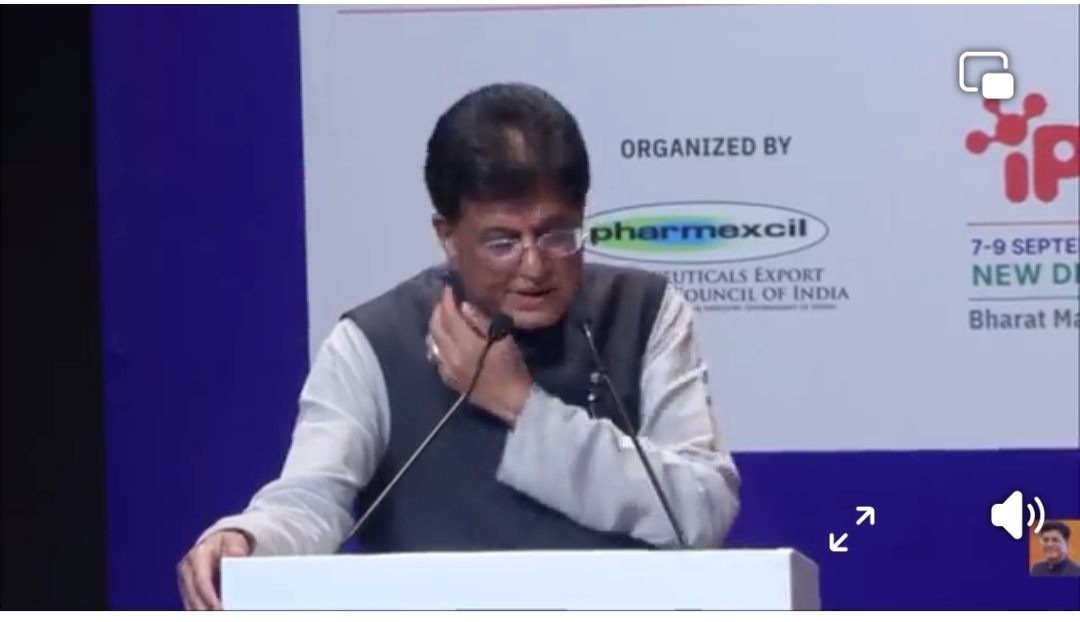
India must build resilient and globally integrated healthcare supply chains, strengthen its position as a trusted healthcare partner to the world and move beyond its success in generics towards greater research, development and innovation, Union Minister of Commerce and Industry Piyush Goyal said at the Bharat Health Global Expo 2026 in New Delhi on Sunday.
Goyal attended the Expo along with Minister of State for Commerce and Industry and Electronics and Information Technology Jitin Prasada and Commerce Secretary Rajesh Agarwal.
Addressing industry stakeholders, Goyal said India’s pharmaceutical sector has a significant opportunity to showcase its capabilities globally. Describing India as the “pharmacy of the world”, he said the country must now aim for a much bigger and better future.
He said the Bharat Health Global Expo could become an important platform for bringing the entire healthcare value chain together and attracting greater international participation. At a later stage, the platform could also accommodate country pavilions and partner countries, enabling foreign companies to showcase their products alongside Indian businesses.
India needs resilient and diversified supply chains
Highlighting the importance of supply-chain resilience, Goyal said the global economy is increasingly looking for dependable and diversified supply chains and is uncomfortable with excessive geographical dependence on one or two locations.
He said India had earlier lost ground in the production of Active Pharmaceutical Ingredients (APIs) and Key Starting Materials (KSMs) for various reasons, and stressed that the country must now restore resilience in its pharmaceutical supply chain.
However, he clarified that resilience should not mean an inward-looking approach. India does not need to manufacture everything domestically, he said, adding that imports will continue wherever they are necessary. The objective should instead be to ensure that critical products are available from multiple geographies and companies so that dependence on one or two countries or suppliers does not threaten continuity of the industry.
Goyal said pooling India’s demand could help identify products that are currently imported but have sufficient potential for indigenous production. He also pointed out that countries around the world are competing aggressively to attract investments and strengthen their supply chains.
The competition for investment, he noted, is no longer limited to developing economies. The United States, Canada, Mexico, Japan, South Korea, Singapore and European countries are also seeking to attract investments. India, therefore, is competing not only in goods and services but also with developed economies in attracting global investment.
Indian pharma companies must adopt a global outlook
Goyal said India must recognise that other countries are also seeking supply-chain resilience and, therefore, Indian pharmaceutical companies need to adopt a global and outward-looking approach.
He said Indian companies may need to invest in overseas markets, including African countries, to undertake local value addition, create employment and strengthen last-mile delivery. Such investments, he said, would help Indian companies build a genuinely global presence while contributing to healthcare access in international markets.
Pharma sector must move beyond generics
On research and innovation, Goyal said India’s success in generic medicines had been built through the sustained efforts of the pharmaceutical industry. However, he cautioned that India cannot remain satisfied with its achievements in generics if it wants to become a developed country by 2047.
He called upon the pharmaceutical industry to increase investments in R&D, develop and patent its own products and make greater use of government programmes supporting research and innovation.
The sector, he said, should be at the forefront of R&D and leverage initiatives such as the Research and Development Innovation Fund (RDIF). Indian companies, engineers and scientific talent should focus on new molecules, biosimilars and biotechnology, which he identified as the next major frontier for the pharmaceutical industry.
Regulatory reforms needed to attract global R&D
Goyal also called for a regulatory environment that makes India an attractive destination for research, clinical trials and innovation.
He said India should adopt an open and welcoming approach towards investments in clinical trials, product development, patenting, R&D and the introduction of new products.
Indian regulators, he added, should study regulatory frameworks in developed economies and draw lessons from global developments to move towards greater regulatory convergence.
Goyal stressed that India’s regulatory mindset must increasingly align with the developed world if the country is to achieve its ambition of becoming a developed economy by 2047. He also urged the government and industry to listen to investors and governments across the world and jointly create a new pathway for the growth of the pharmaceutical sector.
Medical value travel offers major opportunity
Highlighting the potential of medical value travel, Goyal said nearly USD 8 billion is spent in this area and stressed that India has the capabilities to capture a much larger share of the global market.
He said Indian hospitals have become modern and world-class, with advanced equipment, while Indian doctors, technicians and nurses are among the best globally. Medical value travel, he said, should therefore be taken up on a mission mode.
Goyal noted that the Services Export Promotion Council (SEPC) has already undertaken initiatives in collaboration with industry bodies such as CII and FICCI. He called for a stronger global promotion of India’s healthcare capabilities.
Through the Export Promotion Mission (EPM) and India Brand Equity Fund, the Government would be willing to support initiatives aimed at promoting India as a destination for medical care, he said, urging the industry to come forward with proposals at the earliest.
India can become a trusted global healthcare partner
Goyal said India’s position as a trusted partner to the world, particularly in healthcare, had been demonstrated repeatedly during the COVID-19 pandemic, through the supply of generic medicines worldwide and through the emergence of new innovations and patented products from India.
He said these developments could collectively take the Indian healthcare and pharmaceutical industry to the next level, both domestically and globally.
The Minister noted that the past four decades had been a defining period for India’s pharmaceutical industry, but stressed that the sector should not be content with its current position. He called upon the industry to “aim for the skies” and work towards a much bigger and more ambitious future.
Government to support pharma and healthcare infrastructure
On infrastructure development, Goyal said the Government is working to establish bulk drug parks, with projects coming up in Andhra Pradesh, Gujarat and Himachal Pradesh.
He also said 100 new industrial parks are being developed and that dedicated areas could be created for pharmaceutical and healthcare companies wherever required.
The Minister invited industries such as engineering, aerospace and defence to be more demanding about locations and infrastructure requirements. The Government, he said, would be willing to develop plug-and-play infrastructure tailored to the needs of different sectors.
Medical devices need greater domestic manufacturing
Goyal said India still has considerable ground to cover in the medical devices sector. While the country has made progress, he called for a shift from assembling imported products towards domestic manufacturing of components and the development of a complete indigenous medical devices ecosystem.
He said doctors, nurses, technicians and hospitals should become more conscious about the availability of better and superior products manufactured in India.
A stronger domestic market, he said, would also help Indian companies expand exports by providing economies of scale. MSMEs could play an important role in manufacturing components and equipment, while larger companies could help create scale and global competitiveness.
According to Goyal, these combined efforts could generate millions of jobs, attract billions of dollars in investment and make India more resilient against future crises.
Ayush products need greater scientific validation
Speaking about Ayush, Goyal said India’s traditional medicine and traditional knowledge have significant global potential. However, he noted that the country continues to export raw herbs and called for greater scientific validation of Ayush products.
Such validation, he said, would help Indian traditional medicine gain wider acceptance in international markets. The Government, he added, is already working in this direction.
Bharat Health platform can strengthen collaboration
Goyal emphasised the importance of bringing the healthcare sector together on a single platform. He said India has planned several similar initiatives in areas where the country has significant strengths, with pharmaceuticals being one of them.
Instead of holding separate conferences for different segments, he said, a unified platform can bring the entire healthcare ecosystem together and provide stakeholders with a comprehensive view of developments across the sector.
Such a platform could eventually attract participation from around 50 countries and approximately 1,000 people from across the world, enabling stakeholders to compare developments, identify best practices and explore opportunities for collaboration.
He said India must have the confidence to compete with the best globally. Ultimately, he added, competitiveness would depend on quality, timely delivery and strong customer service.
FTAs opening wider global markets for Indian industry
On international market access, Goyal said India’s Free Trade Agreements (FTAs) are opening up new opportunities for Indian businesses. He said nearly two-thirds of the global market is already open to India through preferential market access.
India is also negotiating another eight to ten multilateral or bilateral FTAs or Preferential Trade Agreements (PTAs), which could provide access to nearly 75 per cent of global trade, he said.
Goyal noted that until 2014, India’s FTAs collectively provided access to markets with a combined GDP of around USD 10 trillion. In comparison, the nine FTAs referred to by Jitin Prasada and covered in the accompanying book involve 38 developed countries and provide access to markets with a combined GDP of around USD 60 trillion.
He pointed out that this represents approximately six times the market access available before 2014 and noted that several of these trade agreements had remained stalled for as long as 25 years.
Industry urged to collaborate, innovate and go global
Goyal said Indian industry is competitive and possesses world-class talent. What is required now, he said, is greater ambition, higher goals and the ability to connect different capabilities.
He said the Bharat Health initiative was attempting to achieve precisely this by bringing different organisations together, encouraging cooperation and putting stakeholders on the same platform.
While healthy competition is essential, Goyal stressed that collaboration within the sector is equally important. He urged the industry to adopt a modern outlook, expand globally, make quality its highest priority, strengthen supply-chain resilience, achieve scale and increase investment in R&D and innovation.
He also called upon companies to leverage India’s capabilities and talent and make full use of the opportunities emerging from India’s expanding network of trade partnerships.
Aim to make India the “health stack for the globe”
Goyal called upon the industry to earn greater trust, goodwill and market share around the world and work towards making India the “health stack for the globe.”
He said no individual, economy or country can achieve sustained success and well-being without access to high-quality healthcare.
The Minister said the vision of Viksit Bharat 2047 rests significantly on the shoulders of the healthcare sector. The sector has the responsibility of ensuring a healthy India, providing quality healthcare facilities and medicines, and delivering both preventive wellness and curative healthcare to 1.4 billion people.
He said this responsibility would remain a key pillar of India’s journey towards becoming a developed nation by 2047.