Over 22,000 Children in Nepal Urgently Need Safe Water and Sanitation After Flash Floods.
Damaged water systems and crowded shelters heighten risk of waterborne and infectious diseases, UNICEF warns.
Kathmandu:
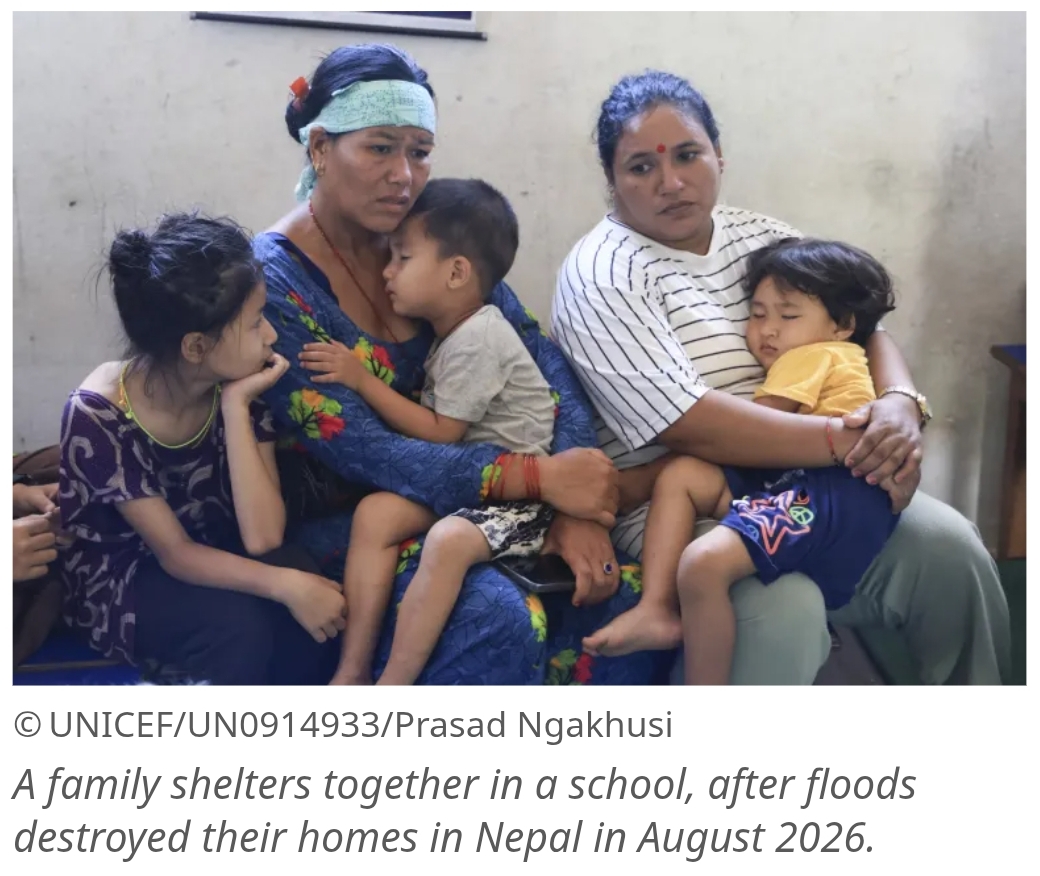
More than a week after devastating flash floods swept through Nepal’s Bhotekoshi-Trishuli river basin, at least 22,000 children remain in urgent need of safe drinking water, sanitation and hygiene services, according to UNICEF.
The floods have damaged water supply systems across the affected districts, ranging from community-level schemes to larger networks. Sanitation facilities have also been damaged or destroyed, leaving thousands of families struggling to access basic services.
The situation has been further complicated by families being accommodated in host households and holding centres, where overcrowding is increasing concerns over the spread of waterborne and infectious diseases.
UNICEF warns of growing health risks
Alice Akunga, UNICEF Representative in Nepal, said families in the affected areas are repeatedly facing the challenge of finding water that is safe for their children.
With water systems and toilets damaged or destroyed and many people sharing limited spaces, maintaining proper hygiene has become increasingly difficult. UNICEF has warned that such conditions can rapidly increase the risk of waterborne diseases, although many of these risks can be prevented through timely access to safe water, sanitation and hygiene services.
“Ensuring access to safe water, sanitation and hygiene is among our top priorities right now,” Akunga said.
Emergency supplies dispatched to affected districts
UNICEF has dispatched critical water, sanitation and hygiene supplies to support around 19,000 people in Rasuwa and Nuwakot, two of the affected districts.
The emergency supplies include:
– More than 3,800 hygiene kits
– Around 3,300 collapsible 10-litre jerrycans
– Approximately 3,500 buckets
– Around 3,500 one-litre mugs
– 4,000 bottles of water-treatment solution
– More than 1,000 tarpaulin sheets
The supplies are intended to help families meet immediate water, sanitation and hygiene needs while damaged infrastructure is assessed and emergency services are restored.
Disease surveillance and hygiene awareness intensified
UNICEF is also working with government agencies and partners to strengthen disease surveillance, promote hygiene and prevent potential outbreaks.
Public-health messages covering safe hygiene practices, water handling and household water treatment are being disseminated through multiple channels, including mobile messaging, radio, social media and community networks.
Mobile subscribers can access validated health advisories without data charges, while a network of more than 600 practitioners is helping extend health and hygiene information to affected communities.
Emergency water and sanitation services to be expanded
As access to affected areas improves, UNICEF plans to scale up emergency interventions. These include emergency water supplies, household water-treatment measures and water-quality monitoring.
The organisation will also support the establishment of temporary sanitation and handwashing facilities, while providing essential hygiene and menstrual hygiene supplies to communities and holding centres.
Focus shifts from emergency response to resilient reconstruction
UNICEF stressed that restoring access to safe water and sanitation will require sustained efforts beyond the immediate emergency response.
Akunga said emergency water-treatment products and supplies can address urgent needs, but damaged water systems, pipelines, pumps, toilets and other sanitation infrastructure will need to be repaired and rebuilt.
UNICEF has emphasised that reconstruction should focus on making infrastructure more resilient to future floods rather than simply restoring facilities to their pre-disaster condition.
The agency warned that stronger and more disaster-resilient water and sanitation systems are essential to protect children and communities from repeated health risks when future floods and other emergencies occur.
The immediate priority remains ensuring that children and families affected by the floods have reliable access to safe water, sanitation and hygiene services while longer-term recovery and resilient reconstruction efforts get underway.