Gwalior Set to Become Telecom Manufacturing Hub with Rs. 5,500 Crore Investment.
Asia’s first Telecom Manufacturing Zone expected to generate over 18,000 employment opportunities; 24 companies initiate application process.
Gwalior:
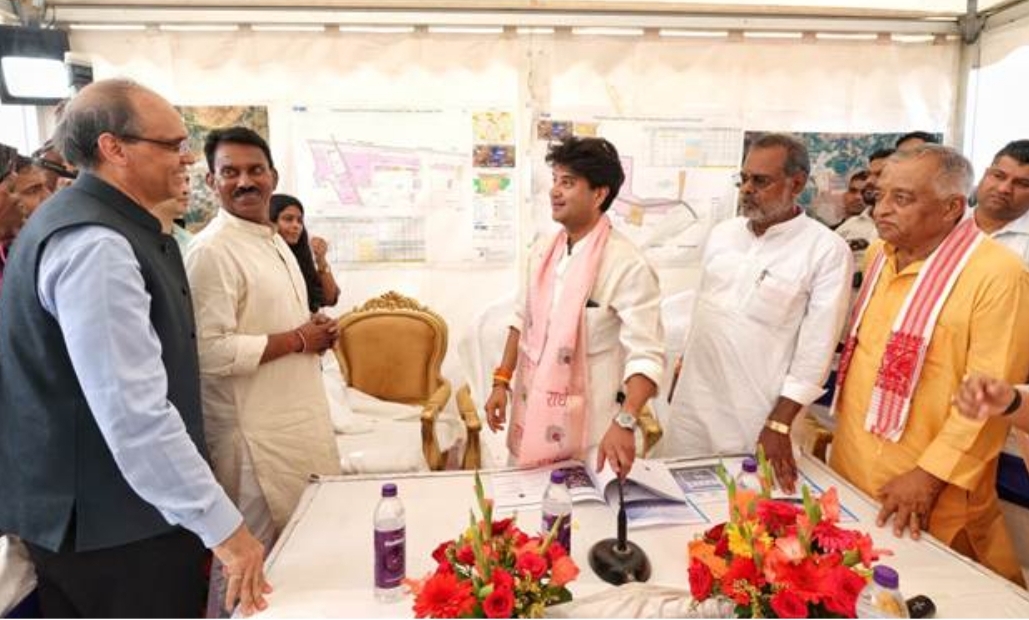
Gwalior is set to emerge as a major hub for India’s telecom manufacturing sector with the proposed establishment of Asia’s first Telecom Manufacturing Zone (TMZ). Union Minister for Communications and Development of North Eastern Region Jyotiraditya Scindia inspected the site identified for the project at Shrimant Madhavrao Scindia Counter Magnet City (SADA), Gwalior, along with the Secretary, Department of Telecommunications, Government of India, and senior officials.
The proposed Telecom Manufacturing Zone is expected to attract an investment of approximately Rs. 5,500 crore and generate more than 18,000 direct and indirect employment opportunities.
Scindia said the project is not intended to be a single industrial unit but a comprehensive manufacturing ecosystem comprising around 24-25 telecom manufacturing units. These units are expected to manufacture telecom equipment and various components, strengthening Gwalior’s position as an emerging centre for the telecom equipment manufacturing industry.
170 Acres Identified for First Phase
Around 170 acres of land have been identified for the first phase of the TMZ, including more than 90 acres in SADA and approximately 70 acres in the IT Park.
Scindia said investor interest in the project has been significant, with applications exceeding the land currently available. Additional land will therefore be identified to facilitate expansion of the first phase, with land allocation increased according to requirements.
SADA was originally established as a Counter Magnet City with the objective of developing Gwalior as a new industrial centre and an alternative growth hub to Delhi. The proposed Telecom Manufacturing Zone is expected to advance this industrial vision by establishing a dedicated telecom manufacturing ecosystem in the city.
24 Companies Begin Application Process
The proposed investment follows an MoU signed in July 2026 between the Department of Telecommunications and the Government of Madhya Pradesh for establishing the TMZ.
Investor roadshows were subsequently organised in Delhi and Mumbai in August, led by Scindia and Madhya Pradesh Chief Minister Mohan Yadav.
The Delhi roadshow resulted in investment commitments of approximately ₹3,500 crore, with the potential to generate around 14,000 employment opportunities. The Mumbai roadshow attracted commitments of approximately ₹2,000 crore, with around 4,000 employment opportunities.
Scindia said these investments have progressed beyond initial expressions of interest, with companies being asked to participate in the formal application process for land allocation. As a result, 24 companies have initiated the application process for establishing manufacturing units within the proposed TMZ.
Incentives for Telecom Manufacturing
The Union Minister credited the Government of Madhya Pradesh with developing an incentive package aimed at attracting telecom manufacturing companies to the zone.
The package includes incentives linked to land lease, power, employment and production, along with measures focused on environmental sustainability and green development.
In addition, the Department of Telecommunications has proposed a Common Testing Lab package worth approximately ₹500 crore, which is intended to support testing and quality requirements for manufacturers operating within the ecosystem.
Connectivity and Skilled Workforce to Support Growth
Scindia highlighted Gwalior’s connectivity, infrastructure and availability of skilled human resources as important factors supporting the proposed manufacturing zone.
The approximately 120-km Agra-Gwalior High-Speed Corridor is being developed to improve connectivity between Gwalior, Delhi and major markets across North India.
Gwalior is also situated on major railway routes, providing connectivity for the movement of goods and human resources across the country. Its airport has been developed at a cost of approximately ₹650 crore, with the project completed in 16 months, further strengthening air connectivity with major cities including Delhi, Mumbai and Bengaluru.
The city also has a substantial technical education base. Approximately 25,000 engineering students graduate every year from institutions in and around Gwalior, providing a potential pool of skilled and technically trained workers for the telecom manufacturing sector.
Six Key Manufacturing Verticals Planned
The TMZ is being planned as an integrated ecosystem covering six key verticals of telecom manufacturing. The Centre and the Government of Madhya Pradesh, along with concerned departments, are expected to provide necessary support to companies establishing manufacturing facilities in the zone.
The proposed project is aimed at strengthening domestic telecom equipment manufacturing, attracting investment, creating employment and supporting the development of a wider industrial ecosystem in Gwalior.
Scindia also announced that after his two-day visit to Gwalior, he will travel to Bengaluru on September 22 to participate in a roadshow with investors from the telecom sector.