Himachal Aims to Make Agriculture Profitable, Raises MSP for Turmeric and Wheat from Next Year: CM Sukhu.
Tanda (Kangra):
Chief Minister Sukhvinder Singh Sukhu on Wednesday said that agriculture would emerge as a profitable venture in Himachal Pradesh in the coming years, with the state government focusing on increasing farmers’ income and strengthening the rural economy. He announced that the Minimum Support Price (MSP) for naturally grown turmeric would be increased from Rs. 150 to Rs. 170 per kg and for wheat from Rs. 80 to Rs. 90 per kg from next year.
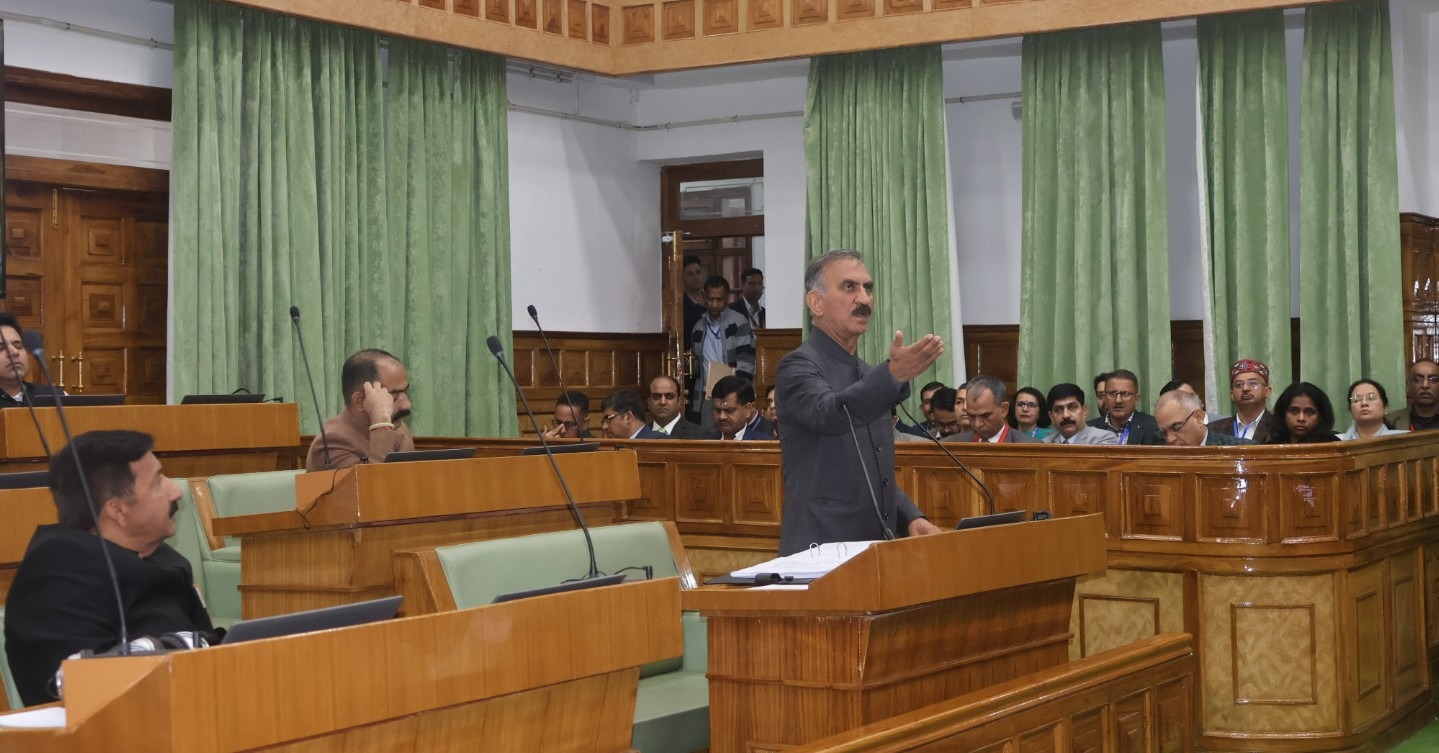
Interacting with beneficiaries of the Rajiv Gandhi Prakritik Kheti Khushal Kisan Yojna at the auditorium of Dr. Rajendra Prasad Government Medical College, Tanda, in Kangra district, the Chief Minister said the government was committed to protecting farmers’ interests and making Himachal Pradesh a leading state in natural farming. He urged farmers not to sell their agricultural land and encouraged them to adopt natural farming to improve their livelihoods.
During the interaction, Sukhu sought suggestions from farmers regarding ways to strengthen agriculture and natural farming. He listened to their experiences, concerns and challenges and assured them that the government would extend adequate financial assistance to farmers and horticulturists as required.
He said the government aimed to increase farmers’ monthly income to Rs. 40,000 to Rs. 50,000 in the coming years. Despite facing financial losses, the state government was directly transferring financial benefits to farmers to safeguard their interests. He emphasised that Himachal Pradesh could become self-reliant only when its farmers and horticulturists were economically prosperous and financially secure.
The Chief Minister said the state government had introduced MSP for naturally grown agricultural produce on its own initiative to protect farmers from losses arising due to market fluctuations. Milk had also been brought under the MSP framework. He added that the government was continuously promoting natural farming, recognising that the rural economy remained the backbone of Himachal Pradesh.
Highlighting the challenges posed by small landholdings in the state, Sukhu said farmers could improve their economic condition by adopting natural farming and taking advantage of various government schemes. He particularly encouraged turmeric cultivation, stating that wild animals generally did not damage the crop, making it a suitable option for farmers in the state.
The Chief Minister also highlighted the government’s efforts to create employment and income opportunities for young people within Himachal Pradesh so that they would not be compelled to migrate to other states in search of jobs.
In this direction, a milk processing plant is being constructed at Dhagwar at an estimated cost of Rs. 300 crore. The facility will procure around 1.50 lakh litres of milk daily from farmers. He said the government would also bear the transportation expenses of milk brought by farmers to the processing plant, providing them additional financial support.
Sukhu said the state government was simultaneously undertaking reforms in education and healthcare. CBSE-affiliated schools had been opened in rural areas, with teachers appointed to ensure access to quality education. In the healthcare sector, diagnostic facilities were being strengthened to promote early detection and timely treatment of diseases.
Referring to the government’s efforts to protect the state’s financial interests, the Chief Minister said a government with political will and commitment could effectively fight for the rights of its people. He cited the Wildflower Hall case, in which the state had secured Rs. 401 crore and was now earning approximately Rs. 35 crore annually.
He also referred to the royalty dispute with GSW Company, stating that the government had secured an increase in royalty from 12 per cent to 18 per cent in the Karchham Wangtoo Hydro Project. An agreement on the Kishau Dam project had also been reached on Himachal Pradesh’s terms.
Regarding the Bhakra Beas Management Board (BBMB) arrears issue, Sukhu said the state had achieved a significant legal victory and would now receive 60 crore units of electricity annually from BBMB.
On the occasion, the Chief Minister also honoured progressive farmers for their contributions to agriculture and natural farming.
Agriculture Minister Prof. Chander Kumar said the interaction had generated valuable suggestions from farmers, which would be incorporated into future policymaking. He said agriculture not only provided food to the country’s population of around 135 crore but also supported industrial activities, making it one of the most important sectors of the economy.
He said the state government was according the highest priority to agriculture and farmers. Himachal Pradesh was among the first states in the country to introduce MSP for agricultural produce, reflecting its commitment to improving farmers’ economic conditions.
Recalling the traditionally low prices received by farmers for their produce, the Agriculture Minister said excessive use of chemical fertilisers and pesticides was adversely affecting soil fertility. He stressed the need to promote natural farming as a sustainable alternative.
He added that livestock was an integral part of natural farming and that the government was promoting both together to ensure better returns for farmers. The progress of agriculture, he said, was essential for the overall development of the country.
Vice Chairman of the State Planning Board Bhawani Singh Pathania, Vice Chairman of the Himachal Pradesh Tourism Development Board R.S. Bali, Himachal Pradesh Marketing Board Chairman Kuldeep Singh Pathania, Himachal Pradesh Wool Federation Chairman Manoj Thakur, APMC Kangra Chairman Nishu Mongra, Secretary Sudesh Kumar Mokhta, Director of Agriculture Ravinder Singh Jasrotia and other dignitaries were also present.