Vallabh College Marks National Press Day with Focus on AI, Digital Media and Ethical Journalism.
Shimla:
Vallabh Government College, Mandi Celebrates National Press Day with a One-Day Seminar on Journalism in the Age of Artificial Intelligence and Digital Media
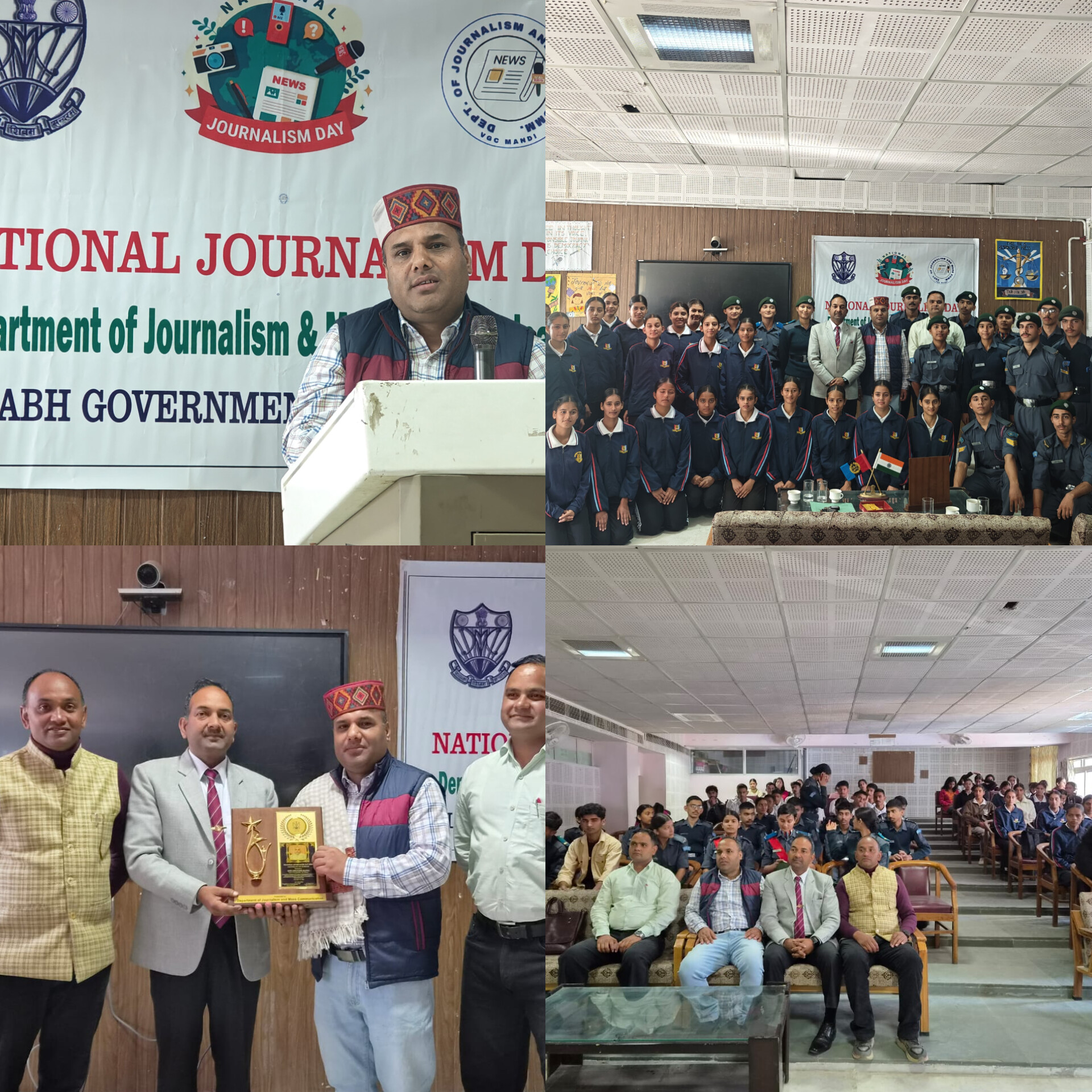
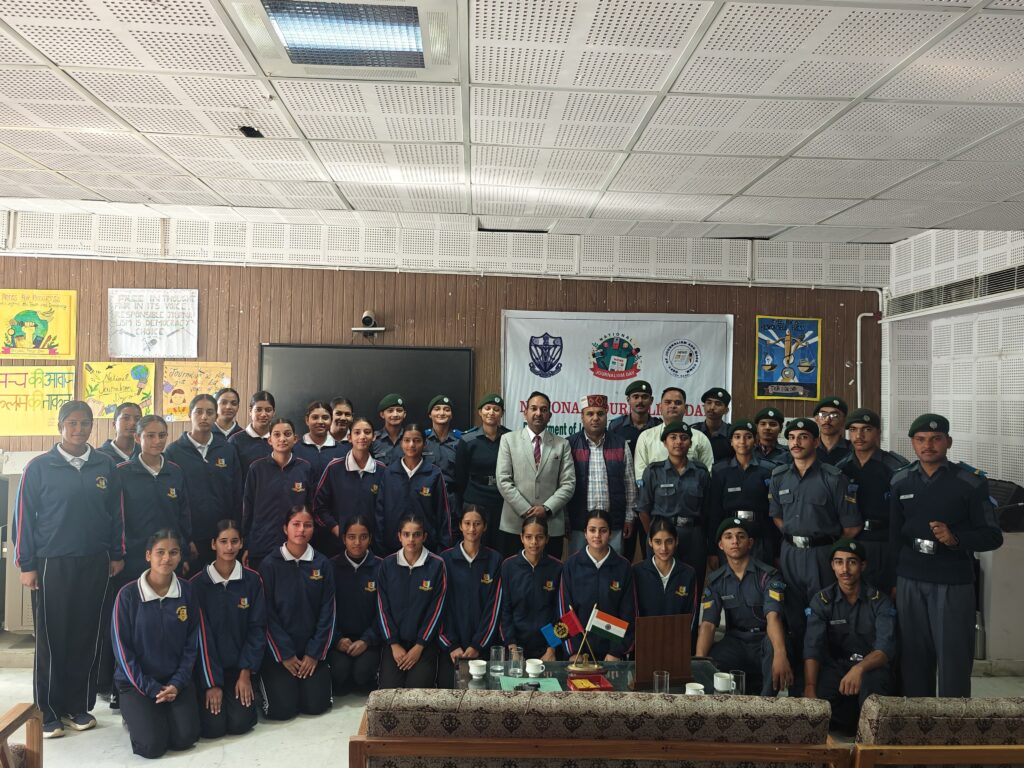
The Department of Journalism and Mass Communication, Vallabh Government College, Mandi, organised a one-day seminar and a series of academic and cultural activities to commemorate National Press Day on 17 November 2026. The programme was presided over by the Head of the Department of Journalism and Mass Communication, Flying Officer Dr. Chaman Lal Kranti Singh.
The celebrations featured a speech competition, poetry recitation, cultural performances, slogan writing and poster-making competitions, providing students with a platform to showcase their intellectual, creative and artistic talents.
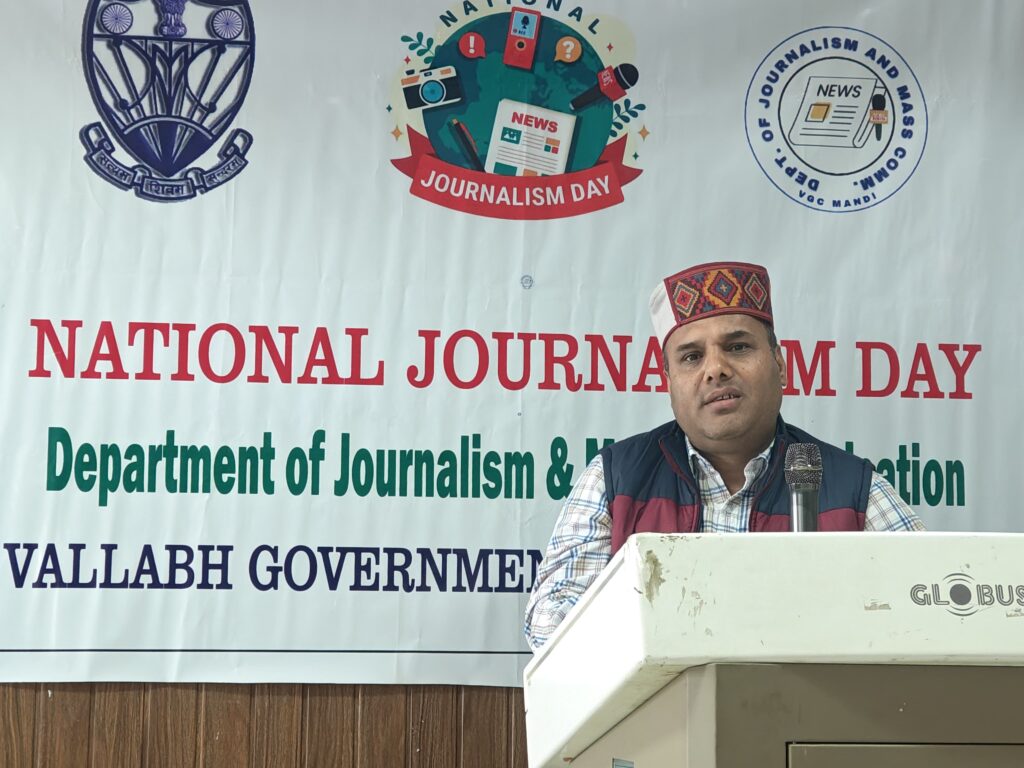
Senior Correspondent of The Tribune, Dipender Manta, attended the seminar as the Resource Person and shared his valuable professional experiences and insights with students of the Department of Journalism and Mass Communication and NCC cadets.
In his address, Manta emphasised that the verification of facts and information has become increasingly important in the era of Artificial Intelligence and digital journalism. He highlighted the significance of professional responsibility, honesty and credibility in journalism. He also elaborated on the positive and negative dimensions of Artificial Intelligence and sensitised students to its growing influence on contemporary media practices.
Presidential Address by Flying Officer Dr. Chaman Lal Kranti Singh
The programme focused on the historical significance of journalism, the role of the media in strengthening democracy, the safety of journalists, ethical values in journalism, and the emerging challenges posed by Artificial Intelligence and digital media.
Addressing the gathering, Flying Officer Dr. Chaman Lal Kranti Singh, Head of the Department of Journalism and Mass Communication, stated that National Press Day is not merely a celebration; it is an occasion to reaffirm our commitment to truth, impartiality, freedom of expression and democratic values.
He observed that journalism is the vigilant guardian of democracy. Its true responsibility lies not in standing close to those in power, but in effectively representing the rights, concerns, aspirations and expectations of ordinary citizens.
Dr. Chaman emphasised that the fundamental objective of National Press Day is to safeguard press freedom, promote ethical and credible journalism, and strengthen the social accountability of the media.
On this occasion, Flying Officer Dr. Chaman paid a heartfelt tribute to Indian and international journalists who made the supreme sacrifice in the pursuit of truth and public interest.
He specifically referred to the contributions and struggles of courageous journalists such as Gauri Lankesh, Shujaat Bukhari, Rajdev Ranjan and Shantanu Bhowmick from India, along with Anna Politkovskaya, Marie Colvin, Daniel Pearl, Daphne Caruana Galizia and Jamal Khashoggi from the international media fraternity.
He stated that the lives and sacrifices of these journalists inspire us to uphold truth, courage and professional integrity. He further emphasised that ensuring the safety of journalists is not merely the responsibility of media organisations but a collective responsibility of every healthy and democratic society.
Journalism in the Age of Artificial Intelligence and Digital Media: Emerging Challenges of Truth, Creativity and Ethics
Speaking on the central theme of the seminar, “Journalism in the Age of Artificial Intelligence and Digital Media: Emerging Challenges of Truth, Creativity and Ethics,” Dr. Chaman observed that Artificial Intelligence has significantly transformed the nature, functioning and possibilities of journalism.
He explained that AI-powered technologies have made several journalistic processes, including news writing, translation, video editing, data analysis and information processing, faster and more efficient. However, these technological advancements have also introduced serious challenges, including fake news, deepfakes, misinformation, digital disinformation and the erosion of media credibility.
Dr. Chaman asserted that the greatest challenge before contemporary journalism is no longer simply to break a news story first, but to ensure that the information being disseminated is accurate and verified. He urged students never to compromise truth in the race for breaking news.
He further stated that Artificial Intelligence can serve as a supportive tool in journalism, but it can never replace human sensitivity, ethical judgement, social responsibility and independent thinking.
Dr. Chaman laid particular emphasis on the importance of fact-checking, source verification, digital literacy and media literacy in contemporary journalism. He also encouraged students to acquire professional competencies in mobile journalism, data journalism, digital storytelling, podcasting, video editing and AI-based media tools.
He remarked that the successful journalist of the future will be one who can establish a balanced and meaningful relationship between emerging technologies, human sensitivity, ethical values and social concerns.
Expressing concern over the growing competition for Television Rating Points (TRPs), online views and likes, Dr. Chaman observed that the purpose of journalism should not be limited to gaining popularity. Rather, its primary responsibility is to create social awareness, highlight issues of public interest and ensure accountability of democratic institutions.
He called upon students of journalism to develop a comprehensive understanding of the Constitution, social realities and public issues, and to imbibe the principles of factual, impartial and sensitive journalism.
Concluding his presidential address, Dr. Chaman urged students and members of the media fraternity to reaffirm their commitment to truthfulness, impartiality, digital responsibility, freedom of expression and social accountability.
He remarked: “Machines can put words together, algorithms can analyse information, and digital platforms can carry voices across the world. However, the courage to stand for truth, human sensitivity and ethical judgement remain the true soul of journalism.”
He further observed: “The real strength of journalism does not lie merely in the sharpness of its pen, but in the truth for which that pen is raised.”
Address by Faculty Members and Guests
Assistant Professor Yog Raj also shared his views on the occasion. He encouraged students to strengthen the foundations of responsible journalism through dedicated study, effective writing and professional commitment.
Assistant Professor Dr. Dayak Ram, Assistant Professor Sarita Kumari and Assistant Professor Yog Raj served as members of the jury and played an important role in evaluating the various competitions.
The programme provided students with a valuable opportunity to interact with experienced media professionals and gain practical insights into the evolving landscape of journalism.
Results of Various Competitions
The winners of the different competitions were announced during the programme.
1. Speech Competition
Samriddhi Sharma, a student of the Department of Journalism and Mass Communication, secured First Position.
Rakhi and Ojaswi jointly secured Second Position.
Yamini, a student of B.A. First Year, secured Third Position.
2. Slogan Writing and Poster-Making Competition
Bhumika secured First Position.
Archana secured Second Position.
Manish secured Third Position.
3. Cultural Competition
Manshirat Kaur of the Department of Journalism and Mass Communication was awarded the Gold Medal for her outstanding Bhangra performance.
Aditya Surya received the Silver Medal for his impressive guitar performance and singing.
Prize Distribution and Participation
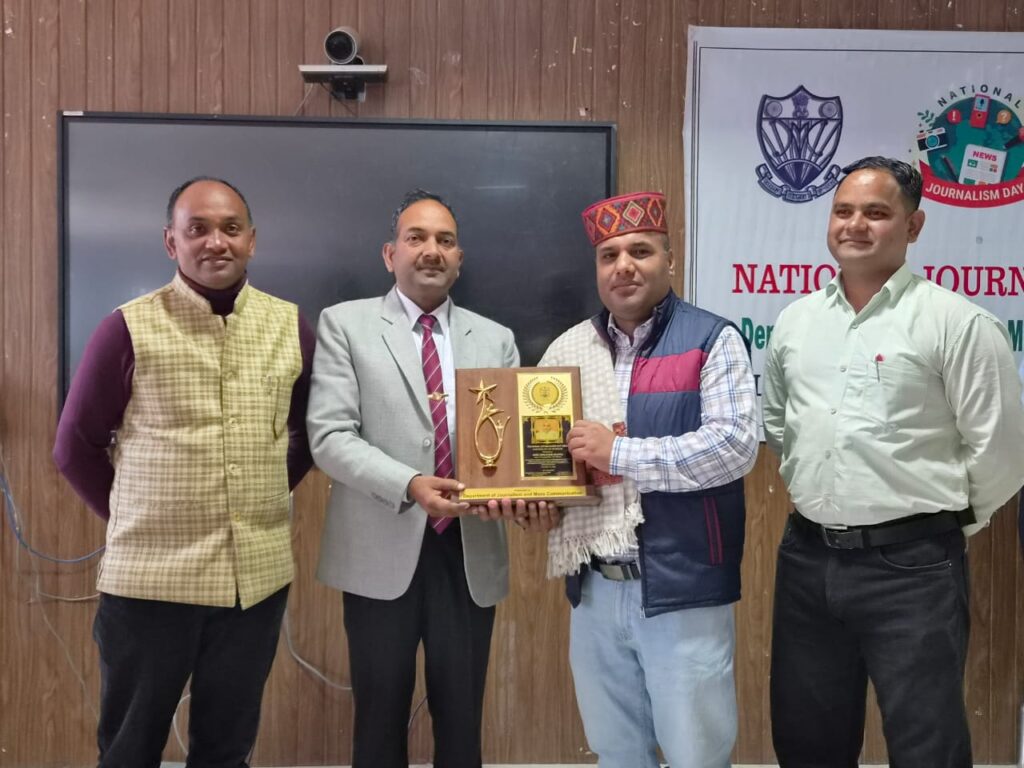
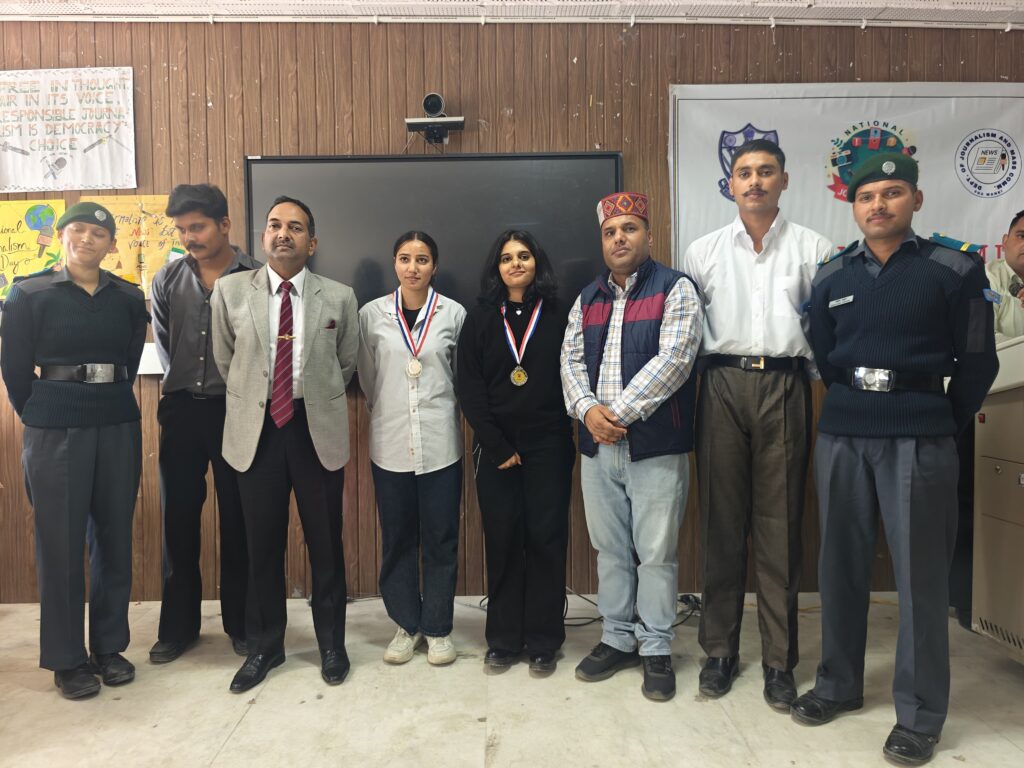
On the occasion, Guest of Honour and senior journalist Dipender Manta, along with Flying Officer Dr. Chaman Lal Kranti Singh, Head of the Department of Journalism and Mass Communication, distributed prizes and certificates to students and NCC cadets who demonstrated outstanding performances in the speech competition, poetry recitation, poster-making and cultural activities.
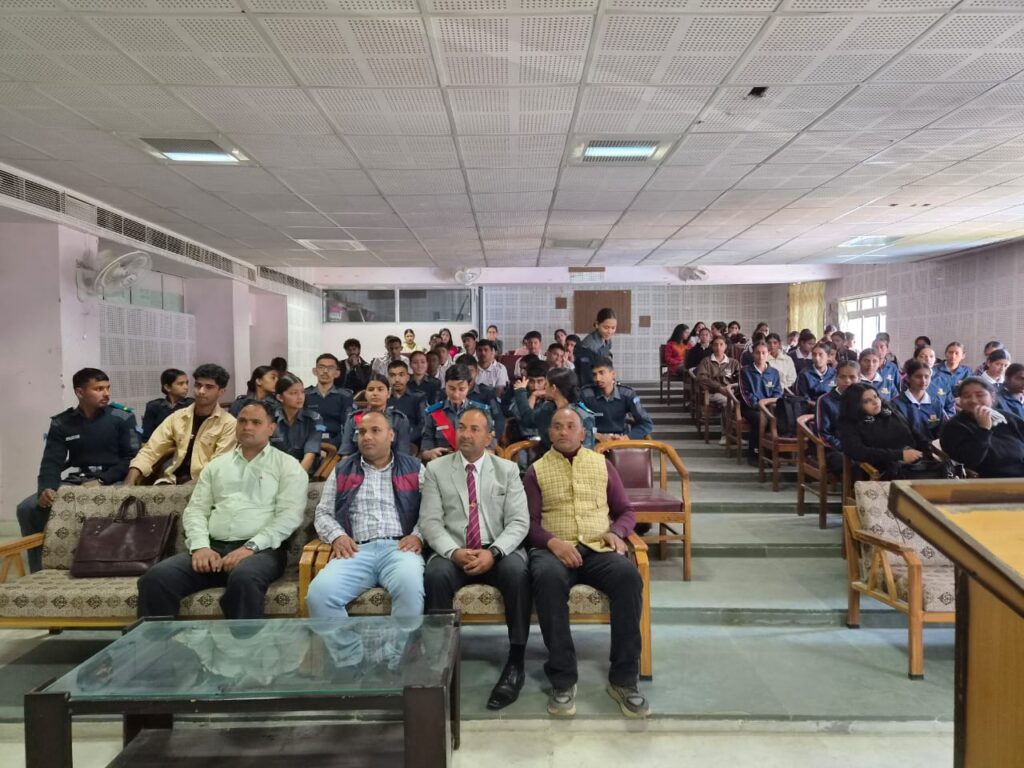
Assistant Professor Dr. Dayak Ram, Assistant Professor Sarita Kumari, Assistant Professor Yog Raj, media representatives, faculty members and students of the Department of Journalism and Mass Communication were present on the occasion.
The programme witnessed enthusiastic participation by hundreds of students from various departments of the college, along with cadets of the NCC Air Wing and NCC Army Wing.
At the conclusion of the programme, Flying Officer Dr. Chaman Lal Kranti Singh expressed his sincere gratitude to the Chief Guest, Guest of Honour, college administration, faculty members, media representatives, participating students and NCC cadets for their valuable presence, cooperation and contribution towards the successful organisation of the event.
The central message of the celebration was that no matter how advanced technology becomes, the soul of journalism must always remain rooted in truth, courage, impartiality and human sensitivity.