20th Central Monitoring Committee Meeting Reviews River Rejuvenation Progress Across 15 States; Emphasizes Urgency of Sustainable Water Management.
New Delhi:
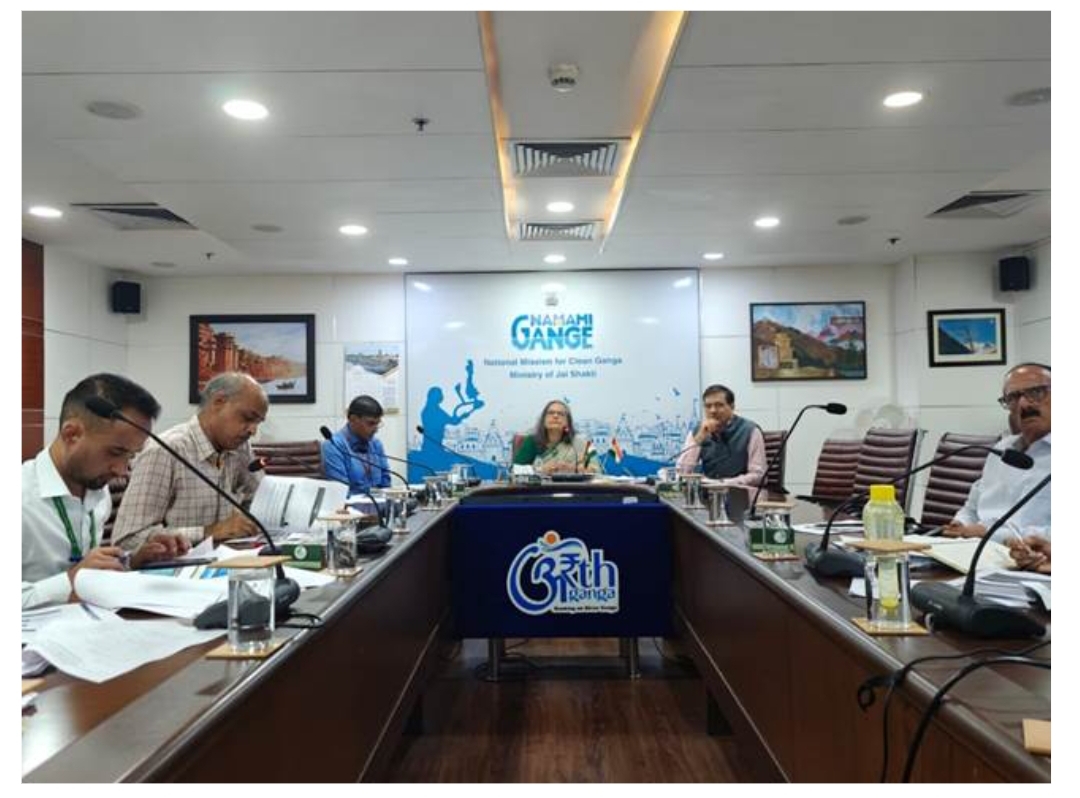
In a significant review session aimed at accelerating efforts to restore India’s rivers, the 20th Meeting (Part-II) of the Central Monitoring Committee (CMC) on river rejuvenation was convened today under the chairpersonship of Debashree Mukherjee, Secretary, Department of Water Resources, River Development & Ganga Rejuvenation (DoWR, RD & GR). The high-level meeting witnessed participation from senior officials including Rajeev Kumar Mital, Director General of the National Mission for Clean Ganga (NMCG), Karan Singh, Joint Secretary of the National River Conservation Directorate (NRCD), Executive Director of Namami Gange Mission, as well as representatives from State Governments and Pollution Control Boards of 15 states.
The meeting focused on reviewing the ongoing initiatives and challenges in river rejuvenation, with a sharp focus on actionable, sustainable solutions. Chairperson Debashree Mukherjee underscored that rejuvenating rivers is not merely an ecological imperative, but also a social and economic necessity. She highlighted key priorities including timely completion of sewage and solid waste management projects, enforcement of compliance in sewage treatment plants (STPs) and common effluent treatment plants (CETPs), demarcation of floodplain zones, and encouraging the reuse of treated wastewater.
Encouraging Trends and Notable State Achievements
The Committee noted a reduction in the number of polluted river stretches across several states between 2018 and 2022, indicating positive momentum. Sikkim stood out with no polluted river stretches as per the latest assessment by the Central Pollution Control Board (CPCB).
Assam and Punjab were commended for initiating crucial steps in demarcating floodplains and removing encroachments—key measures in preserving riverine ecosystems. Odisha’s initiatives in reusing treated wastewater, regulating groundwater, and managing floodwaters through stormwater diversion in Bhubaneswar’s Chandaka catchment area were appreciated.
Punjab also earned praise for its projects that focus on the utilization of treated wastewater and official notification of floodplain zones along the Satluj River. Maharashtra reported significant advances in mandating the reuse of treated sewage in infrastructure projects, reflecting a move towards large-scale circular water use.
In the Northeast, Meghalaya and Mizoram showed progress under the Swachh Bharat Mission 2.0, particularly in enhancing their solid waste management systems. Sikkim was lauded for its holistic approach to waste segregation, composting, and the implementation of zero liquid discharge (ZLD) by industries—a model for sustainable waste and water management.
Persistent Challenges and Way Forward
Despite encouraging developments, the Committee pointed out ongoing concerns such as shortfalls in sewage treatment capacity, non-compliance by several STPs, and delays in the implementation of industrial pollution control projects. The Chairperson called on states to strengthen local River Rejuvenation Committees and convene regular review meetings to ensure continuous monitoring and accountability.
The meeting concluded with a reaffirmation of the collective responsibility of all stakeholders to achieve the shared vision of a pollution-free, resilient, and ecologically balanced river ecosystem.