
PM Modi Inaugurates Bioethanol Plant, Lays Foundation for Polypropylene Unit in Assam’s Golaghat.
India strengthening self-reliance in energy and semiconductor sectors, says PM.
Golaghat, Assam:
Prime Minister Narendra Modi inaugurated a state-of-the-art Bioethanol Plant and laid the foundation stone for a Polypropylene Unit at Numaligarh Refinery Limited (NRL) in Golaghat, Assam. These major energy infrastructure projects aim to boost Assam’s industrial growth and support India’s march towards energy self-reliance and sustainability.
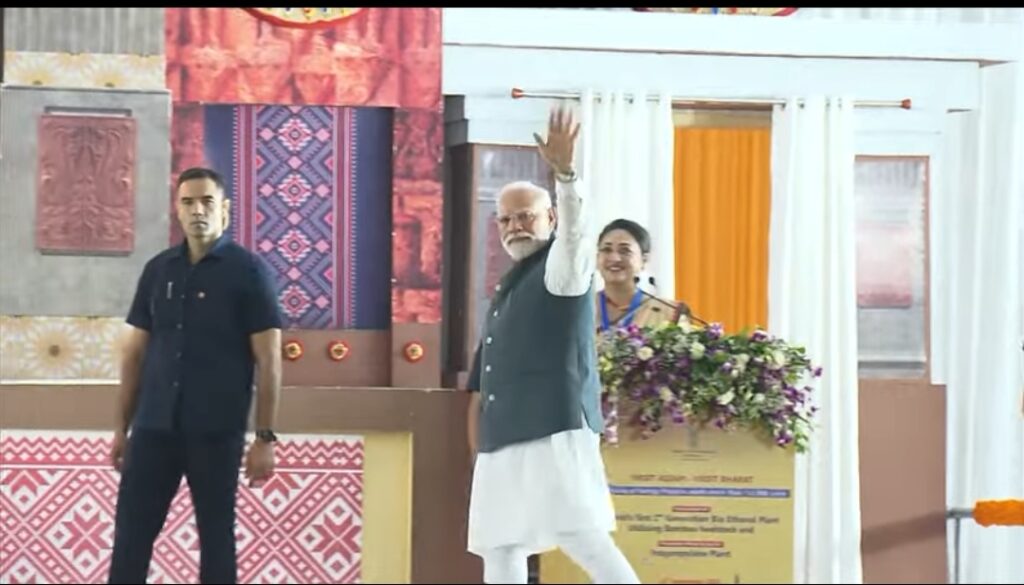
Addressing a large gathering on the occasion, the Prime Minister conveyed festive greetings for Sharodiya Durga Puja and paid tribute to the revered spiritual figure, Srimanta Sankardev. He emphasized Assam’s growing role in India’s development, both in traditional heritage and emerging technologies.
Energy Independence and Green Fuel Initiatives
The newly inaugurated Bioethanol Plant, which uses bamboo as raw material, is a significant step toward clean energy adoption. Highlighting the innovation, Modi noted that the use of bamboo will benefit tribal communities and farmers. The government has earmarked Rs. 200 crore annually for bamboo supply chains and related industries, with local farmers receiving direct procurement support. Small bamboo-chipping units will also be set up in the region.
Speaking about India’s energy needs, the Prime Minister said, “India is currently the fastest-growing major economy in the world. As our economy grows, the demand for electricity, gas, and fuel will only rise. We must reduce our dependency on foreign sources.” He outlined the country’s strategy of simultaneously tapping domestic oil reserves and investing in renewable energy.
He cited India’s current ranking among the top five global solar energy producers as an example of progress in green energy. The Numaligarh Bioethanol Plant represents this new direction, offering an alternative fuel that can reduce fossil fuel dependency.
Polypropylene Plant to Boost Manufacturing and Employment
Alongside the Bioethanol Plant, Modi laid the foundation stone for a Polypropylene Plant, essential for manufacturing everyday plastic products such as containers, ropes, textiles, and automotive components. He noted that the new facility will not only contribute to ‘Make in Assam’ and ‘Make in India’ but also create numerous employment opportunities.
“Polypropylene is the backbone of several industries, from packaging and textiles to automotive and healthcare. This plant will add strength to Assam’s industrial base,” Modi said.

He also drew attention to Assam’s traditional identity in textiles—Gamosa, Eri, and Muga silk—stating that with the addition of polypropylene-based fabrics, Assam’s textile sector would gain a modern dimension.
Assam’s Role in India’s Semiconductor Mission
Highlighting the importance of technological self-reliance, the Prime Minister underscored Assam’s pivotal role in the National Semiconductor Mission. A major semiconductor factory is under construction in Morigaon with an investment of Rs. 27,000 crore.
“Semiconductors are the foundation of every modern device—from smartphones and bank cards to satellites and cars. India’s future in manufacturing depends on our ability to produce our own chips,” he said.
He also referenced the legacy of Assam Tea, once obscure but now a global brand, as a testament to Assam’s potential in making India self-reliant.
Cultural Renaissance and Tourism Push
The Prime Minister spoke at length about the ongoing cultural revival and tourism development in Assam. Major projects such as the renovation of the historic Rang Ghar in Sivasagar and the transformation of Batadrava—birthplace of Srimanta Sankardev—into a world-class tourism site are underway. He also announced the development of the Maa Kamakhya Corridor, similar to the Kashi Vishwanath and Mahakal Mahalok corridors.
Modi emphasized that these initiatives would not only preserve Assam’s rich heritage but also boost tourism and generate employment for local youth.
Tackling Illegal Infiltration and Ensuring Land Rights
Raising the issue of illegal infiltration, Modi accused previous governments of encouraging encroachments for vote-bank politics. He stated that the current administration is actively reclaiming land and redistributing it to tribal families.

Under Mission Basundhara, lakhs of families have received land pattas. Communities like the Ahom, Koch Rajbongshi, and Gorkha have been granted protected status in certain tribal areas.
“Our commitment is to rectify historical injustices and empower the rightful stakeholders of this land,” Modi said.
Focus on Tea Garden Workers’ Welfare
Special emphasis was laid on welfare measures for tea garden workers. The government is investing heavily in healthcare, housing, and education for families working in Assam’s tea estates. Over 20 lakh houses have already been built for the poor in the state, and efforts to provide tap water to every household are progressing rapidly.
“Earlier, tea garden workers were at the mercy of company managements. Now, our government is ensuring they have access to basic amenities and opportunities,” Modi noted.
A Vision for a Developed Assam and Developed India
The Prime Minister concluded by affirming his government’s commitment to building a developed Assam as part of the broader vision of a Viksit Bharat (Developed India).
“A new era of development has begun in Assam. With strong infrastructure, a vibrant cultural identity, and growing industrial capacity, Assam is poised to become a major hub for trade, tourism, and technology,” he said.
The event was attended by Assam Chief Minister Himanta Biswa Sarma, Union Ministers Sarbananda Sonowal and Hardeep Singh Puri, among other dignitaries.
The Bioethanol Plant at Numaligarh Refinery Limited (NRL) is part of India’s larger push toward clean and renewable energy sources. The Polypropylene Plant is expected to add significant value to Assam’s petrochemical industry, generate employment, and contribute to the region’s socioeconomic development.