WHO Launches Upgraded EIOS 2.0 System to Strengthen Global Health Security Through AI and Open-Source Intelligence.
Berlin:
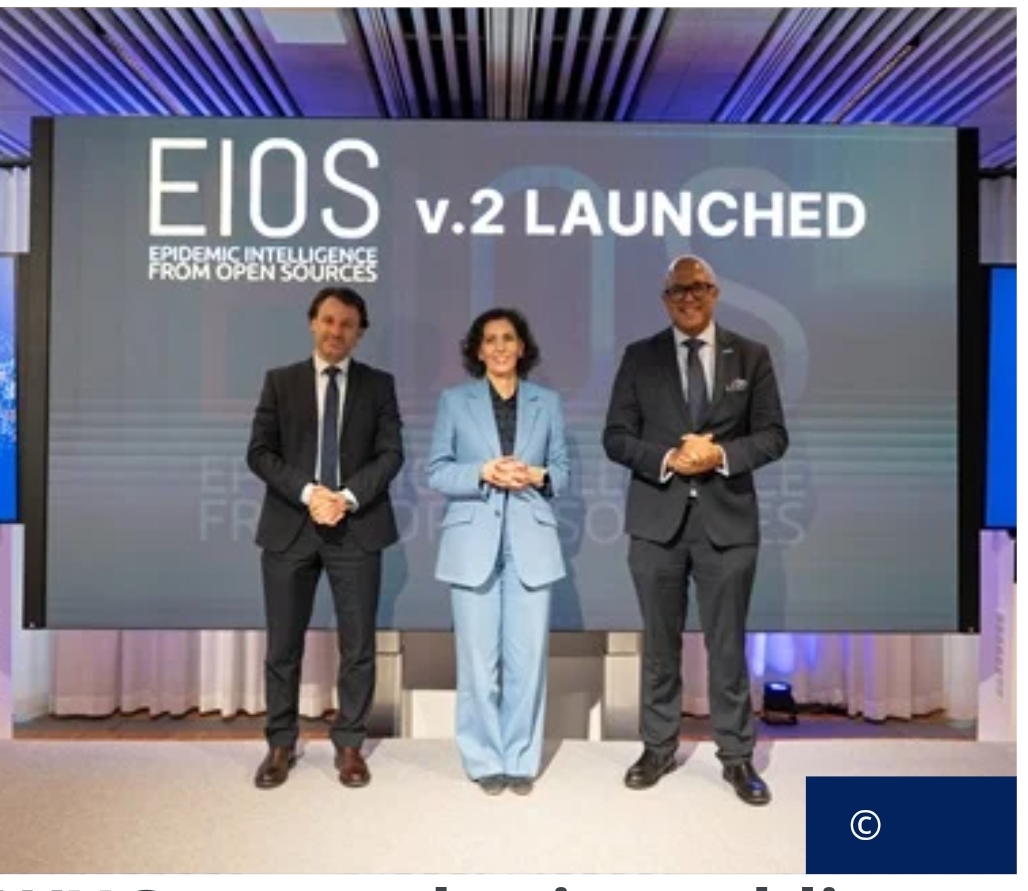
The World Health Organization (WHO), in collaboration with key international partners, today launched version 2.0 of its Epidemic Intelligence from Open Sources (EIOS) system — a powerful global tool designed to enhance early detection and response to public health threats.
Hosted at the WHO Hub for Pandemic and Epidemic Intelligence in Berlin, the upgraded EIOS platform marks a major step forward in global disease surveillance and preparedness. The system, first developed in 2017, has evolved into a vital early-warning network used by over 110 WHO Member States and around 30 organizations and networks worldwide.
A New Era for Global Health Intelligence
EIOS 2.0 introduces several groundbreaking improvements, including advanced artificial intelligence (AI) integration, expanded data sources, and enhanced multilingual accessibility. The update aims to help public health teams detect potential threats more efficiently, analyzing vast volumes of open-source data — such as news, social media posts, and public reports — in near real time.
“Today, we are not just celebrating the launch of a new version of a system; we are entering a new phase in how the world collaborates, innovates, and responds to health threats,” said Dr. Chikwe Ihekweazu, Executive Director of the WHO Health Emergencies Programme. “EIOS system version 2.0 is our bridge to the future: more open, more agile, and more inclusive.”
Recent global crises — including the COVID-19 pandemic, and outbreaks of mpox and avian influenza — have underscored the importance of early detection to prevent localized health events from escalating into international emergencies. With the upgraded platform, public health experts across the globe will be better equipped to monitor emerging risks linked to conflict, climate change, and new or re-emerging pathogens.
Key Features of EIOS 2.0
The upgraded system represents the most significant technological advancement since its inception. Key features include:
AI-powered signal detection: Integration of cutting-edge AI tools enhances the automated analysis of vast data sets, allowing faster identification of unusual health events.
Expanded data sources: EIOS 2.0 can now process diverse media, including radio broadcasts, which are automatically transcribed and translated.
Multilingual and user-friendly interface: The system’s interface can be easily translated into multiple languages, broadening accessibility for non-English-speaking users.
Collaborative dashboard: New dashboard features enable users from different countries and organizations to share insights and jointly monitor health events in real time.
Scalable design: The upgraded architecture allows the system to handle more users and data sources, facilitating continuous growth and innovation.
A Public Good for Global Health
WHO continues to offer the EIOS system free of charge to its Member States and eligible organizations, supporting them through training, online courses, and a global Community of Practice. Public health authorities use EIOS to complement formal reporting systems such as laboratories and hospital networks, helping identify unverified signals from open sources that may indicate emerging health threats.
The official launch in Berlin brought together WHO’s long-standing partners, including the German Government, the European Commission, the Joint Research Centre (JRC), and the Health Emergency Preparedness and Response Authority (HERA), as well as innovation collaborators and members of the global EIOS community.
Global Leaders Applaud the Upgrade
Germany’s Federal Minister of Health, Nina Warken, praised the development, stating:
“Better data – better analytics – better decisions. We are excited to launch EIOS 2.0 at the WHO Hub Berlin. This marks a milestone in accelerating the detection, analysis, and response to health threats. Reliable data and transparent political decision processes are key to building public trust in emergency situations.”
Hadja Lahbib, European Commissioner for Preparedness, Crisis Management and Equality, also emphasized the importance of international cooperation:
“In today’s health security landscape, collaboration is key for effective preparedness and response. Detecting public health threats early is essential to prevent new and emerging diseases from becoming endemic or escalating into a pandemic. The EU is proud to work closely with WHO to strengthen its public health intelligence system and enhance global readiness.”
Empowering Nations Through Training and Collaboration
To facilitate the global roll-out of EIOS 2.0, WHO has introduced a comprehensive capacity-building program. This includes updated guides, multilingual webinars, and virtual help clinics, along with an online training course developed in collaboration with the WHO Academy.
Building a Safer Future
With EIOS 2.0, WHO and its partners aim to redefine global public health intelligence — making early detection faster, collaboration smoother, and responses more coordinated. By harnessing the power of artificial intelligence and open data, WHO continues its mission to ensure that “no signal goes unseen and no threat goes undetected.”
Key Highlights:
WHO launches EIOS 2.0, the upgraded epidemic intelligence platform.
Incorporates AI tools and multilingual interface for real-time global collaboration.
Used by 110+ countries and 30 global organizations.
Developed in partnership with Germany, the EU, JRC, and HERA.
Supports early detection of emerging health threats related to conflict, climate, and pathogens.
Offered as a free public good to all WHO Member States.