Gaza Ceasefire Brings Fragile Hope for Children, Says UNICEF: It Must Deliver More Than Calm — It Must Deliver Action.
UNICEF Urges Full Humanitarian Access and Protection of Children as Recovery Efforts Begin in the Gaza Strip.
Amman:
The United Nations Children’s Fund (UNICEF) has called on all parties to seize the opportunity presented by Gaza’s ongoing ceasefire to prioritize the survival, protection, and recovery of children who have endured years of conflict and unimaginable suffering.
In a statement issued today, Edouard Beigbeder, UNICEF’s Regional Director for the Middle East and North Africa, emphasized that the ceasefire represents a “vital chance for the survival, safety and dignity of children” — but warned that the truce must go beyond silence of guns and translate into concrete action.
“The ceasefire must hold, and it must deliver more than calm — it must deliver action,” Beigbeder said following his recent visit to the Gaza Strip.
Unimaginable Suffering for Gaza’s Children
According to UNICEF, the scale of devastation caused by Israeli military operations in Gaza is beyond measure. The agency reports that more than 64,000 children have been killed or injured and over 58,000 have lost a parent since the start of the conflict. Entire cities have been reduced to rubble, and critical infrastructure — including hospitals, schools, and water systems — has been destroyed.
“Words and numbers alone cannot convey the scale of the impact on children that I saw — an impact that will last for generations,” Beigbeder said.
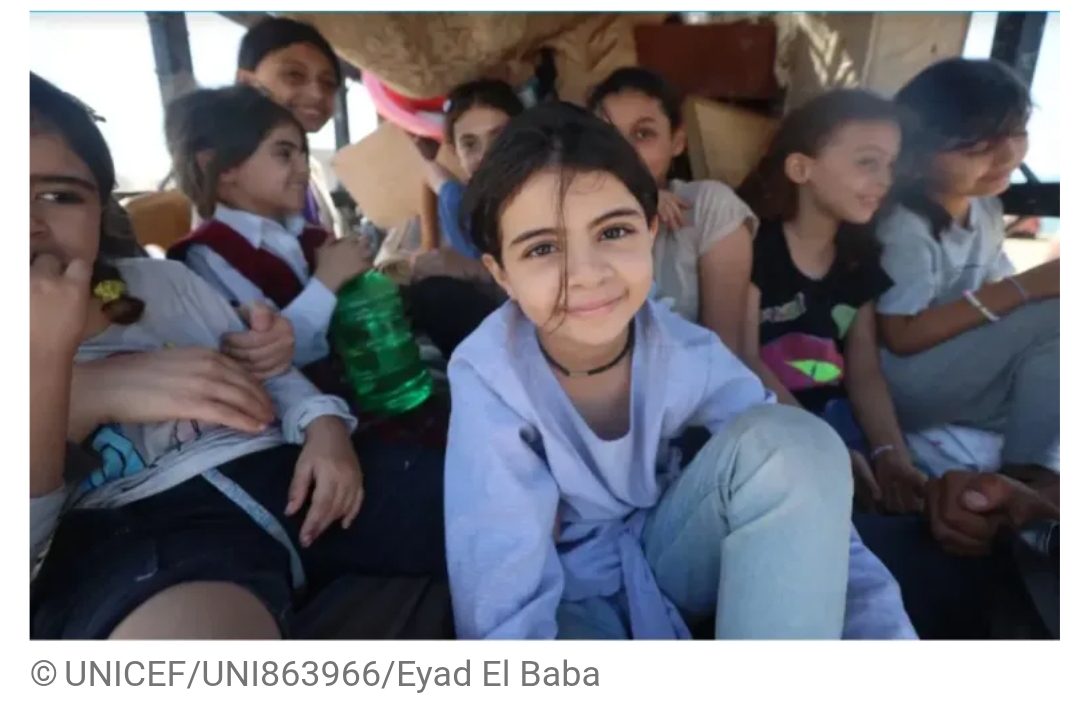
Over one million children have endured what UNICEF describes as “the daily horrors of surviving in the world’s most dangerous place to be a child.” The ongoing crisis has left deep emotional and psychological scars marked by fear, grief, and loss.
UNICEF’s Emergency Scale-Up and Early Recovery Efforts
Following the ceasefire, UNICEF has rapidly expanded its humanitarian operations across Gaza. Teams are racing to prevent further child deaths from malnutrition, disease, and exposure to winter cold.
Key priorities include:
Expanding nutrition treatment to combat rising cases of severe acute malnutrition.
Delivering clean water to displaced families and shelters.
Providing essential winter supplies such as blankets, warm clothing, and temporary shelter materials.
During his visit, Beigbeder met 8-month-old Hoor, a malnourished child now recovering through UNICEF’s therapeutic feeding program. Her family, supported through UNICEF’s cash assistance, can now afford food in local markets.

In addition to emergency relief, UNICEF is helping local partners rebuild essential services, including health facilities, immunization programs, water networks, and energy supplies. The organization is also training community workers, supporting cash-for-work programmes for youth, and prioritizing education as a cornerstone of recovery.
Restoring Education — The Foundation of Hope
Education remains one of UNICEF’s top priorities in Gaza’s recovery phase. During the conflict, the agency managed to bring over 100,000 children back to face-to-face learning, despite ongoing hostilities. The goal now, in collaboration with education partners, is to return all 650,000 school-age children to classrooms.
UNICEF is assembling semi-permanent classrooms and repairing damaged school buildings while planning to rebuild inclusive education centers offering not just learning spaces, but also safe drinking water, mental health support, and child protection services.
“After two lost years, families know that a return to proper education will provide a foundation for learning, healing, and long-term social cohesion,” Beigbeder said.
Call for Safe and Unimpeded Humanitarian Access
While the volume of humanitarian aid entering Gaza has increased since the ceasefire, UNICEF warns it remains far from sufficient. The agency is calling on Israeli authorities to facilitate the safe, rapid, and unimpeded movement of aid by:
1. Opening all crossings into Gaza with faster clearance procedures.
2. Allowing relief supplies through all feasible routes, including via Egypt, Israel, Jordan, and the West Bank.
3. Permitting the entry of a wider range of aid items, especially those long restricted — such as education kits and mental health and psychosocial support materials, which have been blocked for over a year.
Protecting Children and Upholding International Law
UNICEF reiterated its demand for all parties to fully respect international humanitarian law and the terms of the ceasefire. The agency insists that:
Children and civilians must be protected at all times.
Displaced families must be allowed to return home safely and voluntarily when conditions permit.
Humanitarian actors must have sustained and safe access to all affected areas.
Children needing specialized medical care not available in Gaza must be urgently evacuated with their caregivers.
A Fragile Hope for the Future
Beigbeder concluded his statement with a message of cautious optimism, noting that “a fragile hope is returning to Gaza as critical recovery work begins.”
“The world cannot allow this ceasefire to fail,” he said. “It will take time, but an inclusive future that prioritizes the rights of Gaza’s one million children is possible — with peace, action, and collective will.”
Background:
UNICEF has been on the ground in Gaza throughout the conflict, working to protect and support children through emergency health care, nutrition, water and sanitation, and education services. The agency continues to urge the international community to scale up funding and political support to secure a lasting peace and rebuild Gaza’s shattered childhoods.