Himachal CM Demands Release of State’s 7.19% Share in Chandigarh at Northern Zonal Council Meet.
Faridabad, Haryana:
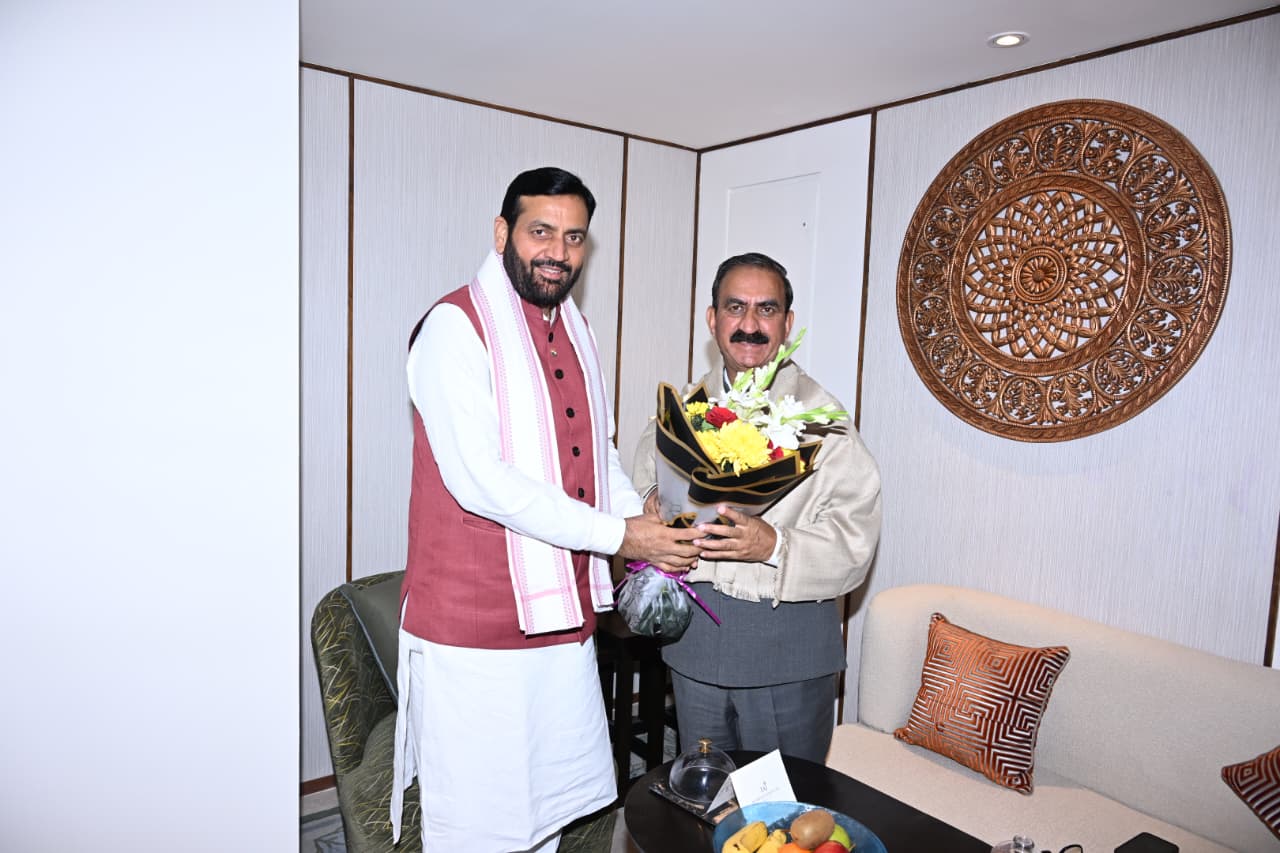
In a forceful intervention at the 32nd meeting of the Northern Zonal Council (NZCC) today, Himachal Pradesh Chief Minister Sukhvinder Singh Sukhu asserted the State’s rightful claim to a 7.19 percent share in Chandigarh’s land and assets, as mandated under the Punjab Reorganisation Act, 1966. Citing the 2011 Supreme Court judgment, he emphasized that Himachal Pradesh is legally entitled to a corresponding 7.19 percent share in the resources of the erstwhile composite Punjab, including power generated through the Bhakra Beas Management Board (BBMB).
The meeting was chaired by Union Home and Cooperation Minister Amit Shah and attended by Chief Ministers, Lieutenant Governors and senior officials of member States and UTs.
Push for Permanent Member in BBMB & Release of Pending Dues
Reiterating Himachal’s long-standing demands, CM Sukhu pressed for:
Inclusion of one permanent member from Himachal Pradesh in the BBMB,
Immediate release of pending dues owed to the State as per the Supreme Court’s directives,
Implementation of the policy granting 12% free power royalty in centrally operated hydro projects, and
Enhancement of free power royalty to 50% in projects where the Centre has already recovered costs.
He further sought the handover of hydropower projects situated in Himachal that have completed 40 years of operation.
Call for Reforms in Disaster Relief Frameworks
Highlighting the increasing vulnerability of hill states to climate-driven calamities, Sukhu urged the Centre to review and revise disaster relief rules, covering both pre- and post-disaster management norms. He stressed the necessity of a unified, sustainable development framework for northern India, noting repeated losses of life and property due to extreme weather events.
Demand for Stronger Air Connectivity & Tourism Push
Emphasizing Himachal Pradesh’s strategic geography and tourism potential, the Chief Minister sought:
Central support for expansion of Kangra Airport with international-level facilities,
Full Central funding for land acquisition and infrastructure,
A separate master plan for small airports and heliports across the State.
He proposed setting up a high-altitude research centre, ice hockey stadium, and adventure sports facilities in border regions. Sukhu also urged the Centre to initiate the National Buddhist Institute project in Spiti and reiterated the demand to start the Kailash Mansarovar Yatra from Shipki-La.
Border Issues, Narcotics Control & POCSO Compliance
The Chief Minister called for speedy resolution of Himachal–Ladakh boundary issues in Sarchu and Shinkula. He requested the upgradation of the regional office of the Ministry of Environment, Forest and Climate Change in Shimla and sought relaxed norms permitting up to one bigha of forest land for housing of disaster-affected families.
On the internal security front, Sukhu highlighted Himachal’s multi-pronged fight against narcotics, including a three-month statewide awareness campaign against synthetic drugs like Chitta, strict enforcement measures, and rehabilitation initiatives. He reaffirmed the State’s zero-tolerance approach to crimes under the POCSO Act.
Appeal for Pending Central Funds & Revenue Compensation
Despite financial challenges, Himachal has released a special relief package for disaster-hit families. However, Sukhu noted that the State is still awaiting:
Nearly Rs. 10,000 crore under the Post-Disaster Needs Assessment (PDNA), and
The Rs. 1,500 crore package announced by the Prime Minister.
He sought the creation of a special task force to compensate the State for the Rs. 9,478 crore revenue deficit for the period up to 2023–24, following the expiry of the GST compensation regime.
Commitment to Environmental Stewardship
Sukhu underscored the ecological significance of the Himalayas, stressing that Himachal is crucial for water security and environmental conservation in North India. The State Government, he said, is pursuing multiple initiatives to make Himachal a “Green State.”
The meeting concluded with broad discussions among participating States and Union Territories on regional cooperation, infrastructure development, and inter-state coordination.