Security Council Urges Action as Libya’s Elections Remain Uncertain amid Political Deadlock and Foreign Interference.
United Nations:
With Libya’s long-delayed elections hanging in the balance, speakers in the United Nations Security Council called for urgent progress on the country’s political road map and an end to foreign interference, warning that continued delays threaten Libya’s stability and the wider region.
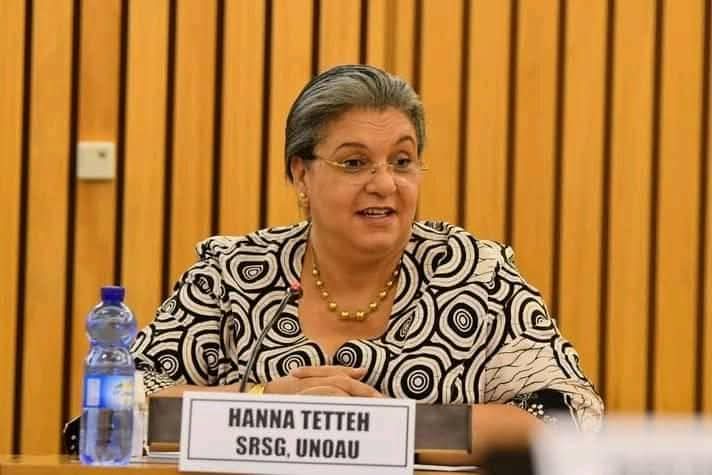
Briefing the Council, Hanna Serwaa Tetteh, Special Representative of the UN Secretary-General for Libya and Head of the United Nations Support Mission in Libya (UNSMIL), said that implementation of the political road map she presented in August has proved “quite challenging”, but stressed that the obstacles can still be overcome.
She noted that while the House of Representatives and the High Council of State had agreed to reconstitute the High National Election Commission, this step has not yet been implemented despite repeated engagements. Another key milestone — amending the constitutional and legal framework for elections — also remains unfulfilled, even as public calls and demonstrations demanding presidential elections have taken place in several cities.
“The political process should not be held hostage by the inaction of key political stakeholders,” she said, adding that if progress is not achieved on the first two milestones, she would be prepared to seek alternative mechanisms with the support of the Security Council.
Tetteh highlighted recent efforts to broaden political engagement, including the launch of a “structured dialogue” in Tripoli earlier this month, with plans to hold similar meetings across the country. She said women made up 35 per cent of participants, alongside youth and persons with disabilities. She also welcomed the successful municipal council elections held on 18 October in 16 municipalities, which saw a voter turnout of 68 per cent, calling them an important step towards restoring the legitimacy of local governance.
On the economic front, she warned that Libya’s persistent financial fragmentation continues to weaken the national currency. However, she welcomed the 18 November agreement between representatives of the House of Representatives and the High Council of State on a common framework for development spending, saying that if implemented transparently, it could help address core economic challenges. While security conditions in Tripoli have stabilized somewhat, she cautioned that the situation remains fragile, with sporadic armed clashes reported in southern Tripoli and other areas.
Sanctions and frozen assets under scrutiny
The Security Council also heard a briefing from the Chair of the Committee established under resolution 1970 (2011) concerning Libya, who outlined the Committee’s work from August to December 2025. He reported that the Committee had received two reports on vessel inspections under the arms embargo and approved a humanitarian exemption to the travel ban for one individual, while rejecting a delisting request submitted by Libya.
On asset-freeze matters, he said no negative decisions were taken on 14 notifications related to the Libyan Investment Authority, and that additional requests remain under consideration. The Committee is also preparing guidance for Member States on the reinvestment of frozen Libyan cash reserves.
Libya warns of cost of global power rivalries
Speaking at the end of the meeting, Libya’s representative said his country has become a battlefield for settling international scores, warning that Libyans are “paying the price for the differences among global powers”. He urged Council members to act more seriously on delisting Libyan citizens from sanctions lists, noting that some individuals have remained listed for more than 15 years.
Recalling that Libya’s Independence Day on 24 December was originally meant to coincide with national elections in 2021, he cautioned against accumulating road maps without implementation. Libya, he said, must be allowed to decide its own future without external guardianship or interference.
While acknowledging the need to reconstitute the High National Election Commission, he also called for alternative solutions if delays continue, pointing to the successful municipal elections as proof that Libya is capable of holding nationwide polls. He added that the government has launched a security campaign against illegal armed groups and urged international support for Libya’s unified development programme.
Calls for withdrawal of foreign forces
Several Council members raised alarm over continued foreign interference and the flow of arms into Libya. The representative of Algeria, speaking also for Guyana, Sierra Leone and Somalia, demanded the immediate withdrawal of all foreign forces, fighters and mercenaries, warning that illicit arms trafficking fuels instability not only in Libya but also in Sudan and the Sahel.
Many speakers also expressed concern over the erosion of Libya’s frozen overseas assets due to mismanagement by financial institutions. Russia and China stressed that these assets belong to the Libyan people and must be protected, calling for urgent steps to allow their reinvestment. Greece, as vice-chair of the relevant sanctions committee, said it is responding to Libya’s request for an implementation assistance notice to facilitate reinvestment, while reaffirming the importance of sanctions as a policy tool.
Support for inclusive political process
Council members broadly urged Libyan political actors to engage constructively with UNSMIL’s road map. Slovenia, speaking as Council President for December, said delays in laying the groundwork for national elections are deeply regrettable, warning that attempts to stall the process would be unacceptable.
Pakistan reiterated that a Libyan-led and Libyan-owned political process is the only viable path to lasting peace, while the United Kingdom and Denmark stressed the importance of women’s participation and the need to ensure safe civic and online spaces for women amid intimidation and smear campaigns.
France and the Republic of Korea welcomed the peaceful conduct of recent municipal elections but cautioned that the risk of renewed confrontation remains high. The United States welcomed Libya’s agreement on a unified development budget, expressing hope that it would benefit people across all regions.
As discussions concluded, Council members underscored that Libya’s stability is critical not only for its people but also for regional and international security, urging renewed political will to turn commitments into concrete action.