BRO Reopens Kunzum Pass Route After Six-Month Winter Closure, Reviving Spiti Valley Tourism.
Kaza/Manali:
In a significant development for the remote tribal district of Lahaul and Spiti, the Border Roads Organisation (BRO) has reopened the strategic Sumdo–Kaza–Gramphu highway via Kunzum Pass for the movement of 4×4 vehicles after remaining shut for more than six months due to heavy snowfall.
The reopening reconnects Spiti Valley with Manali and Lahaul Valley through the Atal Tunnel route, bringing major relief to local residents, transporters and tourism stakeholders ahead of the peak summer tourist season.
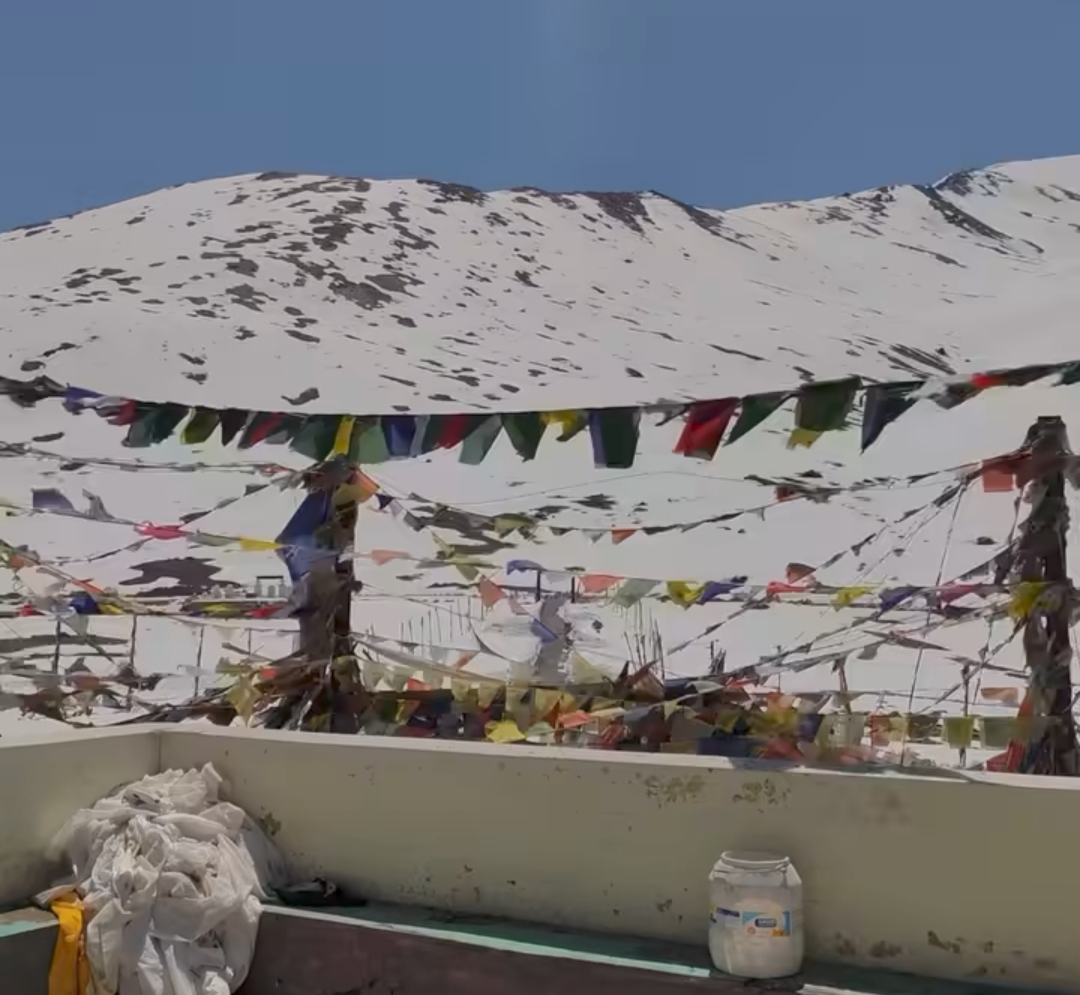
The highway had been closed since early November following intense snowfall at Kunzum Pass, situated at an altitude of nearly 14,931 feet above sea level. Heavy snow accumulation throughout winter had severed direct road connectivity between Spiti and Manali, forcing commuters and residents to travel via the much longer and difficult Kinnaur-Shimla route to reach Kaza.
Deputy Commissioner Kiran Badhana confirmed that the road has now been opened for light motor vehicles after extensive snow-clearing operations and safety inspections conducted jointly by the BRO and district administration.
She said the administration has currently permitted only 4×4 and light vehicles to use the route as restoration work is still underway at several vulnerable stretches.
“After detailed inspections, the road has been opened for light vehicles. Some sections remain slippery during early morning and evening hours because of melting snow, and repair work is continuing,” she said, urging travellers to drive cautiously while crossing the high-altitude pass.
Officials added that heavy vehicles will be allowed only after complete restoration and stabilization of the roadway.
The reopening of the Manali–Kaza route is expected to provide a major boost to tourism in Spiti Valley, often referred to as “Little Ladakh” due to its stark cold desert landscape, ancient Buddhist monasteries and high-altitude villages.
Every summer, thousands of tourists from across India and abroad travel to Spiti between June and October to experience its unique geography, adventure routes and cultural heritage.
Local tourism stakeholder Sonam Targey said visitors can now once again access some of the valley’s most iconic destinations, including the historic Key Monastery, the scenic Chandratal Lake and the high-altitude villages of Hikkim, Komic and Langza.
Hikkim is globally known for housing one of the world’s highest post offices, while Komic is regarded as among the highest motorable villages in the world. Langza remains popular for its giant Buddha statue and fossil-rich mountainsides overlooking the Spiti landscape.
Adventure tourism and wildlife tourism are also expected to gain momentum with the reopening of access to Pin Valley National Park, home to rare Himalayan wildlife species including the snow leopard and Himalayan ibex.
Ancient Buddhist heritage sites such as Tabo Monastery and Dhankar Monastery are also likely to witness an increase in tourist footfall during the coming months.
For local residents, the reopening of the Kunzum Pass route carries significance beyond tourism. During the winter months, the closure of the highway had severely impacted emergency movement and access to healthcare services.
Tourism stakeholder Tanzin Takpa said patients and emergency cases were often forced to depend on helicopter services or undertake the long and difficult route via Kinnaur to reach hospitals in Shimla.
“With the reopening through Atal Tunnel, the distance between Kaza and Manali reduces to around 225 kilometres, significantly cutting travel time and improving connectivity for residents as well as tourists,” he said.
Locals have expressed gratitude to the BRO, district administration and Anuradha Rana for their efforts in restoring the road connectivity ahead of the tourism season.
The reopening of the strategically important highway is expected to revive economic activity across the tribal district, support local businesses dependent on tourism and restore normal movement after a prolonged and harsh Himalayan winter.