PM Modi Launches Development Projects Worth Over Rs 4,700 Crore in Chandigarh, Focuses on Healthcare, Education and Connectivity
Chandigarh:
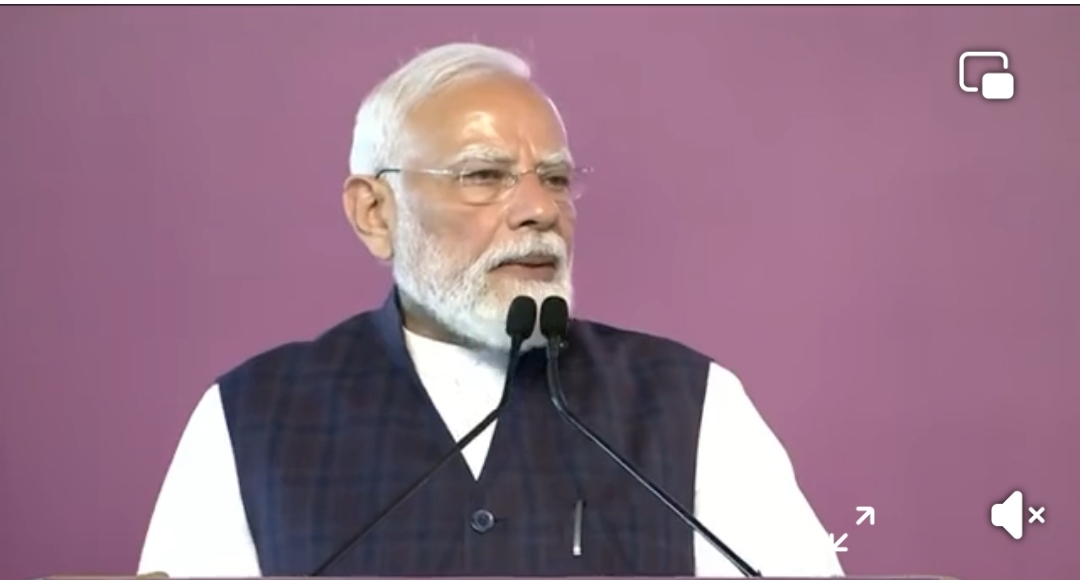
Prime Minister Narendra Modi on Friday laid the foundation stone and dedicated to the nation development projects worth over Rs. 4,700 crore in Chandigarh, covering key sectors such as healthcare, education and road infrastructure. Addressing a public gathering, the Prime Minister said the projects would significantly improve the quality of life in Chandigarh while strengthening healthcare services, educational infrastructure and regional connectivity for people across northern India.
Describing Chandigarh as a model city for planned urban development and ease of living, Modi said the government remains committed to the city’s continuous growth and modernization. He noted that more than Rs. 2,500 crore has already been invested in initiatives such as the Integrated Command and Control Centre, Smart Traffic Management System and Digital Governance to transform Chandigarh into a high-tech city.
Major Boost to Healthcare Infrastructure
The Prime Minister announced several major healthcare projects aimed at strengthening the city’s position as a regional medical hub.
The projects include:
Neuroscience Centre
Mother and Child Centre
Critical Care Hospital Block
He said these facilities would provide advanced treatment to millions of people from Chandigarh as well as neighbouring states, including Punjab, Haryana, Himachal Pradesh and Jammu and Kashmir.
Recalling his visit to the Postgraduate Institute of Medical Education and Research (PGIMER) in 2015, Modi praised the institution for significantly expanding its medical capabilities over the past decade and appreciated the contribution of its doctors, professors and researchers.
Healthcare Becoming a Right
Highlighting the government’s healthcare reforms over the past twelve years, the Prime Minister said India has transformed from a country once perceived as lacking medical infrastructure into a global destination for advanced healthcare.
Referring to the COVID-19 pandemic, he said India did not seek international assistance during the crisis but instead supplied medicines and vaccines to several countries across the world.
“When the COVID-19 pandemic struck, India was not a nation seeking help; it was a nation extending help to the world,” he said.
The Prime Minister stressed that healthcare in India is no longer a privilege but is gradually becoming a right through major investments in public health infrastructure.
He highlighted that since 2014, the government has approved 15 new AIIMS, established hundreds of new medical colleges and expanded speciality hospitals across the country.
He also recalled inaugurating the Homi Bhabha Cancer Hospital in Chandigarh in 2022, saying it is now providing advanced cancer treatment to thousands of patients.
Strengthening Primary Healthcare
The Prime Minister highlighted the expansion of the Ayushman Bharat Health Infrastructure Mission, under which Critical Care Blocks and Public Health Laboratories are being established across the country.
He said nearly 1.75 lakh Ayushman Arogya Mandirs are now providing primary healthcare services in rural, urban and tribal areas.
Speaking about digital healthcare, Modi said the e-Sanjeevani telemedicine platform has enabled over 48 crore online medical consultations, allowing patients in remote areas to access specialist doctors without travelling long distances.
He also referred to initiatives such as Poshan Abhiyan, Mission Indradhanush, yoga promotion, HPV vaccination and the U-WIN platform as important measures for preventive healthcare.
Highlighting India’s progress in maternal and child health, he said over 90 percent of institutional deliveries now take place in hospitals, contributing to a significant reduction in maternal and infant mortality rates.
The Prime Minister also cited the World Health Organization’s findings that tuberculosis infections in India have declined by 21 percent over the past decade while treatment coverage has crossed 90 percent under the TB Mukt Bharat Abhiyan.
Medical Education Expansion
Modi said the government has nearly doubled the number of medical colleges across the country and substantially increased undergraduate and postgraduate medical seats.
He also announced the approval of a new MBBS college at PGIMER, saying it would provide more opportunities for aspiring doctors while strengthening India’s healthcare workforce.
Education and Research
The Prime Minister inaugurated the Kurukshetra Boys Hostel at Punjab Engineering College and laid the foundation stone for new accommodation facilities for research scholars.
He said Chandigarh has the potential to emerge as a leading hub for higher education, research, startups and technological innovation.
Modi stressed the need for stronger research ecosystems to drive advancements in fields such as Artificial Intelligence, semiconductors and deep technology.
Road Infrastructure Projects
To improve urban mobility and regional connectivity, the Prime Minister inaugurated a six-lane greenfield highway connecting IT City with Kurali, which is expected to ease congestion on airport roads.
He also laid the foundation stone for the PR Seven Spur Road Project, aimed at improving traffic movement and supporting industrial and commercial growth in the region.
The Prime Minister said robust infrastructure remains the foundation of economic development and employment generation.
Chandigarh’s Strategic Importance
Modi described Chandigarh as an important link connecting Punjab and Haryana while serving as a major healthcare and educational centre for the wider northern region.
He noted that improvements in Chandigarh’s infrastructure would directly benefit residents of neighbouring states by providing better access to medical care, education and transport facilities.
Swachh Bharat and Civic Responsibility
The Prime Minister reiterated the importance of cleanliness as a permanent habit rather than a one-day campaign.
“Cleanliness is not a one-day activity; it is a way of life,” he said.
He appreciated the city’s efforts to improve sanitation under the Swachh Bharat Mission and praised retired IPS officer Inderjit Singh Sidhu, popularly known as the “Broom Warrior,” for leading grassroots cleanliness campaigns. Modi noted that Sidhu was honoured with a Padma Award this year for his contribution to promoting public hygiene.
He also welcomed the “Swachhta Se Swagat” initiative organised during his visit and said public participation remains essential for disease prevention and healthier communities.
Justice Reforms
Referring to legal reforms, the Prime Minister said Chandigarh played a historic role in implementing the Bharatiya Nyaya Sanhita, marking the transition from colonial-era criminal laws to a modern justice-oriented legal framework.
Regional Development
The Prime Minister said his visit to Chandigarh formed part of a broader development tour covering Haryana and Punjab. He referred to the launch of India’s first hydrogen-powered train between Jind and Sonipat earlier in the day and railway projects in Jalandhar, describing them as significant milestones in the country’s transition towards sustainable transport.
Vision for Viksit Bharat
Concluding his address, Modi said India must continue investing in modern healthcare, world-class education, advanced research and future-ready infrastructure to build a developed nation.
He expressed confidence that the newly launched projects would accelerate Chandigarh’s development while benefiting millions of people across Punjab, Haryana, Himachal Pradesh and Jammu and Kashmir, contributing to the vision of a Viksit Bharat.