PM Modi Urges Policy Consistency as India’s Space Startups Set Sights on Global Leadership.
New Delhi:
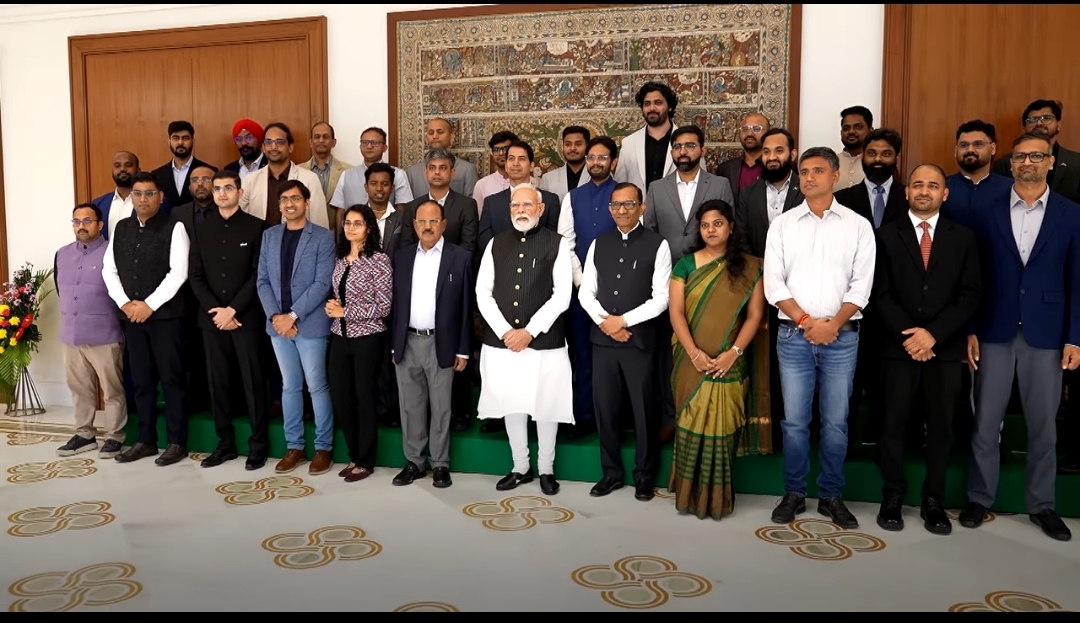
Prime Minister Narendra Modi on Sunday interacted with chief executive officers of Indian space startups, highlighting the sector’s rapid growth and calling for predictable policies, stronger investor confidence and an ecosystem capable of attracting global space talent to India.
During the interaction, Modi said India should create an environment that encourages entrepreneurs to take risks and gives investors confidence that government policies will remain stable. He stressed that policy consistency would be critical as private companies venture into an increasingly competitive global space market.
“Whatever decisions we take, we should remain consistent with them and should not keep changing them repeatedly,” Modi said, underlining the importance of trust between the government and entrepreneurs.
The interaction came against the backdrop of growing private participation in India’s space sector. A CEO of Skyroot Aerospace described the company as India’s first space-tech unicorn and highlighted its July 18 launch of a private rocket that successfully deployed satellites. The company said the launch was only the beginning of its ambitions and outlined plans to increase its launch frequency significantly.
According to the CEO, Skyroot has established three factories and developed the capacity to manufacture one rocket a month. The company aims to scale this further to one launch a week and eventually undertake multiple launches a day. The CEO credited the opening up of the space sector with creating opportunities for private companies to invest and expand.
Modi also sought feedback from startup founders on investor sentiment following the successful launch. One entrepreneur said investor confidence had increased substantially, while another said the company had secured eight launch contracts within a month of its launch, most of them from international customers.
Highlighting the potential global impact of India’s emerging private space industry, Modi said successful breakthroughs would draw international attention to Indian startups and technologies.
“The world must now be looking for Indian startups,” he said, stressing that India should build an ecosystem that makes the country an attractive destination for space innovation and investment.
The Prime Minister also emphasised the opportunity to make India a global hub for space talent. During the interaction, a startup founder noted that Indians working in the US and Europe were increasingly interested in returning to the country following the opening up of the space sector.
Modi said India should create an environment where people from around the world would want to build their careers in the country’s space industry. He described the potential to attract global talent as a major strategic advantage.
The startups participating in the interaction presented a wide range of ambitious technologies. These included plans for a global ground-station network, robotic spacecraft capable of capturing and removing defunct satellites from orbit, and docking and refuelling systems aimed at establishing fuel stations in space.
Another venture is working on satellites capable of manufacturing pharmaceutical products in space and returning them to Earth. An entrepreneur associated with the venture described it as India’s first space-pharma startup.
The Prime Minister also heard about satellite propulsion technologies designed to extend the operational life of satellites and enable them to move between different orbital positions. Startup representatives said Indian space technologies were receiving growing interest from international markets and highlighted government support for exports.
Another company outlined plans to deploy its innovation for the benefit of 10 lakh farmers, reflecting the potential for space technology to have a direct impact on agriculture and other sectors.
Concluding the interaction, Modi underlined India’s advantages in cost competitiveness, technological talent and entrepreneurial risk-taking.
He said India’s relatively low costs, strong pool of skilled professionals and willingness among entrepreneurs to take risks could allow the country to establish itself rapidly in the global space industry.
Modi called for creating an “aura” around India that would encourage people across the world to look towards the country to build their future in the space sector.
The interaction underscored the government’s broader push to expand private participation in space, strengthen domestic capabilities and position India as a major global destination for space technology, investment and talent.