
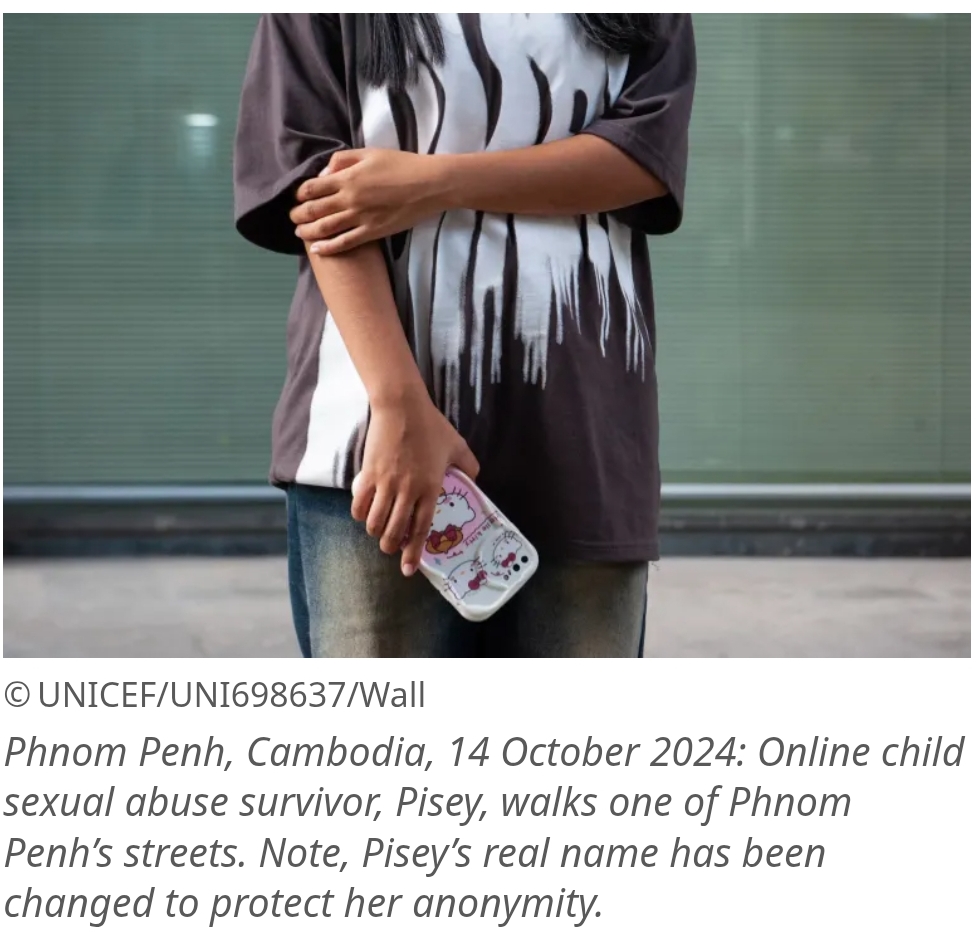
Nearly 1 in 5 Children Across 21 Countries Experienced Technology-Facilitated Sexual Abuse: UNICEF.
NEW YORK:
Nearly one in five children aged 12 to 17 across 21 countries experienced at least one form of technology-facilitated sexual exploitation or abuse in a single year, according to a new report released by UNICEF, highlighting the growing risks children face in an increasingly digital world.
The report, titled “Through Children’s Eyes: How Digital Technologies Enable Child Sexual Abuse,” estimates that approximately 20 million children were subjected to technology-facilitated sexual exploitation and abuse during the period studied.
UNICEF said the findings combine children’s testimonies with one of the largest available bodies of survey data on the issue. The report warns that technology is increasingly being used to facilitate sexual abuse and exploitation, both online and offline, while the true scale of the problem is likely considerably higher because many children do not disclose their experiences.
Millions exposed to unwanted sexual content
According to the report, more than 15 million children were exposed to unwanted sexual content. Around 9 million were pressured or asked to participate in sexual conversations or share sexual images against their will, while approximately 4 million children had sexual images of themselves shared without their consent.
UNICEF Executive Director Catherine Russell described the findings as a stark warning about the scale of abuse occurring in digital spaces where children study, play and communicate.
“The report reveals a painful reality,” Russell said, stressing that millions of children experience unwanted sexual content or exploitation online and often suffer in silence without knowing where to seek help.
Social media platforms account for majority of cases
The report found that nearly 60 per cent of cases occurred on social media platforms, including Facebook, Instagram, Snapchat, TikTok and WhatsApp.
Online gaming platforms accounted for another 14 per cent of cases, with UNICEF highlighting how features such as private messaging, anonymous or fake accounts and other platform functions can be misused to build trust and facilitate abuse.
The extent of the problem varied between countries. In Montenegro, more than 80 per cent of reported cases involved social media platforms, while in Colombia, social media was linked to more than half of the cases studied.
The findings underline that technology itself is not the sole cause of abuse, but that the design and features of digital platforms can create opportunities for perpetrators to manipulate, contact and exploit children.
Perpetrators are often people children already know
The report also challenges the widespread perception that online sexual abuse is mainly committed by strangers.
Across the countries surveyed, 57 per cent of cases involved someone the child already knew. These perpetrators included peers, romantic partners, friends and family members.
At the same time, 38 per cent of children first encountered the perpetrator online, demonstrating how digital platforms can also provide avenues for strangers to establish contact and develop relationships with children.
UNICEF pointed to fake accounts and private messaging as examples of tools that can be exploited to initiate contact and facilitate abuse.
Serious impact on children’s mental well-being
The consequences of technology-facilitated sexual exploitation can extend far beyond the initial incident, affecting children’s emotional well-being, sense of safety and ability to trust others.
Children interviewed during the research described feelings of fear, shame, confusion and isolation. Some said they struggled to understand what had happened or did not know whom they could approach for help.
UNICEF’s analysis found that children who experienced technology-facilitated sexual exploitation and abuse were four times more likely to report suicidal thoughts or behaviours and self-harm, and also reported significantly higher levels of anxiety.
In Mexico and North Macedonia, the risk of suicidal thoughts or behaviours was reported to be more than eight times higher among children who had experienced abuse. In Pakistan, children who experienced such abuse faced a more than sevenfold higher risk of self-harm.
Most cases remain hidden
Despite the scale of the problem, very few cases reach authorities.
UNICEF found that more than 40 per cent of cases were never disclosed to anyone, while less than 1 per cent were reported to authorities, including police, social workers or helplines.
The most common reason children remained silent was that they did not know where to go or whom to tell.
Non-disclosure was particularly high in some countries. In Armenia, for example, more than half of the cases identified in the research were never shared with anyone.
UNICEF said the low reporting rate demonstrates the need for child-friendly and trustworthy systems that allow children to seek help without fear of blame, shame or further harm.
UNICEF calls for stronger action
The report calls for governments, technology companies, schools, families and other stakeholders to take urgent measures to make digital environments safer for children.
UNICEF is calling for safer-by-design digital platforms, including stronger privacy protections for children, restrictions on unsolicited contact by adults, safer recommendation systems and improved mechanisms for detecting and reporting abuse.
It also urged governments to strengthen laws, regulation and accountability so authorities can respond effectively to evolving forms of abuse, including sexual extortion and AI-generated sexual abuse material.
The agency called for greater investment in child protection, healthcare, justice and social services, as well as reporting mechanisms that children can trust.
Protection cannot be placed solely on children
UNICEF stressed that children should not be expected to carry the responsibility of protecting themselves from technology-enabled abuse.
Families, schools and communities need to respond appropriately when children disclose abuse and help them access support safely, the report said.
The agency also called for measures to reduce economic vulnerabilities that perpetrators can exploit, including stronger family support and improved access to education and employment opportunities for children and young people.
In addition, UNICEF urged societies to address gender and social norms that normalise the sexualisation of girls and stigmatise survivors of sexual violence.
“All of us, including governments and technology companies, must do more to protect children online,” Russell said.
The UNICEF findings underscore the need for a coordinated global response as digital technology becomes an increasingly central part of children’s everyday lives. The agency warned that without stronger safeguards, accountability and accessible support systems, millions of children will remain vulnerable to sexual exploitation and abuse facilitated through digital technologies.