Field Workshop Held in Manali to Promote Conservation of Himalayan Wild Pollinators.
Shimla:
The Desert Regional Centre (DRC), Zoological Survey of India (ZSI), Jodhpur, Rajasthan, organised a field workshop on the conservation of Himalayan wild pollinators, with special emphasis on bumblebees, in collaboration with students and faculty members of Jawahar Lal Nehru Government Degree College (JLNGC), Haripur, Manali.
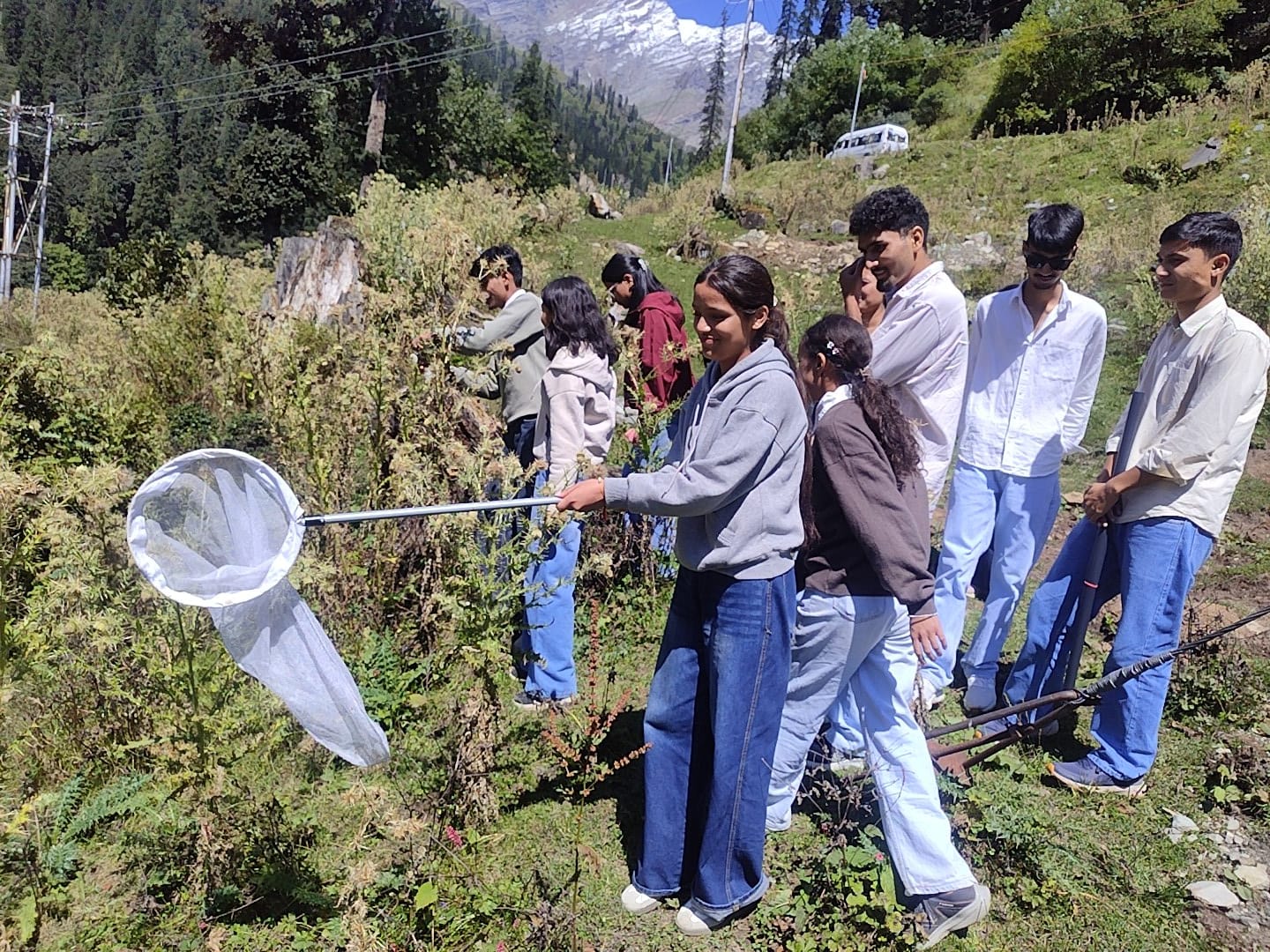
The workshop was aimed at strengthening practical knowledge among students about pollinator ecology, biodiversity conservation and sustainable environmental practices. Students actively participated in field-based activities designed to provide them with firsthand exposure to the importance of pollinators and their role in maintaining healthy ecosystems.
The programme was organised under the National Mission on Himalayan Studies (NMHS)-supported research project titled “Assessing Ecosystems for the Conservation and Management of Himalayan Wild Pollinators: Action for Long-Term Monitoring Assessments of Himalayan Bumblebees towards Biodiversity Conservation.”
The research project is being implemented by the Desert Regional Centre, Zoological Survey of India, Jodhpur, under the leadership of Dr. R. H. Raina, Scientist-E and Principal Investigator, with the guidance and support of Dr. Dhriti Banerjee, Director, Zoological Survey of India.
Focus on Himalayan Bumblebees and Pollinator Ecology
During the workshop, participants were introduced to the ecological and agricultural importance of Himalayan bumblebees and other wild pollinators. Experts explained how pollinators contribute to plant reproduction, ecosystem functioning and agricultural productivity.
The participants were also sensitised to the major threats faced by Himalayan pollinators, including climate change, habitat degradation and the broader loss of biodiversity.
The research team demonstrated several field-based approaches for documenting bumblebee diversity and distribution. Participants were familiarised with methods for assessing habitat characteristics, developing DNA reference libraries for accurate species identification and generating scientific data to support conservation planning and long-term management of Himalayan pollinator populations.
Hands-on Learning and Capacity Building
A major objective of the workshop was to build scientific and conservation capacity among students through practical field exposure.
The organisers encouraged students to develop a deeper understanding of local biodiversity and to take an active role in protecting ecosystems. The hands-on activities provided participants with an opportunity to connect classroom-based learning with field-level ecological research.
The programme also promoted the principles of Mission LiFE (Lifestyle for Environment) by encouraging students to adopt environmentally responsible lifestyles and contribute to biodiversity conservation through individual and community-level actions.
Research Team and Institutional Support
The workshop was led by Dr. Ishfaq Majeed Shah, Research Associate, along with Dr. Muzafar Riyaz, under the supervision of Dr. R. H. Raina.
The organising team expressed gratitude to Dr. Dhriti Banerjee, Director, Zoological Survey of India, and Dr. Indu Sharma, Officer-in-Charge, Desert Regional Centre, ZSI, for their continued guidance and encouragement.
The team also acknowledged the financial support provided by the National Mission on Himalayan Studies (NMHS), Ministry of Environment, Forest and Climate Change (MoEFCC), Government of India, which has supported the implementation of the research initiative across the Himalayan region.
The organisers appreciated the cooperation of Dr. Sakshi Rana, Department of Botany, and Prof. Monika Parsheera, Department of Zoology, for facilitating the workshop and supporting the participation of students.
Special appreciation was also extended to Dr. Shefali, Principal, Jawahar Lal Nehru Government Degree College, Haripur, Manali, for her guidance, encouragement and support in making the programme successful.
Interactive Discussion on Biodiversity Conservation
The programme concluded with an interactive discussion focusing on biodiversity conservation and the indispensable role of pollinators in maintaining healthy ecosystems.
The workshop provided an important platform for strengthening scientific awareness among students, encouraging community participation and promoting a stronger commitment towards biodiversity conservation.
The organisers highlighted the need for sustained scientific monitoring and conservation efforts to safeguard Himalayan wild pollinators, particularly bumblebees, which play a vital role in maintaining ecological balance and supporting natural and agricultural ecosystems.
The programme also reinforced the importance of involving young people in biodiversity research and conservation initiatives and encouraged students to become active participants in protecting the Himalayan environment.