
Unregulated Mining Threatens Southeast Asian Rivers, Raising Urgent Calls for Cross-Border Water Governance.
Southeast Asia:
Unregulated mining activities are increasingly threatening the ecological health of major rivers across Southeast Asia, raising serious concerns about water pollution, public health, food security and the livelihoods of millions of people who depend on these vital freshwater resources. Environmental experts and affected communities are calling for stronger transboundary cooperation, improved water-quality monitoring and greater transparency to address the growing crisis.
Historically, water governance in the Salween and Mekong river basins has largely focused on water flows, resource allocation and the environmental impacts of upstream dams. However, attention is now shifting towards another critical issue: the quality of the water itself and the growing threat posed by toxic contamination from unregulated mining.
Mapping conducted by the Stimson Center has identified more than 2,800 locations associated with unregulated rare earth and other mining activities along rivers in mainland Southeast Asia. These activities are raising concerns about the release of toxic chemicals into waterways, with potentially serious consequences for downstream communities, ecosystems and local economies.
The expanding mining sector highlights the urgent need for governments across the region to work together to protect shared rivers, strengthen environmental oversight and ensure that communities have access to reliable information about water quality.
Mining Pollution Threatens the Salween and Mekong River Basins
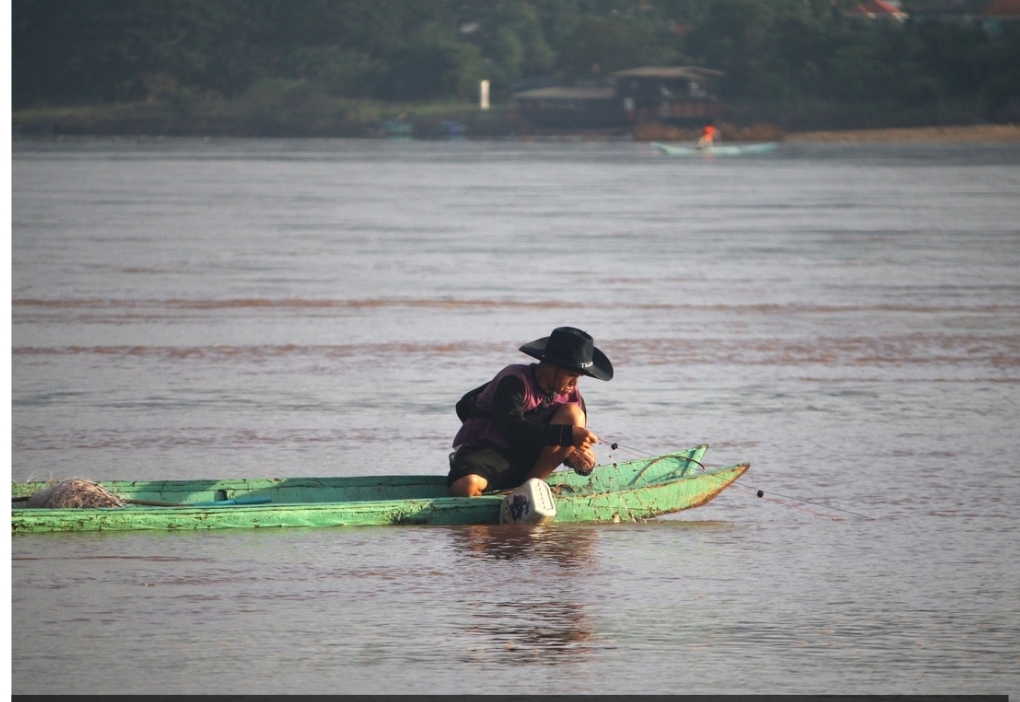
The Salween and Mekong are among Southeast Asia’s most important river systems, supporting millions of people through agriculture, fishing, drinking water, transportation and other economic activities. Their ecological systems also sustain rich biodiversity and provide essential resources for communities living along their banks.
However, mining activities in upstream areas are increasingly raising concerns about environmental degradation and cross-border pollution.
Rare earth extraction and other forms of mining can generate contaminated wastewater, toxic residues and disturbed sediments. When these pollutants enter rivers, they can travel downstream across national boundaries, affecting communities that may have little influence over the activities responsible for the contamination.
Unlike water-flow issues, which have traditionally dominated regional discussions, water-quality problems can be difficult to identify and address without regular scientific testing, transparent information-sharing and coordinated environmental monitoring.
The transboundary nature of these rivers means that pollution originating in one country can create environmental and economic consequences in another, making cooperation between neighbouring governments essential.
IUCN Supports Community-Based Reporting and Environmental Awareness
To better understand the effects of unregulated mining, the International Union for Conservation of Nature (IUCN) supported the Transboundary Journalists and Communicators Association (TJCA) in working with local communities and universities across the Salween and Mekong river basins.
The initiative aimed to document the impacts of mining on downstream populations, strengthen public awareness and bring scientific evidence and community concerns into wider discussions about environmental governance.
Through field investigations, interviews and reporting, TJCA examined the experiences of affected communities, the emerging evidence of water contamination and the shortcomings in existing environmental monitoring systems.
The initiative also sought to highlight the governance challenges that allow potentially damaging mining activities to continue without adequate oversight, particularly in areas where conflict and limited institutional capacity complicate environmental protection.
By bringing together community perspectives, scientific findings and information from government agencies, the reporting helped draw attention to the connections between mining, freshwater security and regional cooperation.
Salween River: Karen Communities Raise Concerns Over Mining Pollution
In the Salween River basin, TJCA published a series of reports documenting concerns raised by Karen communities about the environmental consequences of mining activities.
The reporting presented emerging scientific evidence of water contamination and highlighted the lack of effective cross-border environmental monitoring, which makes it difficult to assess pollution levels consistently and respond to potential threats.
It also examined policy and governance gaps that have allowed unregulated mining to expand in conflict-affected areas of Myanmar, particularly Shan and Kayah States.
In such areas, insecurity and challenges in environmental enforcement can make it difficult to regulate mining operations, monitor discharges and ensure that affected communities receive timely information about potential risks.
For communities that depend on the Salween and its tributaries for their livelihoods, concerns about declining water quality extend beyond environmental conservation. They also involve access to safe water, agricultural productivity, food security and the preservation of traditional ways of life.
The reports underscore the importance of strengthening environmental monitoring and ensuring that local communities have opportunities to participate in decisions affecting their rivers and natural resources.
Mekong Basin: Mining Upstream Raises Concerns Over River Pollution
In the Mekong River basin, TJCA produced news reports examining the environmental impacts of mining on the Mekong and its major tributaries, particularly the Kok, Sai and Ruak rivers in northern Thailand.
These waterways have been affected by mining activities upstream in Myanmar and Lao PDR, with rare earth extraction associated with concerns about severe environmental degradation, sediment disturbance and toxic contamination.
The resulting pollution threatens downstream ecosystems and communities that rely on rivers for fishing, farming, household water supplies and other essential activities.
As concerns have grown, affected communities have increasingly sought to raise public awareness and demand stronger action to protect their water resources.
One example highlighted by the initiative is the Peace Walk for Rivers, a public action through which communities have drawn attention to the environmental pressures facing rivers and the need for greater accountability.
Community-led advocacy has become an important part of the wider effort to ensure that river pollution receives greater public and political attention.
The reporting also demonstrated the importance of connecting scientific evidence with local experiences. While water testing can help establish the presence and extent of contamination, accounts from affected communities provide essential information about changes in river conditions and the consequences for daily life.
Mining Expansion Raises Alarm Along Rivers Between Laos and Vietnam
Concerns about unregulated mining are also emerging along the Ca-Neun and Ma rivers, which flow from Lao PDR into Vietnam.
According to information highlighted by the initiative, five pilot mines were approved in 2022, but the number of mines has since increased to 20, indicating a substantial expansion of mining activity in the area.
A serious environmental incident occurred in February 2024, when settling ponds at one mine burst, releasing contaminated material and severely polluting downstream water and sediments.
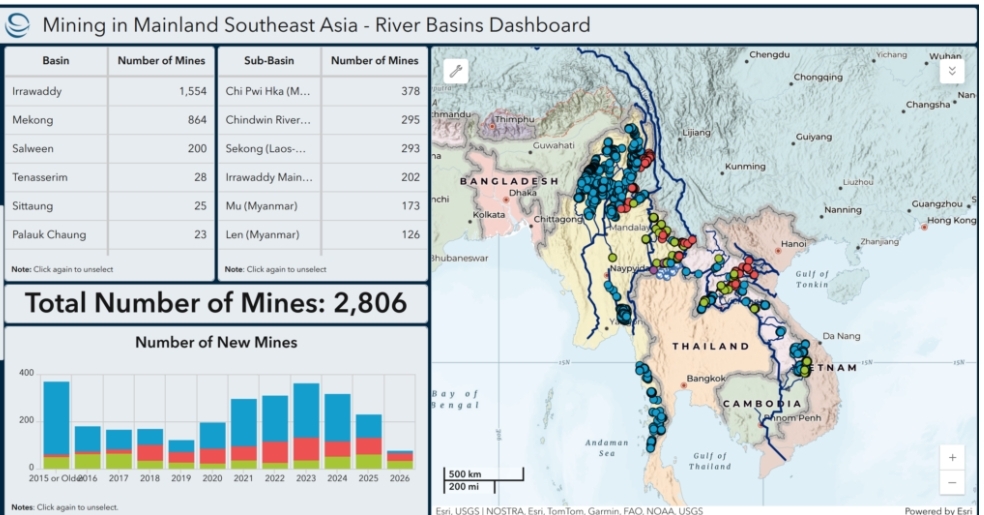
Field observations documented fish deaths, deteriorating river-water conditions and reduced suitability of the water for irrigation in affected downstream communities.
These impacts illustrate how failures in mine-waste management can have consequences extending beyond the mining site itself, potentially affecting river ecosystems and the communities that depend on them.
The incident also highlights the importance of monitoring mining waste-storage facilities, enforcing environmental safeguards and establishing mechanisms for rapid notification and coordinated responses when pollution crosses national borders.
IUCN is working in the Ca-Neun and Ma river systems to facilitate transboundary cooperation on emerging environmental challenges, including freshwater resource management and ecosystem health.
The initiative reflects the need for neighbouring countries to address shared water-quality concerns through cooperation rather than relying exclusively on separate national monitoring and regulatory systems.
Why Transboundary Water Governance Is Essential
The growing threat of mining-related pollution demonstrates the limitations of managing rivers solely within national boundaries.
When rivers flow across countries, environmental damage caused upstream can affect downstream populations that have little control over the source of pollution. Without effective cooperation, authorities may struggle to obtain timely information, identify contamination sources or coordinate responses.
Stronger transboundary governance could help address these challenges through several measures:
– Shared water-quality monitoring: Countries should strengthen coordinated testing programmes to identify pollutants, track changes in river conditions and assess risks to human health and ecosystems.
– Open access to environmental data: Water-quality information should be made accessible to governments, researchers, journalists and affected communities, enabling informed public discussion and timely action.
– Improved regulation of mining activities: Stronger environmental assessments, effective enforcement and better management of mining waste are needed to reduce the risk of contamination.
– Early-warning and emergency response systems: Neighbouring countries should develop mechanisms for promptly sharing information about mine-waste spills and other pollution incidents.
– Community participation: People living along affected rivers should be involved in environmental monitoring, decision-making and the development of solutions.
– Cross-border scientific cooperation: Universities, researchers and environmental organisations can help strengthen the evidence base needed to understand pollution pathways and develop appropriate responses.
These measures could help governments move beyond fragmented approaches towards a more coordinated system for protecting shared freshwater resources.
Millions Depend on Healthy Rivers for Their Livelihoods
For millions of people across the Salween and Mekong basins, rivers are more than geographical features. They are essential sources of food, income, cultural identity and community well-being.
Fishing communities depend on healthy aquatic ecosystems, while farmers rely on river water to irrigate crops. Many rural households also depend directly on rivers for domestic uses and other daily needs.
Mining-related contamination can therefore create a chain of consequences, from deteriorating water quality and damage to aquatic habitats to reduced agricultural productivity and growing uncertainty over the safety of freshwater resources.
The effects may be particularly difficult for communities living in remote or conflict-affected areas, where access to independent water testing, public information and effective regulatory institutions can be limited.
Protecting these rivers requires not only technical monitoring and stronger environmental laws but also greater recognition of the rights and concerns of communities that depend on them.
IUCN Initiative Calls for Greater Transparency and Cooperation
The initiative supported by IUCN’s Building River Dialogue and Governance project highlights the importance of combining community-based reporting, scientific research and cross-border dialogue to address emerging threats to freshwater ecosystems.
Through its collaboration with TJCA, local communities and universities, the initiative has helped bring attention to mining-related pollution and the governance weaknesses that can allow environmental risks to persist.
A central lesson emerging from this work is that reliable, publicly accessible water-quality data must become a fundamental part of transboundary river management.
When information is shared across borders and discussed with affected communities, governments and researchers are better positioned to identify problems, assess environmental risks and develop appropriate responses.
Greater transparency can also help communities understand changes in their local environments and participate more effectively in decisions that affect their health and livelihoods.
Conclusion: Protecting Southeast Asia’s Rivers Requires Collective Action
The expansion of unregulated mining across mainland Southeast Asia presents an increasingly urgent challenge for freshwater protection and regional environmental governance.
The experiences documented along the Salween, Mekong, Kok, Sai, Ruak, Ca-Neun and Ma rivers demonstrate how mining-related pollution can create risks that extend beyond national boundaries, threatening ecosystems and communities far downstream.
Addressing these challenges will require stronger environmental enforcement, transparent information-sharing, coordinated scientific monitoring and meaningful participation by affected communities.
As governments across the region confront growing pressure on freshwater resources, transboundary cooperation will be essential to ensuring that rivers remain healthy, productive and safe for future generations.
Ultimately, safeguarding Southeast Asia’s rivers will depend not only on managing how much water flows through them, but also on protecting what that water contains.