
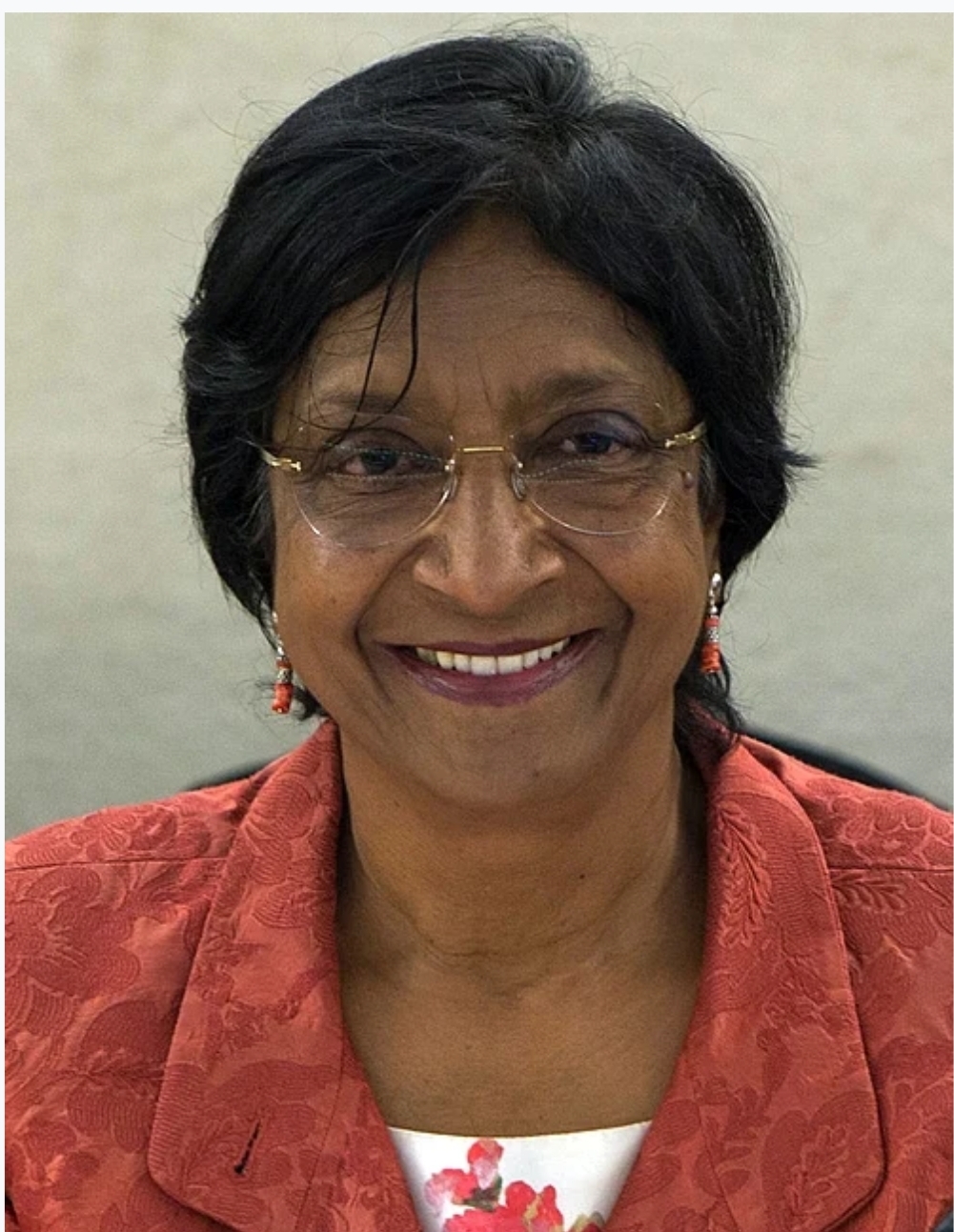
Navi Pillay Wins 2026 Nobel Peace Prize for Advancing International Law and Justice.
Oslo:
The Norwegian Nobel Committee has awarded the 2026 Nobel Peace Prize to Navanethem “Navi” Pillay for her efforts to promote peace, strengthen international law and ensure accountability for war crimes, crimes against humanity and genocide.
Pillay, a South African jurist of Indian Tamil origin, was recognised for her longstanding commitment to universal legal principles, human rights and the prosecution of serious international crimes. The committee said her work had helped strengthen the global legal framework and expand the role of international law in preventing violence and resolving conflicts.
Born in Durban, South Africa, during the apartheid era, Pillay grew up in a society marked by racial discrimination, segregation and exclusion. She pursued a career in law and became a prominent legal figure, challenging structural discrimination and defending those who opposed apartheid, including Nelson Mandela and other anti-apartheid activists.
Her career has spanned several major judicial and international institutions. She has served as a judge on South Africa’s High Court and the International Criminal Tribunal for Rwanda. She has also served at the International Criminal Court and as the United Nations High Commissioner for Human Rights.
Until recently, Pillay chaired the UN Independent International Commission of Inquiry on the Occupied Palestinian Territory. She is currently serving as a judge at the International Court of Justice in the case in which Myanmar faces allegations of genocide.
Role in Landmark International Legal Cases
One of Pillay’s significant contributions came through her work at the International Criminal Tribunal for Rwanda, where she played an important role in advancing the prosecution of sexual violence during armed conflict.
The tribunal established that rape and sexual violence could constitute crimes against humanity and, under certain circumstances, acts of genocide. The Nobel Committee highlighted Pillay’s influence in advancing these legal principles.
She also contributed to a landmark development in international criminal law concerning the prosecution of individuals who incite genocide through propaganda. The case established an important precedent for holding individuals accountable for encouraging mass atrocities.
According to the Nobel Committee, Pillay’s work has demonstrated how international courts and legal mechanisms can help prevent violence, establish accountability and provide justice to victims of conflict.
International Law as a Foundation for Peace
Announcing the award, the Nobel Committee emphasised the importance of international law in maintaining global peace and resolving disputes without resorting to violence.
The committee noted that international legal institutions expanded significantly after the Second World War, particularly with the establishment of United Nations institutions. These developments reflected the principle that lasting peace must rest on legal rules rather than military strength or temporary balances of power.
However, the committee expressed concern that the international rules-based order is facing growing pressure. Powerful countries and political leaders have frequently avoided accountability, while international institutions and judicial mechanisms have faced criticism and challenges to their authority.
The committee warned that when political and military power takes precedence over legal principles, it weakens international stability, trust and peaceful coexistence.
It stressed that international law is increasingly essential at a time when the world is facing numerous wars, conflicts and humanitarian crises.
Recognition of Justice and Human Dignity
The 2026 Nobel Peace Prize recognises Pillay’s efforts to hold states and national leaders accountable under international law and to establish legal protections for victims of violence and persecution.
Throughout her career, she has emphasised that individuals and governments must comply with the rule of law. Her work has also contributed to defining legal standards for prosecuting international crimes and protecting human dignity.
The Nobel Committee said Pillay’s career demonstrated the importance of supporting and strengthening international judicial institutions, particularly when judges and legal bodies face political pressure.
The committee linked the award to Alfred Nobel’s vision of promoting fraternity between nations and supporting peaceful conflict resolution. It said Pillay’s work had advanced the use of international tribunals as instruments of peace and justice.
By recognising Pillay, the committee has highlighted the role of independent courts, international legal principles and accountability mechanisms in building a more peaceful world.
Her selection underscores the message that lasting peace cannot be achieved without justice, and that protecting the rule of law remains essential to safeguarding human rights and preventing future atrocities.