Vice-President Calls for Scientific Validation of Ayurveda, Launches Digital Initiatives at AIIA.
New Delhi:
Vice-President C. P. Radhakrishnan on Thursday called for greater scientific research into Ayurveda to establish the efficacy of traditional healthcare practices, strengthen patient confidence and enhance the global acceptance of India’s traditional systems of medicine.
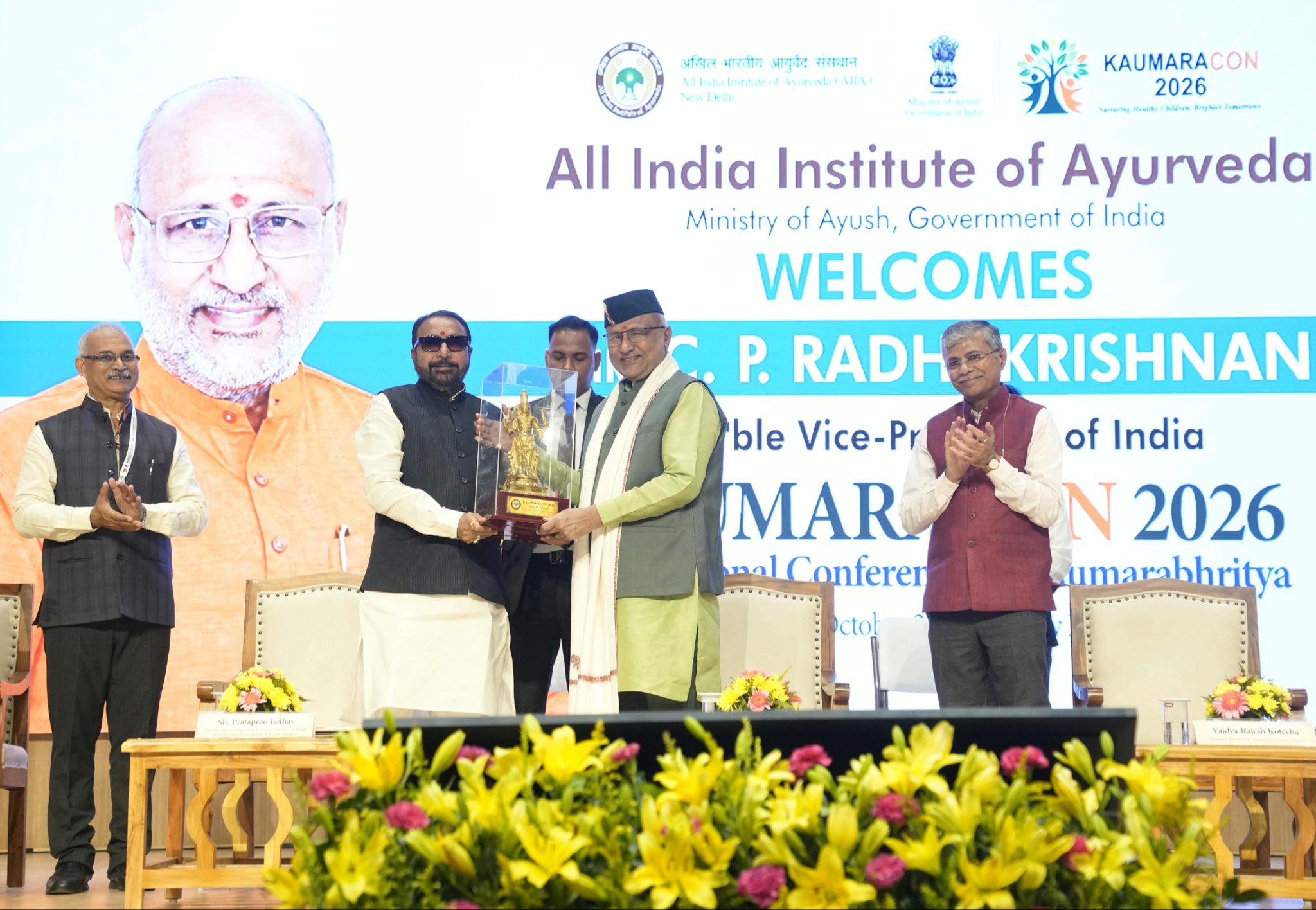
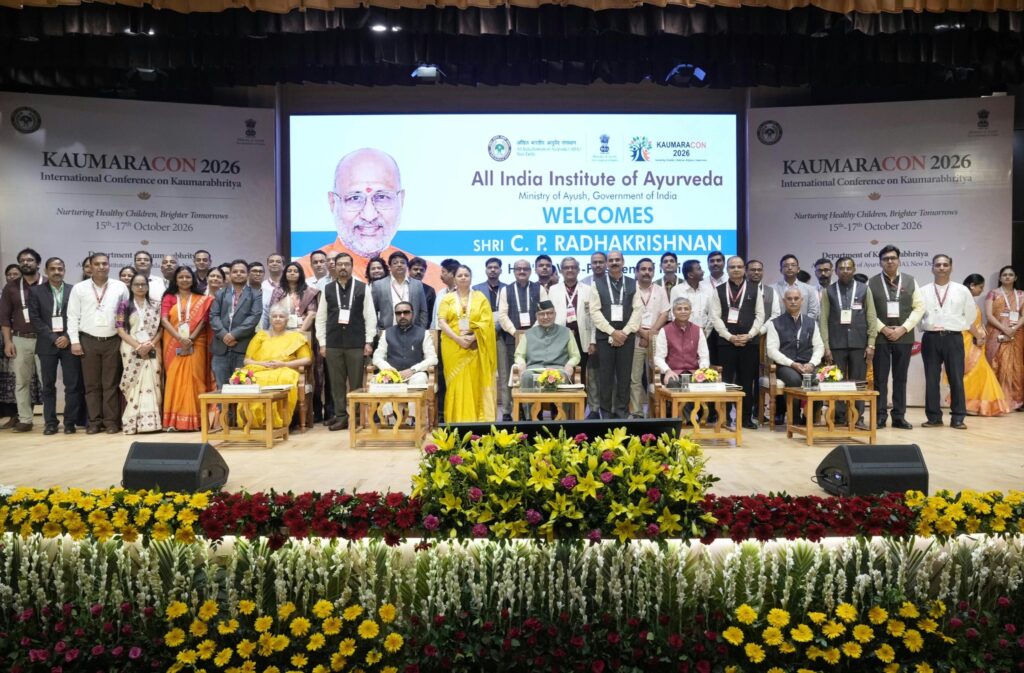
He was addressing the inaugural ceremony of KAUMARACON-2026, the third international conference on Kaumarabhritya, organised by the All India Institute of Ayurveda (AIIA), New Delhi.
Emphasising the need to integrate traditional knowledge with modern scientific research, the Vice-President said rigorous scientific validation was essential to establish the effectiveness of traditional healthcare practices and ensure their wider acceptance internationally. He urged researchers and medical practitioners to preserve India’s traditional wisdom while strengthening it through evidence-based research and innovation.
Referring to Prime Minister Narendra Modi’s vision of developing AIIA on a par with the All India Institute of Medical Sciences (AIIMS), Radhakrishnan said the Institute was progressing towards achieving this objective. Congratulating AIIA on its 10th Foundation Day, he highlighted the importance of sustained investment in research, innovation and academic excellence to strengthen its position as a leading institution in traditional medicine.
The Vice-President observed that India’s traditional systems of medicine represented a valuable civilisational legacy built on centuries of knowledge and experience. He highlighted the establishment of a separate Ministry of AYUSH in 2014 and its efforts to strengthen education, expand healthcare services and promote scientific research.
He also underlined the significance of interdisciplinary collaboration between the Ministry of AYUSH and institutions such as the Indian Council of Medical Research (ICMR), Council of Scientific and Industrial Research (CSIR), Department of Biotechnology (DBT), Department of Science and Technology (DST) and AIIMS.
According to the Vice-President, the integration of AYUSH services into leading medical institutions had created opportunities for dialogue and cooperation between traditional medicine and modern healthcare. He cited the international recognition of Yoga and the establishment of the World Health Organization’s Global Centre for Traditional Medicine in Jamnagar as important milestones in promoting India’s traditional knowledge globally.
Child Healthcare a National Priority
Highlighting the importance of child healthcare, Radhakrishnan said children deserved particular attention in areas such as nutrition, physical growth, development, disease prevention and emotional well-being.
The theme of KAUMARACON-2026, “Shaping the Future of Child Health: Global Perspectives, Research Innovations, and Clinical Frontiers in Kaumarabhritya,” reflected the collective responsibility to ensure that every child grew up in a healthy and supportive environment.
He stressed that the vision of building a developed India by 2047 required sustained attention to children’s health, as their well-being would play a crucial role in strengthening the country’s human capital. He called upon researchers, healthcare professionals and practitioners to place child health at the centre of their efforts.
Digital Initiatives Launched
During the event, the Vice-President inaugurated several digital initiatives aimed at promoting innovation and strengthening the Ayurveda ecosystem.
These included the AYUSH Start-up Portal, the AIIA–iCAINE website and the Ayurveda Digital Innovation and Venture Acceleration Facility (AyuDIVA). He also launched the Vamana App and the Panchakarma Assessment App.
An international Memorandum of Understanding between Maharishi International University (MIU), USA, and AIIA, New Delhi, was exchanged in his presence, marking another step towards international academic cooperation.
Earlier, the Vice-President visited the hospital facilities at AIIA and Dhanwantari Vatika. During the visit, he was briefed on the Institute’s contributions to public health and the Ayurvedic significance of medicinal plants, herbs and rocks displayed at the Vatika.
The event was attended by Prataprao Jadhav, Minister of State for AYUSH and Health and Family Welfare; Vaidya Rajesh Kotecha, Secretary, Ministry of AYUSH; Dr Maneesha Upendra, Chairperson of the National Commission for Indian System of Medicine; Professor P. K. Prajapati, Director of AIIA, New Delhi, along with researchers, faculty members, students and other dignitaries.