Sonam Targay Presents Spiti Case Study at National-Level PESA Workshop in Mashobra.
Shimla:
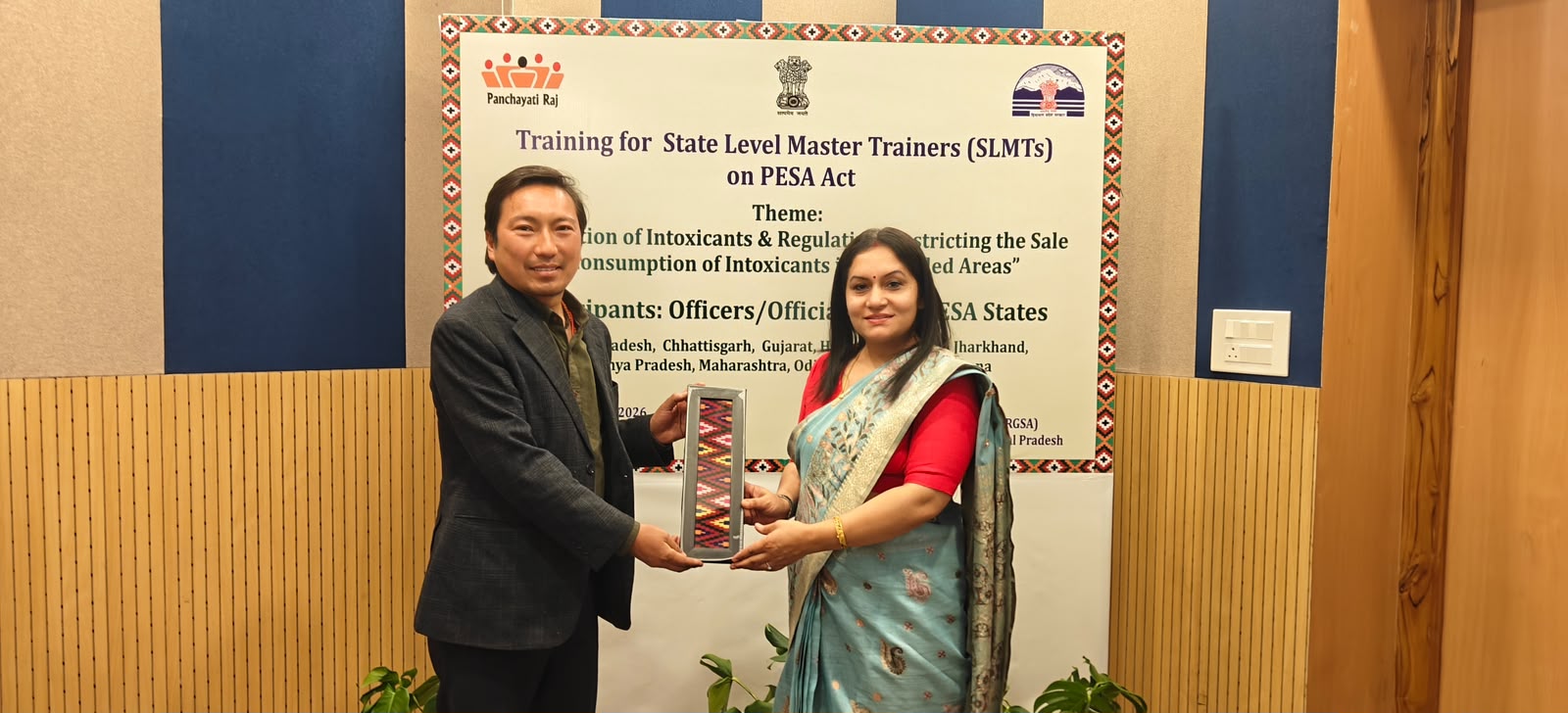
Sonam Targay, National-Level Master Trainer on the Panchayats (Extension to Scheduled Areas) Act, 1996 (PESA), presented a case study highlighting community-led practices for the prohibition and regulation of intoxicants in Spiti at a national-level training programme held at Craignano, Mashobra, Shimla, on October 16.
The one-day workshop, organised by the Department of Panchayati Raj, Government of Himachal Pradesh, focused on the implementation of the PESA Act, the role of Gram Sabhas in regulating intoxicants, and the legal and administrative mechanisms applicable to Scheduled Areas.
During his presentation, Targay shared experiences from Spiti, highlighting the importance of community participation, traditional practices and grassroots governance in addressing issues related to intoxicants in tribal areas. His case study provided an opportunity to discuss local experiences and community-based approaches to regulating the sale and consumption of intoxicants.
The programme also featured sessions on the provisions of the PESA Act and its rules, the responsibilities of Gram Sabhas, the constitution and functioning of Intoxication Committees, and relevant provisions of the Himachal Pradesh Excise Act concerning licensing fees and other charges in Scheduled Areas.
Participants also discussed best practices followed in Fifth Schedule Areas of Himachal Pradesh and measures to strengthen the implementation of prohibition and regulatory provisions.
Expressing his views after the workshop, Targay said it was a valuable experience to participate in the national-level event and present Spiti’s experiences and perspectives. He emphasised that empowering Gram Sabhas, preserving indigenous traditions and strengthening community-based governance were essential for effective implementation of the PESA Act.
He expressed gratitude to the Chief Minister of Himachal Pradesh, the Union Ministry of Panchayati Raj and the state Panchayati Raj Department for organising the workshop and providing a platform to share the region’s experiences.
He added that such initiatives help ensure that the traditional knowledge and voices of tribal communities contribute meaningfully to policymaking and sustainable development.