CJI Emphasises Compassionate Justice, Calls New Mandi Court Complex a Symbol of Hope for People.
Mandi (Himachal Pradesh):
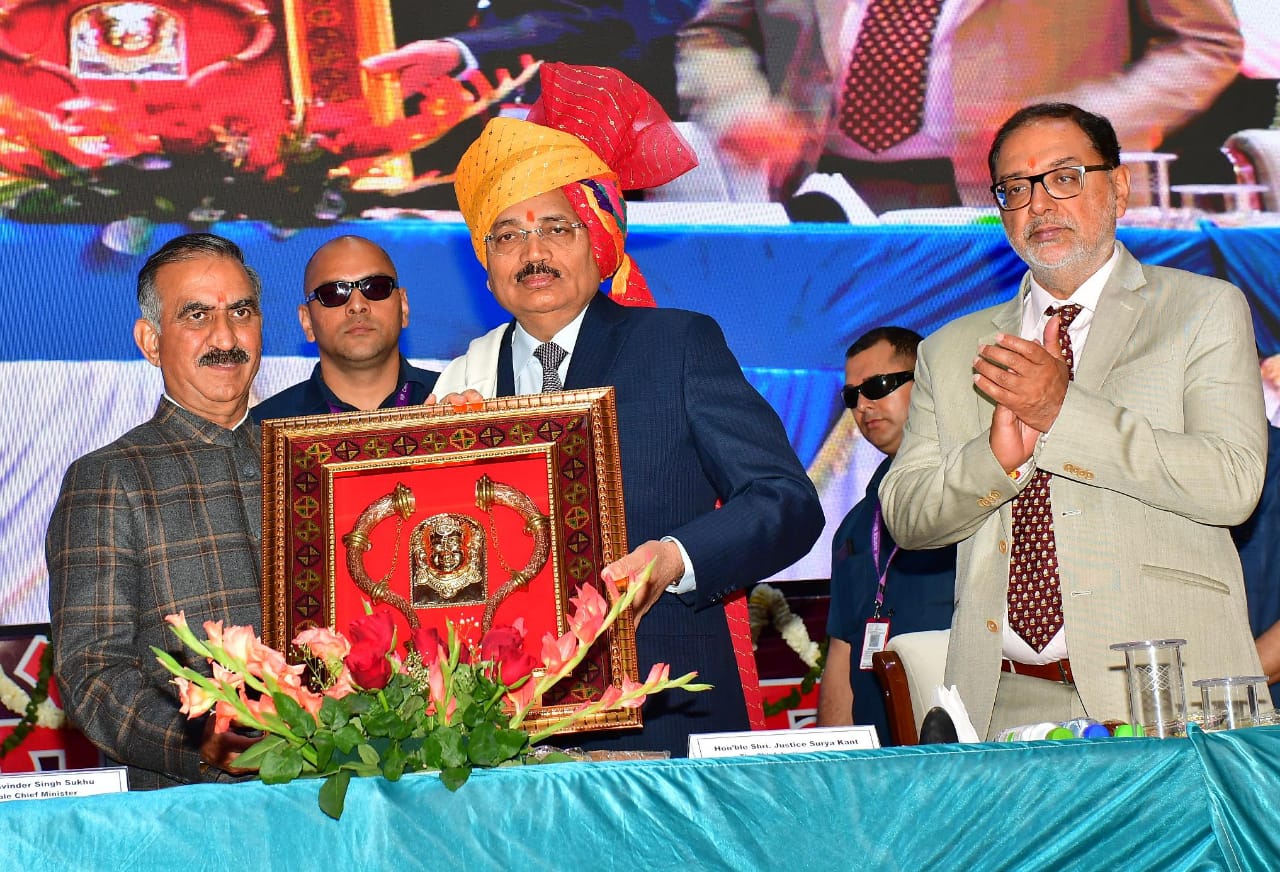
Chief Justice of India Justice Surya Kant on Sunday highlighted the importance of a compassionate and people-centric judicial system while addressing a gathering at a historic judicial event in Mandi. The Chief Justice said that courts should function much like hospitals—places where people arrive in distress and leave with hope and relief.
Speaking during the foundation laying ceremony of a judicial court complex in the temple town, popularly known as “Chhoti Kashi,” the CJI expressed gratitude to the people and the state government for establishing modern judicial infrastructure in the region. He noted that Mandi holds deep spiritual significance and attracts people from across the country who come seeking solutions to their personal and social problems through faith. Similarly, he said, a court represents a place where citizens seek justice and reassurance.
The Chief Justice said the newly established court complex would strengthen access to justice at the district level. According to him, the facility has been built with sufficient space and modern amenities to meet current judicial requirements and allow future expansion if needed.
He also urged the Government of Himachal Pradesh to continue investing in judicial infrastructure across other districts where such facilities are still lacking. “Wherever there is a shortage of proper court complexes, the government should consider building modern judicial facilities according to its budgetary capacity,” he said.
Courts Must Work Like Hospitals: CJI
Reiterating a statement he had earlier made in Ranchi on November 14, the Chief Justice drew an analogy between courts and hospitals. He explained that just as a seriously ill person feels hope after receiving first aid from doctors and nurses in a hospital, a person approaching the judiciary should feel that justice and relief are possible.
“When a litigant comes before the court, his situation is often similar to that of a sick person seeking treatment. Judicial institutions must therefore respond with compassion, empathy and fairness,” he said.
He stressed that judicial complexes are not merely structures made of cement, steel and bricks but institutions that must reflect humanity, sensitivity and dedication from everyone working there—judges, court staff, lawyers and legal service providers.
The CJI said that as court infrastructure becomes more advanced and accessible, the responsibility of judicial officers and members of the Bar also increases. They must ensure that every person seeking justice—especially the poor and vulnerable—feels respected and supported within the judicial system.
Focus on Fundamental Duties
The Chief Justice also praised the Himachal Pradesh State Legal Services Authority for organizing a discussion on fundamental rights and duties under the Constitution of India. While fundamental rights often receive attention, he said, citizens must also be aware of their fundamental duties.
He pointed out that protecting nature, maintaining cleanliness, respecting others and using responsible language in public discourse are all part of these duties. The CJI noted that safeguarding natural resources—such as water bodies, rivers and forests—is not solely the responsibility of the government but also of every citizen.
Highlighting the unique natural environment of Himachal Pradesh, he said the state is particularly close to nature, with its mountains, rivers and abundant water resources. Therefore, citizens and institutions in the region must take the lead in protecting the environment and promoting awareness of constitutional duties.
Role of Paralegal Volunteers
The Chief Justice said paralegal volunteers could play a crucial role in spreading awareness about constitutional values at the grassroots level. Since they are connected with villages and rural communities, they can effectively educate people about their rights and duties.
He suggested that district and sub-division level legal services authorities organize similar awareness programmes at smaller levels so that citizens across the state become conscious of their constitutional responsibilities.
“If people fulfil their fundamental duties, the protection of fundamental rights becomes stronger,” he said, adding that Himachal Pradesh could emerge as a model for the rest of the country in promoting constitutional awareness.
Warm Connect With Himachal
Concluding his address, the Chief Justice expressed emotional attachment to the people of the state and said that visiting Himachal felt like returning to his own village and family. He thanked the audience for their affection, support and guidance.The event was attended by senior judicial officers, government officials, members of the legal fraternity and representatives of legal services institutions.
“Let us work together so that the judiciary continues to inspire faith and ensure justice for every citizen,” the Chief Justice said while concluding his speech with “Jai Hind, Jai Bharat.”