UNICEF Official Warns of Famine, Rising Child Deaths in Gaza After Visit: Children Are Being Starved, Bombed, and Displaced.
New York:
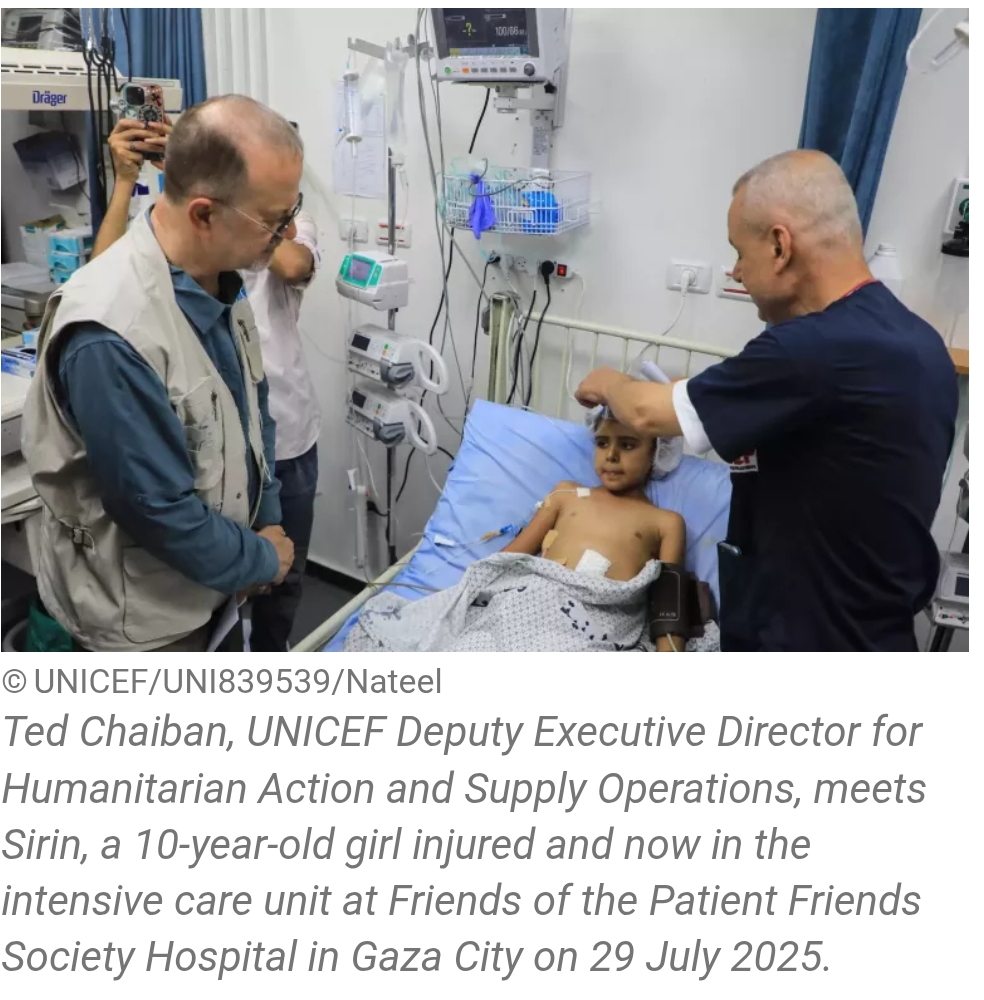
UNICEF Deputy Executive Director Ted Chaiban has returned from a five-day mission to Israel, Gaza, and the West Bank with an urgent plea for global attention and humanitarian action, describing the situation in Gaza as “inhumane” and “at a crossroads.” His remarks, delivered on August 1, underscore the unprecedented scale of suffering among children after nearly two years of war.
Chaiban, who has now visited Gaza four times since the conflict escalated on October 7, painted a harrowing picture of the humanitarian crisis. He reported that over 18,000 children have been killed since the war began—an average of 28 children per day. “That’s the size of a classroom, gone every day,” he said. “Children are not the cause of this war, but they are its greatest victims.”
He highlighted the growing threat of famine, revealing that two critical indicators have now crossed famine thresholds in Gaza. “One in three people are going days without food. Malnutrition among children is soaring, with more than 320,000 young children now at risk of acute malnutrition,” Chaiban warned. “In Gaza City, global acute malnutrition is over 16.5 per cent.”
Recalling a recent Israeli airstrike on a nutrition clinic in Deir el-Balah, he shared the story of Ahmed, a 10-year-old boy who lost his sister Samah, 13, while they were waiting in line for food. “Ahmed tried to flag down a donkey cart to save her. He is traumatised and broken,” said Chaiban. “This simply should not be happening.”
At a stabilization center in Gaza City, Chaiban saw firsthand the toll on infants suffering from severe acute malnutrition. “Their bodies were little more than skin and bone,” he said. “One mother told me she had stopped producing breastmilk because she herself was starving.”
Despite the challenges, UNICEF continues its operations: delivering 2.4 million litres of clean water daily to northern Gaza, supporting vaccination campaigns, providing infant formula, and offering psychosocial support to traumatized children. However, the scale of aid is still far from what is needed.
Chaiban noted some easing in humanitarian access following recent Israeli announcements but stressed that it remains insufficient. Over 1,500 trucks of aid are waiting at various corridors, yet only 33 trucks had entered in recent days.
UNICEF is calling for expanded humanitarian and commercial access to reach at least 500 trucks per day, the removal of restrictions on “dual-use” items, and more fuel to repair Gaza’s failing water infrastructure. “Water is critically low, and disease outbreaks are looming,” he said.
Chaiban also visited the West Bank, where 39 Palestinian children have been killed this year, and Bedouin families have been forcibly displaced. He met Israeli children affected by the conflict, stressing that “children from all communities deserve protection.”
In his closing remarks, Chaiban appealed for an immediate and sustained ceasefire, the return of hostages, and a political resolution to the crisis. He emphasized that humanitarian pauses are not enough. “What is happening on the ground is inhumane. We are at a crossroads. The decisions made now will determine whether tens of thousands of children live or die.”
UNICEF’s Gaza appeal remains critically underfunded, with only 30% of its health and nutrition needs currently met.
“We know what must be done,” Chaiban concluded. “But we need access, we need funding, and we need peace.”