Over 640,000 Children at Risk as Cholera Outbreak Spreads Rapidly in Sudan’s North Darfur, Warns UNICEF.
Port Sudan:
A devastating cholera outbreak is sweeping through North Darfur State in Sudan, threatening the lives of over 640,000 children under five, as the region grapples with a growing health emergency amidst ongoing conflict and mass displacement.
Since the first cholera case was reported in Tawila on 21 June 2025, more than 1,180 cases, including around 300 in children, have been recorded, with at least 20 deaths. Across the five Darfur States, the overall cholera caseload has surged to nearly 2,140, resulting in over 80 fatalities as of 30 July.
The outbreak has taken hold in the wake of intensified violence in North Darfur, which has displaced over 500,000 people into Tawila — a town about 70 kilometres from Al Fasher, the state capital — since April this year. Most of these displaced families are now living in overcrowded conditions, without sufficient access to clean water, sanitation, shelter, or healthcare, creating the ideal environment for cholera to spread.
Hospitals have been bombed and numerous health facilities have shut down. UNICEF reports that the combination of malnutrition and cholera is proving especially lethal for children. The number of children with severe acute malnutrition in the area has doubled in the past year, and without urgent nutritional and medical interventions, child mortality is expected to rise sharply.
“Despite being preventable and easily treatable, cholera is ripping through Tawila and elsewhere in Darfur, threatening children’s lives, especially the youngest and most vulnerable,” said Sheldon Yett, UNICEF Representative for Sudan. “We are working tirelessly with our partners on the ground to do everything we can to curb the spread and save lives – but the relentless violence is increasing the needs faster than we can meet them.”
UNICEF has initiated an emergency response by distributing Oral Rehydration Salts (ORS), providing safe water to nearly 30,000 people through water trucking and infrastructure rehabilitation, and delivering hygiene kits to 150,000 people in Daba Naira. Chlorine tablets are also helping families purify water at the household level.
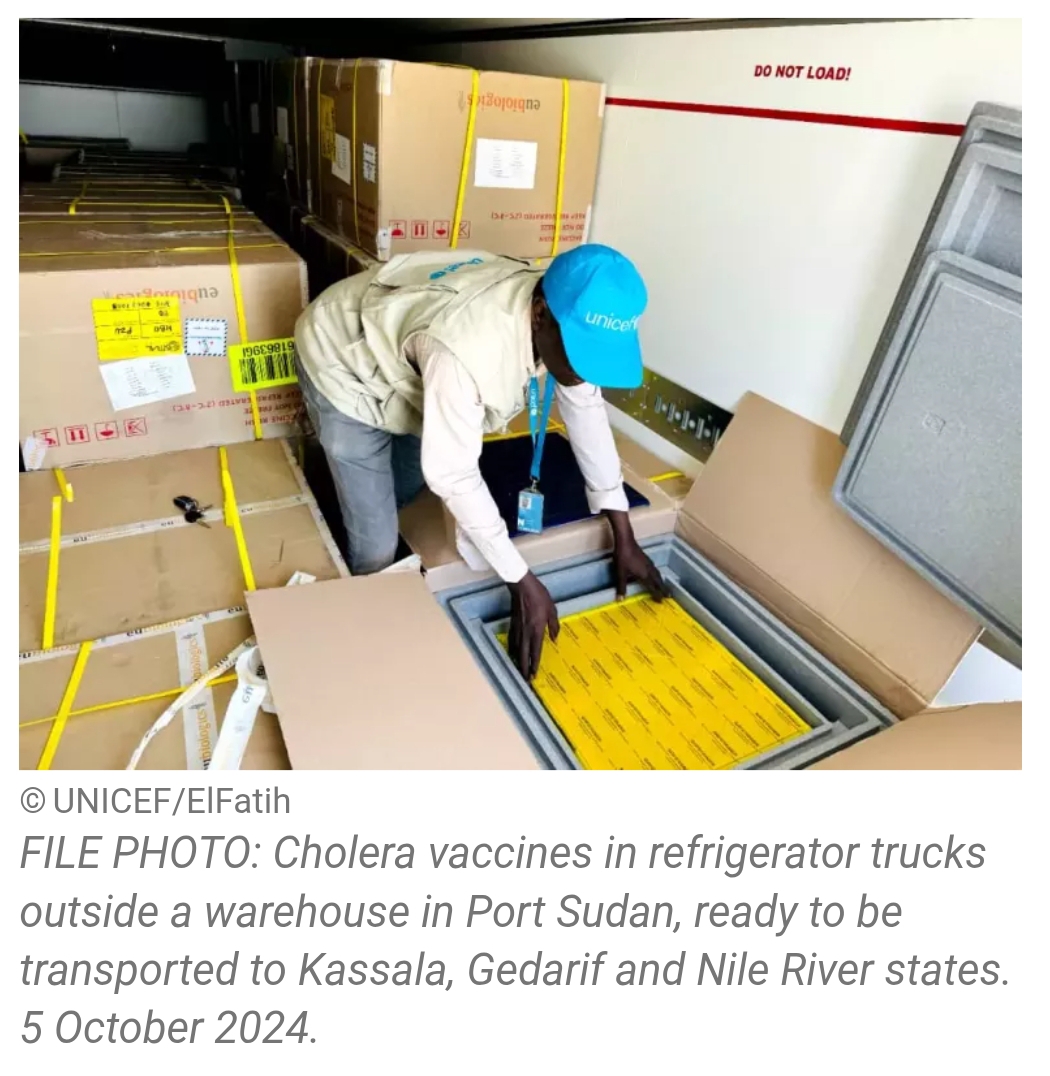
To curb further transmission, UNICEF is preparing to deliver 1.4 million doses of oral cholera vaccine, and is working closely with partners to support and expand Cholera Treatment Centres. Supplies such as cholera kits, soap, latrine slabs, and plastic sheeting are also being deployed.
In addition to health and WASH interventions, UNICEF has launched community engagement campaigns, both online and on the ground, to raise awareness about cholera prevention and early treatment. A Cholera Emergency Room has been established to coordinate the response, with UNICEF technical teams supporting surveillance, infection prevention, and local training.
However, ongoing violence, looting, and bureaucratic barriers continue to obstruct the delivery of vital aid. Humanitarian convoys are frequently attacked, and UNICEF warns that without sustained, unimpeded access, the situation will worsen rapidly.
UNICEF is urgently calling on the Sudanese government and all parties involved in the conflict to facilitate safe and uninterrupted humanitarian access to Tawila and across the Darfur States.
“The children of North Darfur cannot wait a day longer,” said Yett. “This is a race against time to save lives.”