Violent Protests Erupt in Ladakh Over Statehood and Sixth Schedule Demands; Sonam Wangchuk Calls for Restraint.
Leh, Ladakh:
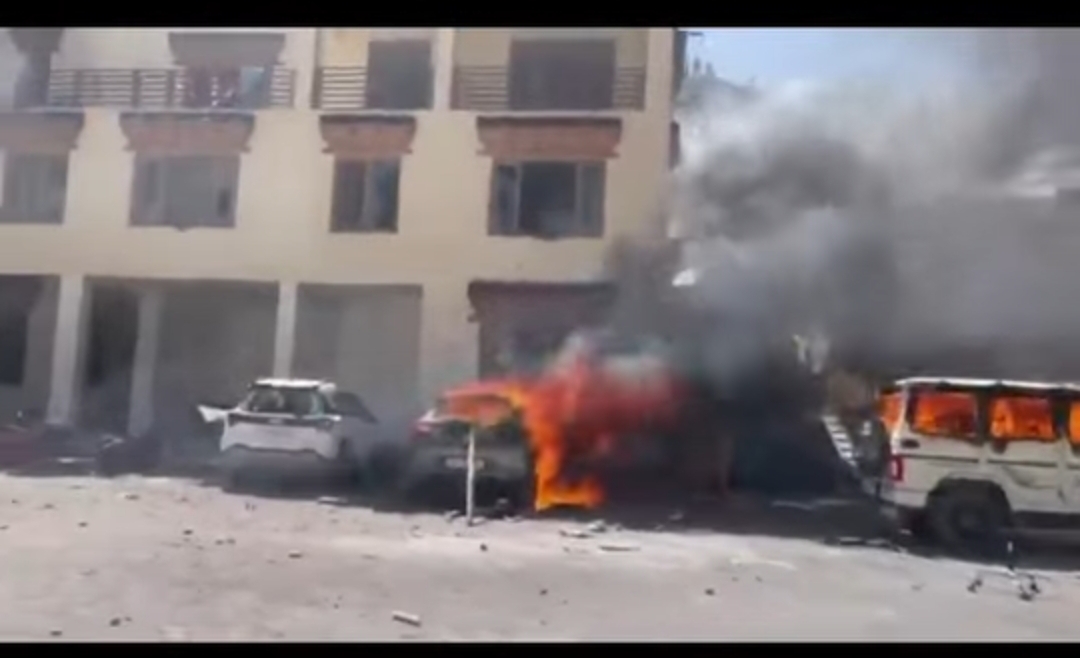
Protests in Ladakh demanding statehood and the implementation of the Sixth Schedule turned violent today, with demonstrators clashing with police forces, setting fire to a BJP office, and leading to the use of teargas by authorities to disperse crowds. Several persons injured following police firing, according to activist Sonam Wangchuk, who has been leading the movement.
Protests Intensify Amid Growing Discontent
The protests were triggered after student and youth organizations called for a shutdown in Leh, the largest city in Ladakh, to express support for the demands of statehood and the Sixth Schedule, which grants tribal-majority areas financial and legislative autonomy through autonomous district councils. Tensions escalated when two elderly individuals, who had been on a hunger strike for over two weeks to press for these demands, fainted on Tuesday and had to be hospitalized.
“This morning, a large number of people moved towards the site of the hunger strike. The youth went out of control,” said Congress leader Tsering Namgyal. “The news of the elderly protesters’ condition spread quickly, and it ignited a wave of anger.”
As the situation unraveled, protesters set fire to a BJP office and a security vehicle stationed outside. The confrontation quickly escalated, and police resorted to using teargas shells to disperse the growing crowd.
Sonam Wangchuk Calls for Calm
Activist Sonam Wangchuk, who has been at the forefront of the protests, expressed deep concern over the violence. Wangchuk, who had been leading a hunger strike for 35 days to draw attention to the cause, posted a message on social media calling for restraint.
“Very sad events in Leh. My message of a peaceful path failed today. I appeal to youth to please stop this nonsense. This only damages our cause,” Wangchuk wrote on X.
Wangchuk had been advocating for Ladakh’s inclusion under the Sixth Schedule, a demand that has gained significant traction in the region since the abrogation of Article 370 and the subsequent bifurcation of the erstwhile state of Jammu and Kashmir into two Union Territories in 2019. Since the reorganization, Ladakh has been under direct central administration without a legislative body, which has exacerbated local discontent.
The Call for Statehood and the Sixth Schedule
The central issue fueling the protests is the demand for Ladakh to be brought under the Sixth Schedule, which applies to tribal-majority areas in northeastern states, offering them greater autonomy. With more than 90% of Ladakh’s population belonging to Scheduled Tribes, local leaders argue that such a move would empower the region’s tribal communities and protect their cultural heritage from outside influence.
The demand for Ladakh’s statehood, coupled with the push for the Sixth Schedule, is rooted in a broader desire for political autonomy and greater control over local affairs. After Ladakh was made a Union Territory (UT) without a legislative assembly, many residents have expressed concerns about the central government’s control over their political and economic matters, and the perceived neglect of their needs.
Authorities’ Response
In response to the protests, the central government has announced that a new round of talks will take place on October 6, 2025. While the government has recognized the importance of addressing the region’s grievances, the violence that has erupted on the streets of Leh has raised alarms about the escalating tensions in the region.
Police forces have been deployed in large numbers across Leh, and there are reports of heightened security measures around key government offices and protest sites.
A Divided Opinion on the Path Forward
The political and legal status of Ladakh has been a contentious issue since the abrogation of Article 370. While the government maintains that the move was necessary to ensure the region’s development and national integration, local leaders and activists argue that it has led to economic and political marginalization of the people of Ladakh.
In the wake of the violence, Wangchuk emphasized that the struggle for statehood and autonomy must remain peaceful. “We cannot allow such incidents to derail our cause,” he said during a press conference. He has called for an end to the hunger strike and urged protesters to adopt nonviolent means in their pursuit of their rights.
Future of Ladakh’s Autonomy
The unrest in Ladakh has highlighted the broader issues of governance and autonomy that continue to affect the region. As the Centre prepares for the upcoming talks, the future of Ladakh’s political status and its demands for greater rights under the Sixth Schedule remain uncertain.
Ladakh’s residents are hopeful that the discussions will bring a resolution to their demands, but with the violence escalating, the region’s road to peace and autonomy remains fraught with challenges.