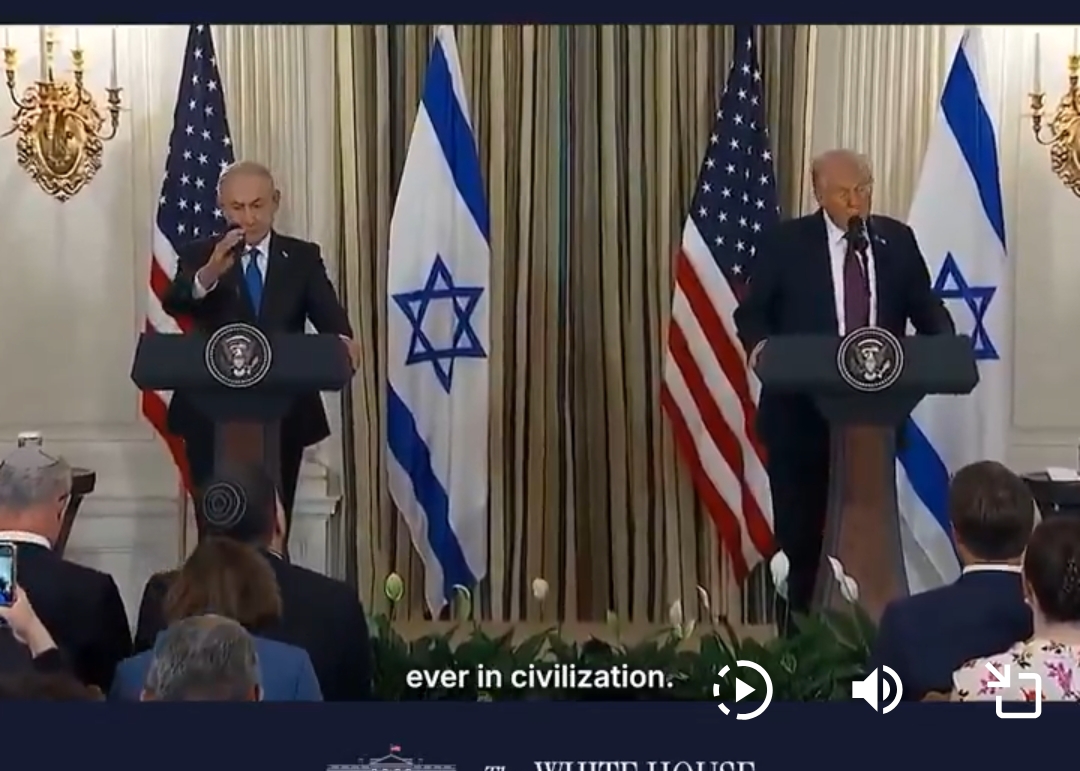
President Trump and Israeli PM Netanyahu Hold “Historic” Meeting Focused on Gaza Ceasefire and Broader Middle East Peace.
Washington, DC:
In what is being hailed as a “historic day for peace,” former U.S. President Donald J. Trump announced the conclusion of a high-level meeting with Israeli Prime Minister Benjamin Netanyahu, aimed at charting a path toward ending the ongoing conflict in Gaza and advancing long-term peace in the Middle East.
The meeting, which took place in Washington, comes amid heightened international pressure to bring an end to the months-long war in Gaza, which has resulted in thousands of casualties and widespread humanitarian suffering.
In a public statement released following the talks, President Trump said:
“Today is a historic day for peace — and Prime Minister @netanyahu and I have just concluded an important meeting. We discussed how to end the war in Gaza, but it’s just a part of the bigger picture, which is peace in the Middle East.”
Sources close to the meeting indicate that discussions included proposals for a sustained ceasefire in Gaza, rebuilding efforts, regional cooperation, and potential normalization talks with other Arab nations — similar to the Abraham Accords brokered during Trump’s presidency in 2020.
Though no formal agreement was signed, officials familiar with the meeting described it as “constructive” and “forward-looking.” Both leaders reportedly expressed a willingness to engage with regional stakeholders, including Egypt, Jordan, Saudi Arabia, and the Palestinian Authority, in pursuit of a comprehensive peace framework.
The meeting marks a significant moment in Trump’s post-presidency diplomatic engagements, especially as speculation continues around his potential bid for the 2028 U.S. presidential election.
Prime Minister Netanyahu, who has faced domestic and international criticism over Israel’s handling of the Gaza conflict, welcomed the dialogue. His office released a statement shortly after the meeting, calling it “a crucial step toward restoring security for Israel and stability for the region.”
Political analysts view this meeting as an attempt to revive U.S. influence in the peace process and reshape the narrative around the Gaza conflict — one that balances military objectives with humanitarian and diplomatic considerations.
As the situation in the Middle East remains fragile, today’s dialogue is seen by many as a hopeful sign that diplomacy could once again take center stage in resolving one of the world’s most intractable conflicts.