Shoeless, Starving, and Nowhere to Go: The Devastating Reality Facing Gaza’s Children, UNICEF Warns.
Geneva:
The humanitarian crisis in Gaza has reached an unbearable level, with children suffering the most under relentless violence and deprivation, UNICEF spokesperson James Elder revealed today during a press briefing at the Palais des Nations in Geneva.
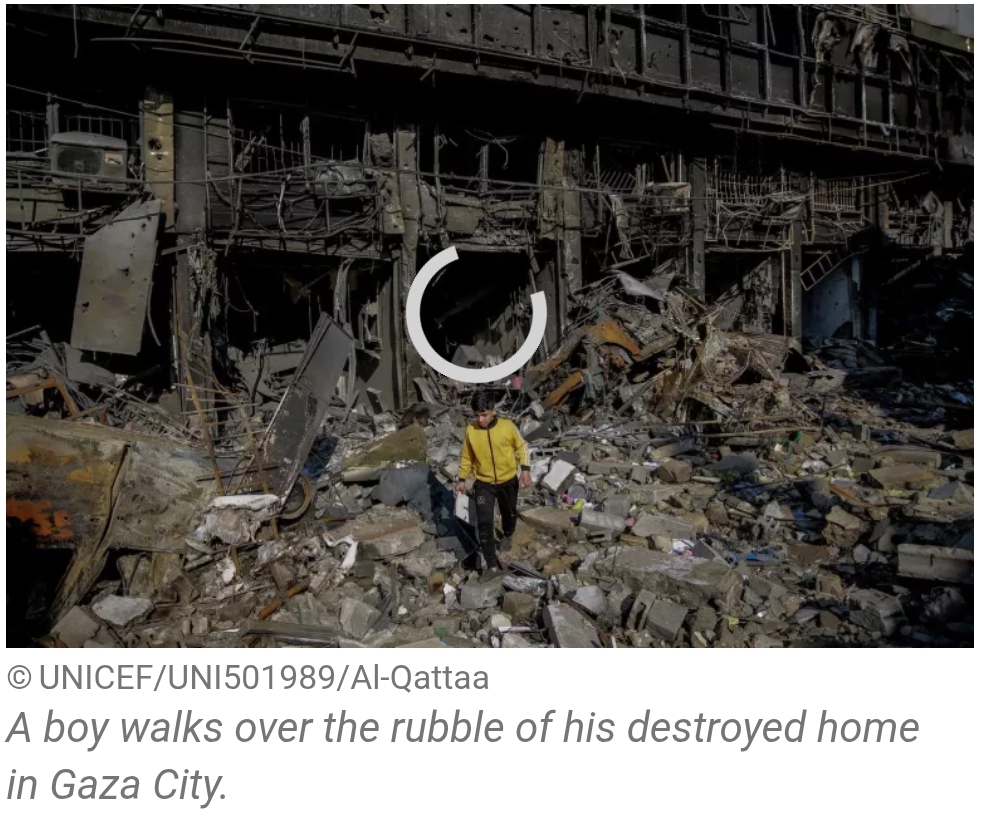
Elder painted a grim picture of life in Gaza City, where tens of thousands of children live amid rubble and constant danger. “Shoeless children push grandparents in wheelchairs around destroyed homes, amputee children struggle through the dust, and mothers carry children suffering from severe rashes,” he said. The children live in fear, shuddering under relentless airstrikes and tracking the fire from helicopters and drones overhead.
The fundamental question haunting Gaza’s residents remains: “Where can I go that will be safe?” The heartbreaking answer, Elder stressed, is that there is nowhere safe in the Gaza Strip.
More than 600,000 civilians have been displaced in recent days, with over 200,000 warned to leave Gaza City and 400,000 already forced south. However, the so-called “safe zones” in the south have become death traps themselves. Overcrowded areas like Al-Mawasi are severely lacking basic necessities, with 85% of families living near open sewage and waste, two-thirds without access to soap, and no safe shelter from aerial attacks.
Hospitals are overwhelmed, many damaged by shelling. At Al Helou hospital, the infant Intensive Care Unit is overflowing, and last week it suffered direct attacks. In Nasser hospital, mothers and newborns lie on corridors due to lack of space, with premature babies sharing oxygen in shifts. Miscarriages and infant deaths have increased, with an estimated 1,000 babies killed in the past two years alone.
Elder condemned the brutal contradictions imposed on Gaza’s civilians, explaining that the blanket evacuation orders do not remove civilian protections, yet civilians remain trapped between hostile northern zones and deadly southern “safe zones.”
The ongoing violence has resulted in countless children being paralysed, burnt, or amputated following attacks on shelters, including hospitals and tents designated as temporary refuge. Schools turned into shelters have been destroyed, and tents offer little protection from shrapnel or fire.
Despite these horrific conditions, UNICEF and partners continue to provide critical aid, including therapeutic food for malnourished children, water line repairs, trauma support, and waste collection. However, Elder warned that without the removal of restrictions on humanitarian aid entry, these efforts remain insufficient to meet the urgent needs.
“The strength of international law depends not on words on paper, but on the resolve of countries to uphold it,” Elder emphasized, urging the international community to act decisively.
In his stark closing, Elder reminded the world of the unrelenting toll on Palestinian children: “Everyone bears some responsibility for this, but there is only one victim. Yesterday, today, and without meaningful action, tomorrow. Palestinian children.”
This latest briefing highlights the urgent need for global intervention to protect Gaza’s most vulnerable and to restore humanitarian access amid ongoing conflict.