National Homoeopathy Conference Highlights Role of Integrative Mental Health Care in Disasters and Emergencies.
Kottayam:
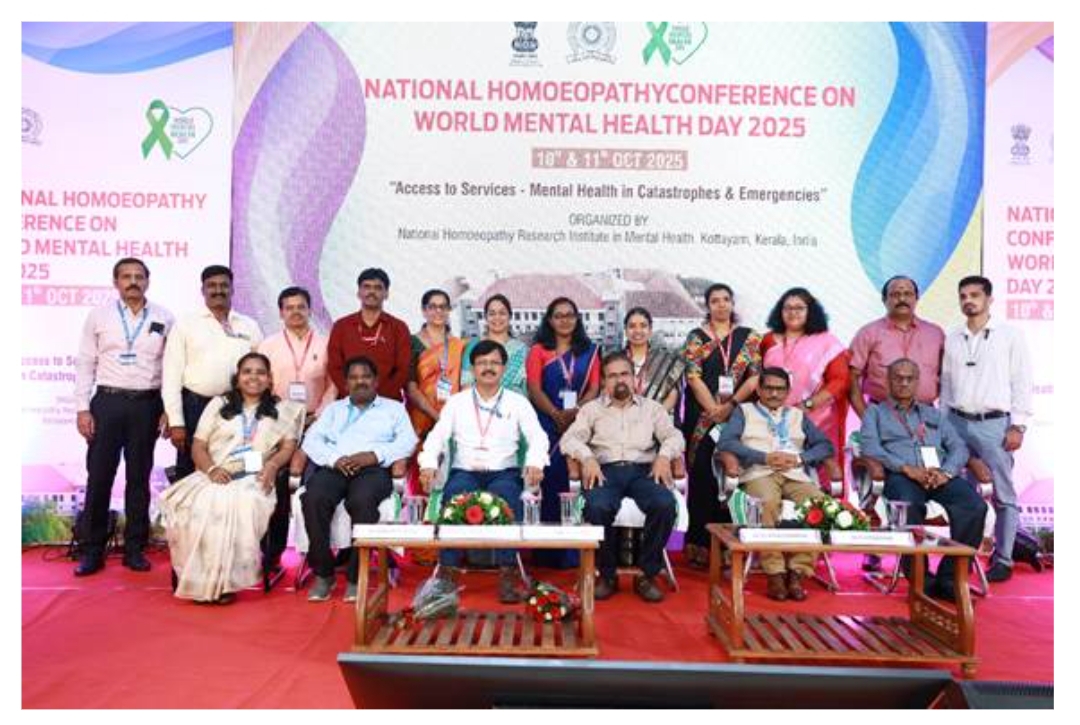
To mark World Mental Health Day 2025, the National Homoeopathy Research Institute in Mental Health (NHRIMH), Kottayam, organized a two-day National Homoeopathy Conference from October 10 to 11, focusing on the theme “Access to Services – Mental Health in Catastrophes and Emergencies.” The event brought together leading homoeopathic practitioners, mental health experts, researchers, and dignitaries from across India to explore innovative and research-driven approaches to mental health care in disaster and emergency settings.
The conference was hosted at the NHRIMH Auditorium and served as a national platform to discuss the integration of Homoeopathy into psychosocial and community-based mental health frameworks, especially during crises. The sessions emphasized the urgent need for accessible, person-centered, and evidence-based care for populations affected by natural disasters, conflicts, and other emergencies.
Dr. Subhash Kaushik, Director General of the Central Council for Research in Homoeopathy (CCRH), addressed the gathering virtually from New Delhi. He highlighted the growing importance of Homoeopathy in post-disaster rehabilitation and resilience-building, noting that holistic care should be grounded in strong clinical and research evidence.
The conference was inaugurated by Dr. C. T. Aravind Kumar, Vice Chancellor of Mahatma Gandhi University, Kottayam. In his address, he stressed the importance of strengthening holistic mental health services and the role of Homoeopathy in addressing emotional and psychological needs during emergencies.
Chetan Kumar Meena, IAS, District Collector of Kottayam, attended as the Guest of Honour and lauded the efforts of NHRIMH in promoting integrative mental health approaches. He emphasized the need to include Homoeopathy in mainstream disaster response strategies to widen access to mental health care during times of crisis.
Dr. Debadatta Nayak, Assistant Director (H) and Officer-in-Charge of NHRIMH, delivered the welcome address and drew attention to the global relevance of the conference theme. He called for urgent collaboration to improve mental health service accessibility in emergency settings. Dr. R. Sitharthan, Principal, NHRIMH, proposed the vote of thanks at the conclusion of the event, expressing gratitude to all participants and contributors.
Over the two days, the conference featured multiple scientific sessions and presentations covering a wide range of critical topics. These included:
- Disaster Mental Health: Lived Experience and Emerging Trends
- Community-Based Management of Psychiatric Crises in Hydrological Disasters (Case study: Wayanad, Kerala)
- Homoeopathic Approaches in Disaster Management
- Resilience in Crisis Situations
- Translational Research in Homoeopathy: N-of-1 Trials and Networks
- Emotional Dysregulation in ADHD and Homoeopathic Interventions
- Clinical and Laboratory-Based Mental Health Assessments
- Human Response to Trauma and Psychiatric Emergencies
- Case-based Insights into PTSD, ADHD, Autism Spectrum Disorder, and Psychotic Disorders
- Substance Withdrawal and Homoeopathic Support
Postgraduate trainees from NHRIMH also presented their research dissertations covering a broad spectrum of mental health conditions, including bipolar disorder, major depressive disorder, schizophrenia, obsessive-compulsive disorder, alcohol and cannabis use disorders, autism, internet addiction, and Parkinson’s disease.
Dr. K. C. Muraleedharan, Assistant Director (H) and Admin In-charge of CCRH, delivered a special address emphasizing the evolving role of Homoeopathy in mental health care, particularly in underserved and disaster-affected communities. He advocated for interdisciplinary collaboration to ensure continuity of care in diverse healthcare settings.
The conference concluded with a valedictory session in which participants shared reflections on the relevance and impact of the discussions. Experts reiterated the value of Homoeopathy as a complementary and accessible modality in mental health care—particularly during catastrophes and emergencies when conventional healthcare systems may be overburdened.
The event reaffirmed a collective commitment to strengthening mental health systems by integrating Homoeopathy with conventional practices, grounded in robust research, and accessible to all, especially in times of crisis.