WHO and European Union Partner to Boost Digital Health Systems in Sub-Saharan Africa.
World Health Summit 2025 marks launch of new collaboration to strengthen digital health infrastructure and pandemic preparedness across Africa.
Berlin:
The World Health Organization (WHO) and the European Union (EU) have announced a new strategic partnership to accelerate the digital transformation of health systems in sub-Saharan Africa. The collaboration aims to expand the use of WHO’s Global Digital Health Certification Network (GDHCN), enhancing pandemic preparedness and advancing equitable access to health services through secure, interoperable digital systems.
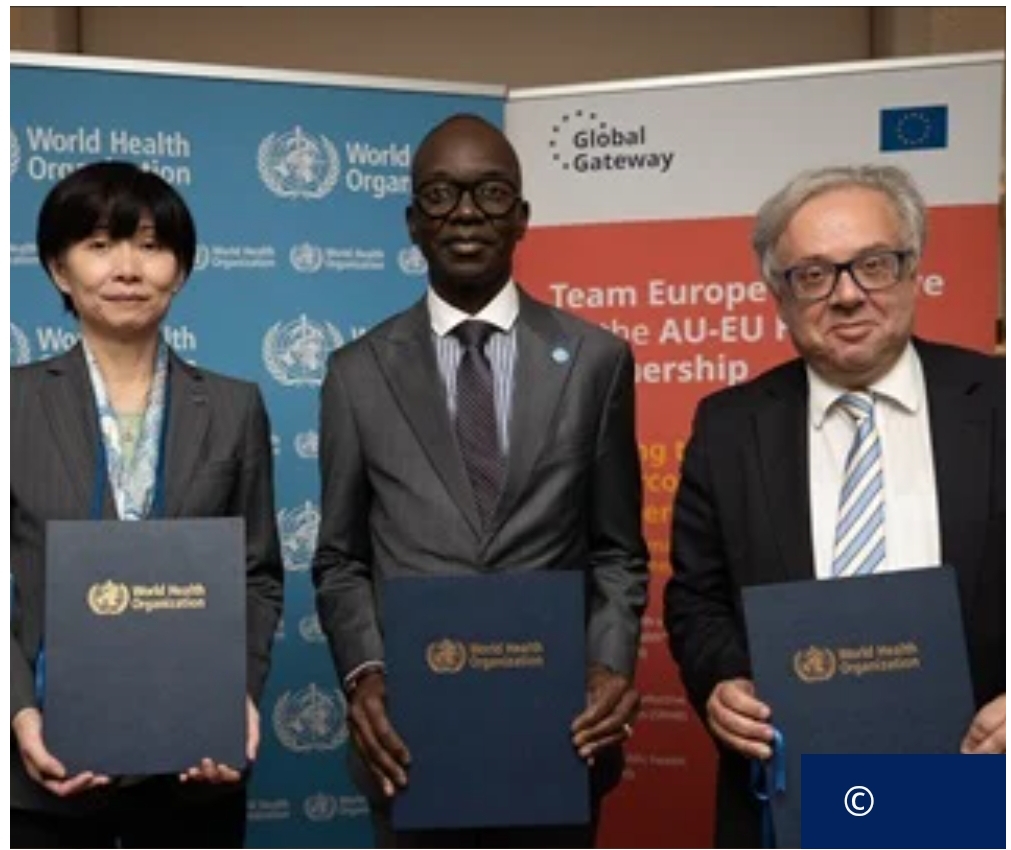
The landmark agreement was unveiled at the World Health Summit 2025 by Dr Yukiko Nakatani, WHO Assistant Director-General for Health Systems, Access and Data; Dr Mohamed Yakub Janabi, WHO Regional Director for Africa; and Martin Seychell, Deputy Director-General of the European Commission Directorate-General for International Partnerships.
Under the new initiative, the EU will provide €8 million in funding from 2025 to 2028 to support WHO and its regional partners in strengthening digital health infrastructure and policy frameworks across sub-Saharan Africa. The partnership aligns with the EU Global Gateway strategy and forms part of the Team Europe Initiative on the EU-AU Health Partnership, which aims to build resilient, people-centered digital health ecosystems across the continent.
Building on the Global Digital Health Certification Network
The collaboration centers on WHO’s Global Digital Health Certification Network (GDHCN)—a secure, globally interoperable system that allows countries to verify nationally approved digital health credentials across borders. The GDHCN builds upon the European Union Digital COVID Certificate (EU DCC), which enabled international verification of vaccination, testing, and recovery certificates during the COVID-19 pandemic, connecting 76 countries and territories.
Despite the EU DCC’s wide reach, only four African countries—Benin, Cabo Verde, Seychelles, and Togo—were part of the network. The GDHCN, now managed by WHO since 2023, aims to close that gap by supporting broader participation across the WHO African Region.
Beyond COVID-19, the GDHCN is poised to play a key role in digitizing the International Certificate of Vaccination or Prophylaxis (ICVP)—the well-known “Yellow Card.” This digital transformation, in line with the updated International Health Regulations (IHR), will enable more reliable vaccination tracking, reduce the risk of fraud, and simplify international health documentation for travelers.
Empowering Countries and People
The new EU–WHO partnership emphasizes empowering countries to manage their own trusted, interoperable digital health systems. The GDHCN ensures that personal health records are securely stored and managed by national health authorities. WHO itself does not have access to personal data, ensuring full respect for privacy and data protection standards.
“Digital health is a cornerstone of modern, resilient health systems,” said Dr Yukiko Nakatani. “This partnership will not only help countries strengthen their digital foundations but also ensure that individuals have secure, portable access to their health information—wherever they are, whenever they need it.”
By facilitating cross-border collaboration and strengthening health data interoperability, the partnership is expected to enhance health security, pandemic response, and universal health coverage efforts throughout Africa.
Martin Seychell highlighted that the EU’s investment “reflects our shared commitment to building digital bridges between Europe and Africa, ensuring that technology benefits everyone, everywhere.”
A Foundation for the Future
Working closely with regional organizations such as the Africa Centres for Disease Control and Prevention (Africa CDC), the partnership will provide technical expertise, capacity-building support, and policy guidance to participating countries.
“The initiative lays the groundwork for a new era of digital health cooperation,” said Dr Mohamed Yakub Janabi. “It strengthens not only pandemic preparedness but also the everyday delivery of health services—making them more efficient, transparent, and people-centered.”
Through this collaboration, WHO and the European Union reaffirm their joint vision of a digitally connected, health-secure Africa, where every individual can access and control their own health information in a trusted and interoperable global system.