
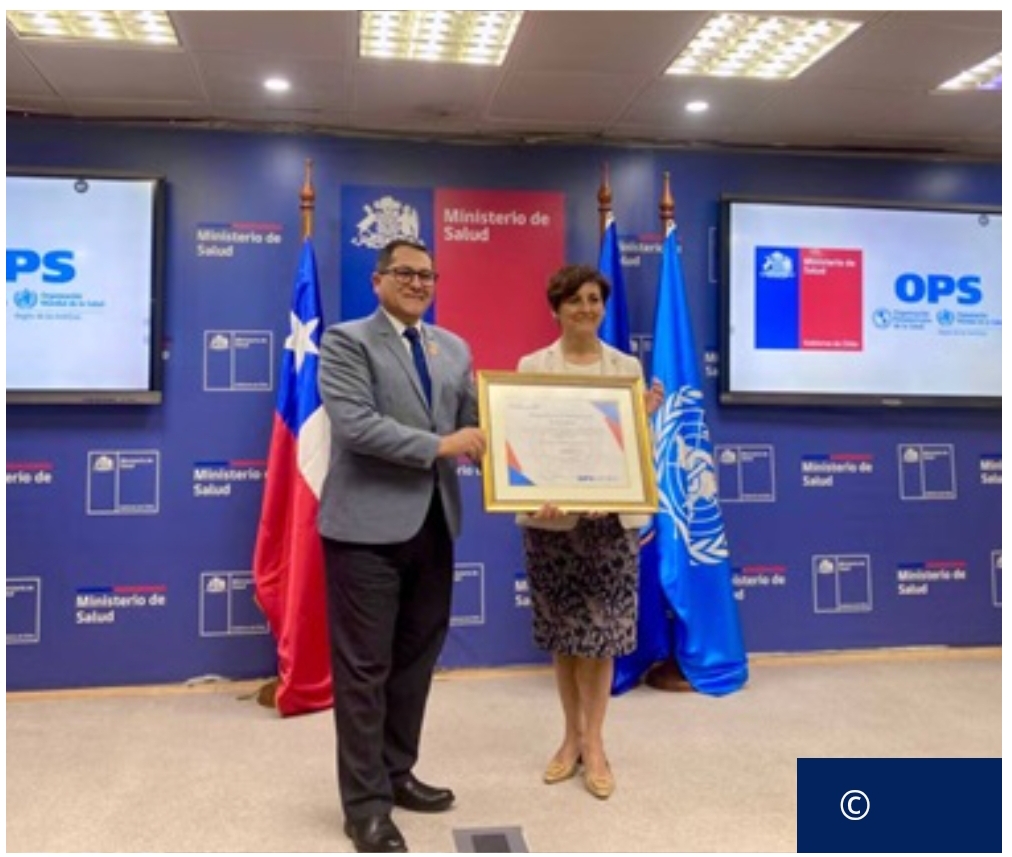
Chile Becomes First Country in the Americas to Eliminate Leprosy, WHO and PAHO Confirm.
Santiago:
World Health Organization (WHO), together with the Pan American Health Organization (PAHO), has officially verified that Chile has eliminated leprosy, marking a historic public health milestone. Chile is now the first country in the Americas—and only the second worldwide—to achieve this recognition.
Leprosy, also known as Hansen disease, was first recorded in Chile at the end of the 19th century on Rapa Nui (Easter Island). While the disease had limited presence on mainland Chile, sporadic cases were introduced over time. On the island, transmission was contained through isolation and treatment measures, with the last secondary cases managed by the late 1990s.
Chile has not recorded any locally acquired case of leprosy for more than 30 years, with the last detected in 1993. Despite the absence of local transmission, the disease remained on the national public health agenda. Authorities maintained mandatory notification, integrated surveillance systems, and continuous clinical readiness across the health sector.
Decades of sustained vigilance
“This landmark public health achievement is a powerful testament to what leadership, science, and solidarity can accomplish,” said Dr. Tedros Adhanom Ghebreyesus, Director-General of WHO. He emphasized that Chile’s success demonstrates how sustained commitment, inclusive health services, early detection, and universal access to care can eliminate even ancient diseases.
The verification recognizes over three decades of sustained public health action, robust epidemiological surveillance, and long-term political commitment. At the request of Chile’s Ministry of Health, WHO and PAHO convened an independent expert panel in 2025 to assess whether elimination had been achieved and could be sustained.
The panel conducted an in-depth review of epidemiological data, surveillance systems, case management protocols, and sustainability plans. It confirmed the absence of local transmission and validated Chile’s capacity to detect and manage future imported cases among non-autochthonous populations.
Ximena Aguilera, Chile’s Minister of Health, described the verification as “a source of great pride” for the country. She highlighted decades of prevention strategies, early diagnosis, effective treatment, and the dedication of health teams nationwide. Aguilera also reaffirmed Chile’s commitment to maintaining active surveillance and ensuring respectful, stigma-free care for all affected individuals.
Strong systems in a low-incidence setting
Between 2012 and 2023, Chile reported 47 leprosy cases, none of which were locally acquired.
Chile’s integrated health model has played a central role in sustaining elimination. Primary care centers serve as the entry point for suspected cases, with rapid referral to dermatology specialists for diagnosis, treatment, and follow-up. Clinicians are trained in line with WHO’s Towards Zero Leprosy strategy, prioritizing early detection, disability prevention, and comprehensive rehabilitation.
Care extends beyond medical treatment to include physiotherapy, long-term follow-up, and social support to promote recovery and inclusion. Since 1995, PAHO, in coordination with WHO, has provided multidrug therapy (MDT) free of charge across the Americas, including Chile. This uninterrupted access to treatment has been critical in curing patients, preventing disability, and interrupting transmission.
A milestone for the Americas
Chile’s achievement sets a precedent for other countries in the region. PAHO Director Dr. Jarbas Barbosa said the milestone sends “a powerful message” that diseases often associated with vulnerable populations can be eliminated through strong systems and political will.
PAHO has supported Chile in aligning surveillance with international standards, strengthening laboratory capacity, and maintaining clinical expertise—even in a context where many health professionals may never encounter a case during their careers.
Chile’s success is also rooted in a broader legal and social framework that promotes human rights, equal access to healthcare, and anti-discrimination protections. The country’s mixed public–private health system, under strong regulatory oversight, ensures access to services for all residents, including migrants and vulnerable groups.
Sustaining elimination
While the verification marks a significant milestone, health authorities stress that elimination does not mean complacency. Under WHO’s Towards Zero Leprosy strategy and PAHO’s Disease Elimination Initiative, Chile will continue reporting to WHO, maintaining sensitive surveillance systems, and preserving clinical expertise to respond to any future sporadic or imported cases.
The independent verification panel recommended formally designating a national referral center and leveraging WHO Academy’s online training resources to strengthen long-term preparedness.
Chile’s elimination of leprosy stands as a powerful example of how sustained public health commitment, scientific rigor, and inclusive policies can consign a centuries-old disease to history—while ensuring that no one is left behind.