Children Bear Brunt of Global Crises, UNICEF Chief Warns at Humanitarian Dialogue 2026.
New York:
Delivering a stark assessment of the state of children worldwide, Catherine Russell, Executive Director of UNICEF, warned that children are facing unprecedented levels of violence, hunger, and deprivation amid escalating global conflicts and shrinking humanitarian resources.
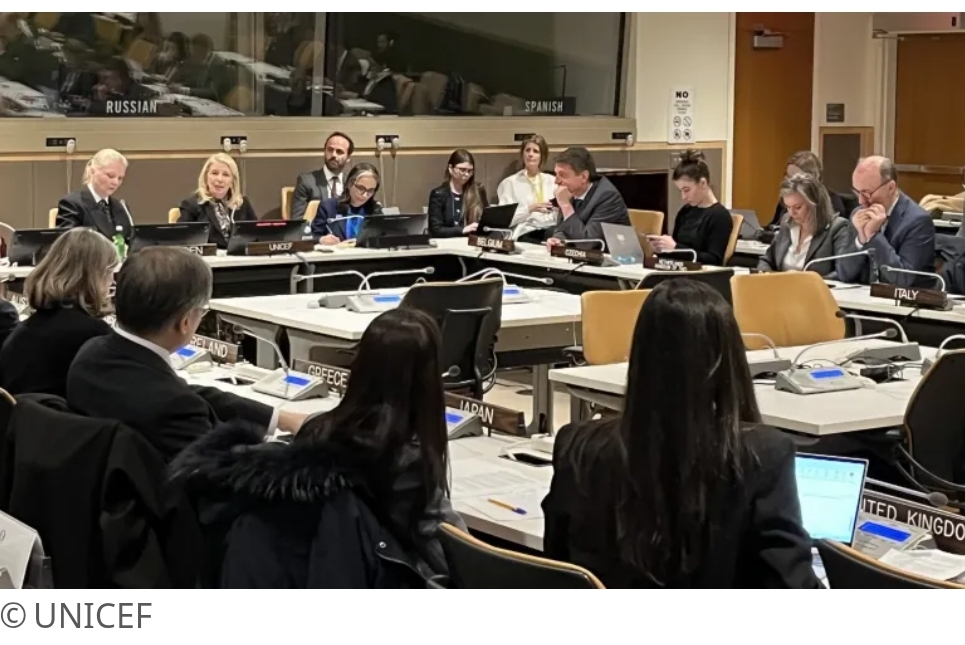
Speaking at the Humanitarian Dialogue on “Humanitarian Priorities for Children in 2026,” Russell said that more than 41,000 grave violations against children were recorded in 2024—the highest number ever documented by the United Nations—with similar trends expected in 2025.
Rising Violence and Changing Nature of War
Russell highlighted how modern warfare is increasingly endangering children, with new technologies making attacks faster and more lethal, especially in densely populated areas. Explosive weapons now account for nearly 70% of child casualties in conflict zones.
In Sudan, she noted, armed drones are responsible for nearly 80% of reported child casualties this year, underscoring the evolving and deadly nature of conflict.
She further warned that essential infrastructure—including schools, hospitals, and water systems—is increasingly being targeted, leaving children without access to basic services necessary for survival and development.
Global Hunger Crisis Deepens
The UNICEF chief drew attention to the worsening hunger crisis, stating that nearly 38 million children across 26 countries require urgent nutritional support, including around 10 million suffering from severe acute malnutrition.
Recounting her recent visit to Somalia, Russell described harrowing scenes of mothers walking for days under extreme conditions to reach treatment centers with severely malnourished children.
She emphasized that famine is preventable, stressing that the crisis is less about food scarcity and more about the lack of political action to address conflict and ensure access to aid.
Children at Risk of Abuse and Loss of Education
Russell also raised alarm over increasing risks of sexual violence against children. In the Democratic Republic of the Congo, she revealed that at the peak of violence last year, a child was raped every 30 minutes.
Education systems have also been severely disrupted. In Gaza Strip, where 90% of schools have been damaged or destroyed, more than 650,000 children have been out of school for over two and a half years.
“Children are not asking for temporary fixes—they want safe schools where they can rebuild their lives,” she said.
Humanitarian System Under Pressure
Russell warned that the global humanitarian system is under immense strain, with declining funding and limited access forcing difficult decisions on aid delivery. This includes scaling back nutrition programs, protection services, and access to education—choices she described as life-and-death for children.
For 2026, UNICEF has appealed for $7.7 billion to reach 73 million children, though its humanitarian action plan is 25% smaller than the previous year due to funding constraints.
She stressed the importance of flexible funding, noting that it enables rapid responses to crises such as the earthquake in Myanmar and post-ceasefire operations in Gaza. However, such funding accounted for less than 4% of UNICEF’s total humanitarian income in 2025.
Call for Urgent Global Action
Concluding her remarks, Russell issued a strong call to the international community, urging immediate political and financial action to protect children.
She outlined three key priorities: restoring respect for international law, ensuring flexible and timely humanitarian funding, and investing in long-term solutions that address the root causes of crises.
“Ultimately, it is a choice,” she said. “Whether we accept a world where children suffer the consequences of conflict, or we act together to give them a chance to live, learn, and hope.”
The address underscored the urgent need for coordinated global efforts as millions of children continue to face the devastating impacts of war, hunger, and displacement worldwide.