Massive Protest Held at Sandhol in Mandi Against Closure of College, BJP Demands Immediate Restoration.
Shimla:
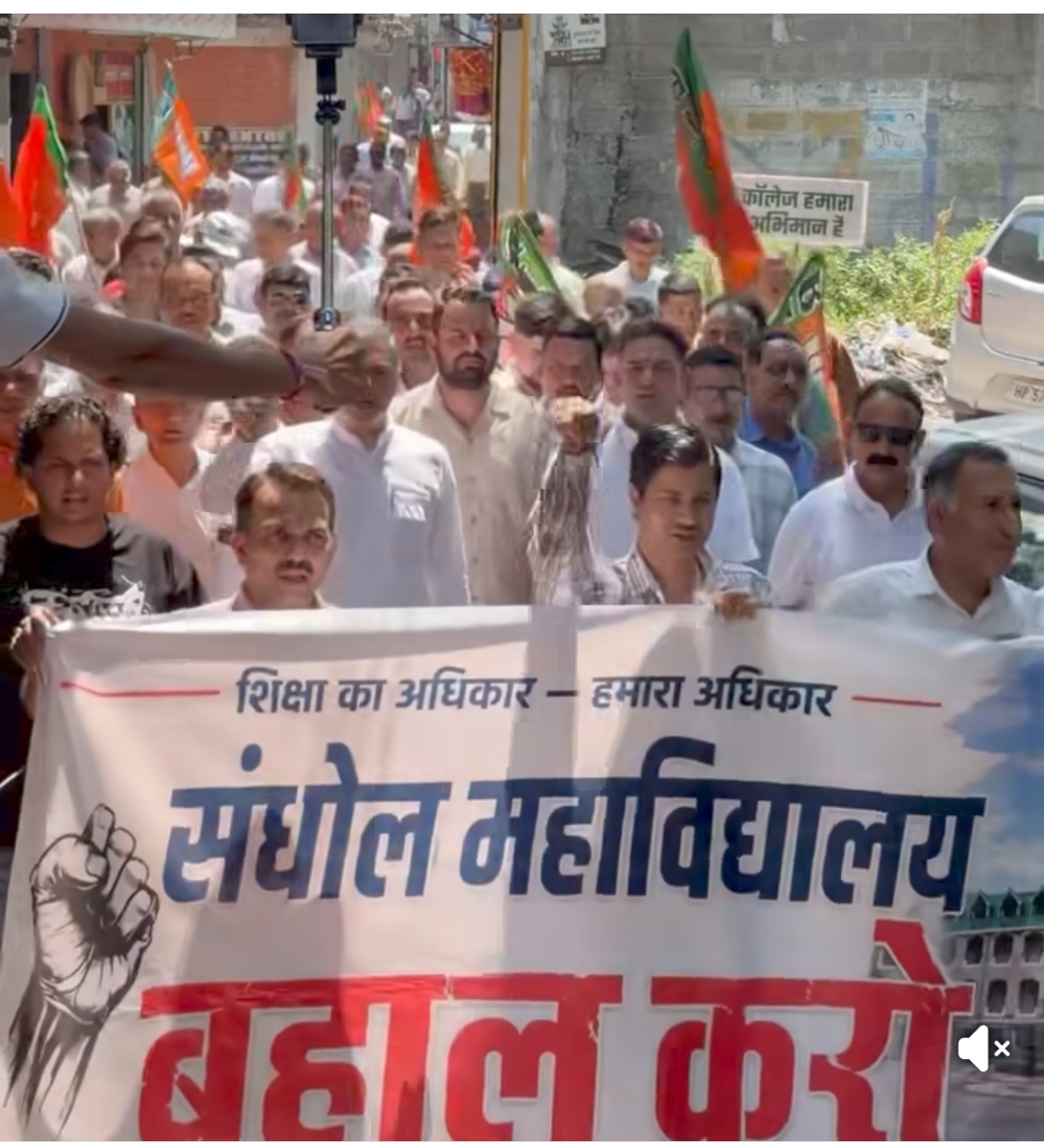
A large-scale public protest was organized at Sandhol in Mandi district on Wednesday against the reported decision by the state government to close Sandhol College, drawing widespread participation from local residents and BJP leaders. The demonstration was led by BJP leader and former BJP candidate from the Dharampur Assembly constituency, Rajat Thakur, and witnessed participation from hundreds of people including women, students, parents, panchayat representatives, social organizations, and party workers.
Addressing the gathering, Rajat Thakur said that the issue is not merely about saving an institution but about protecting the future of rural youth and safeguarding their right to higher education. He emphasized that many economically weaker families are unable to send their children to distant colleges, which has severely impacted students’ education in the region.
The protest saw strong slogans against the state government, with demonstrators demanding immediate restoration of the college. Participants alleged that the closure decision has directly harmed students, particularly those from rural backgrounds, and has reduced access to higher education opportunities for thousands of youth.
A large protest march was also carried out from Sandhol bus stand through the hospital area, camp zone, and mini secretariat. The rally concluded with the submission of a memorandum to the state government through the Tehsildar Sandhol. The memorandum demanded the immediate reopening of Sandhol College, filling of vacant teaching and non-teaching posts, and steps to ensure that students’ education is not disrupted.
Rajat Thakur warned that if the government fails to restore the college soon, the BJP along with local residents will intensify their agitation and launch a larger public movement. He also announced plans to raise awareness across villages regarding the issue.
Protesters reiterated that the decision to close the college is a direct attack on the interests of rural students and accused the government of weakening higher education access in the region. They demanded urgent intervention to protect students’ academic future and ensure uninterrupted functioning of the institution.