Netanyahu Honors Second Lebanon War Victims, Vows Continued Security Presence and Pursuit of Peace with Lebanon.
Jerusalem:
Israeli Prime Minister Benjamin Netanyahu paid tribute to the soldiers and civilians who lost their lives in the Second Lebanon War, reaffirming Israel’s determination to confront Hezbollah, maintain security along its northern border, and pursue a future peace agreement with Lebanon.
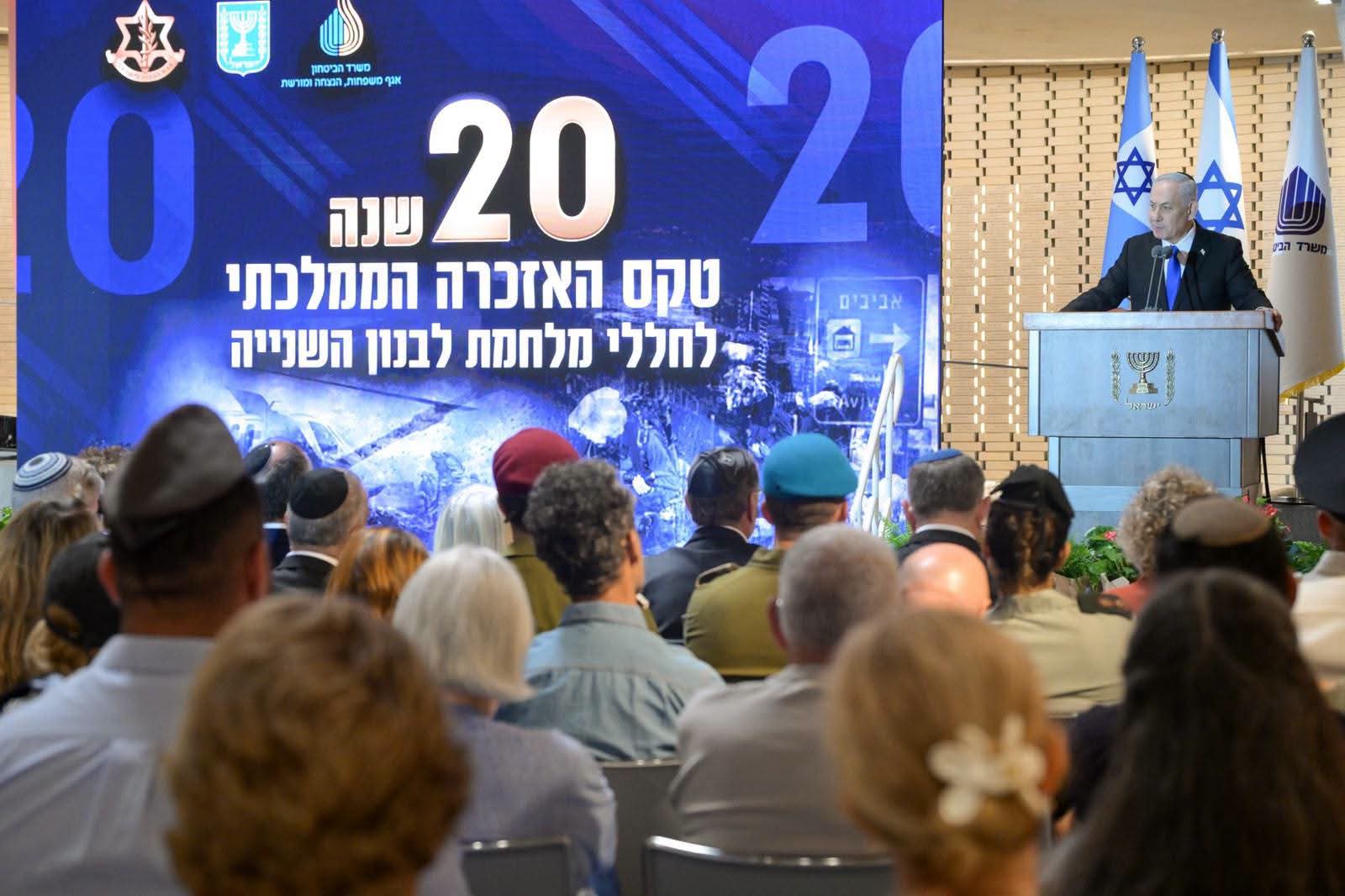
Speaking at the State Memorial Ceremony for the fallen of the 2006 conflict at Mount Herzl, Netanyahu addressed bereaved families, praising the sacrifices made by those who died and describing their legacy as an enduring source of inspiration for Israel’s current military campaign, which he referred to as the “War of Redemption.”
Tribute to Fallen Soldiers and Their Families
Opening his remarks, Netanyahu extended condolences to the families of soldiers and civilians killed during the Second Lebanon War, acknowledging the lasting pain of their loss.
He highlighted the story of the late Major Roi Klein, who sacrificed his life during the Battle of Bint Jbeil by shielding fellow soldiers from a grenade with his body. Netanyahu noted that Klein’s son has since joined the Golani Brigade as a combat soldier, calling it a symbol of the continuation of Israel’s military tradition across generations.
According to the Prime Minister, the legacy of soldiers like Klein continues to inspire Israeli troops serving in ongoing military operations.
Hezbollah and Lebanon
Netanyahu described Lebanon as both “a beautiful country” and a nation whose territory has been transformed into a base for Hezbollah, which he characterized as an Iranian-backed militant organization.
He accused Hezbollah of choosing conflict with Israel despite the consequences for Lebanon itself, arguing that the group has placed the country at the center of regional instability.
The Prime Minister said Israel had demonstrated that it would not be intimidated by Hezbollah or Iran, rejecting past statements by former Hezbollah leader Hassan Nasrallah that portrayed Israel as weak.
Reflecting on His Own Military Service
During his speech, Netanyahu recalled serving in Lebanon while a member of Israel’s elite General Staff Reconnaissance Unit, describing operations conducted in Beirut and elsewhere during his military career.
He spoke of Lebanon’s natural beauty while lamenting what he described as the country’s domination by armed groups backed by Iran.
Military Operations Against Hezbollah
Netanyahu reviewed Israel’s recent military operations against Hezbollah, stating that Israeli forces had taken decisive action following attacks launched from Lebanon.
He said Israel had:
Prevented Hezbollah’s Radwan Force from carrying out attacks in northern Israel.
Conducted intelligence and military operations, including the widely reported pager operation.
Eliminated Hezbollah’s senior leadership, including Hassan Nasrallah.
Killed more than 9,000 Hezbollah fighters since the current conflict began, including approximately 3,500 during Operation Roaring Lion, according to Israeli figures.
Destroyed much of Hezbollah’s missile and rocket arsenal.
Targeted infrastructure in southern Lebanon that Israel says was used for militant operations.
Netanyahu argued that these operations significantly weakened Hezbollah’s military capabilities and strengthened Israel’s national security.
Security Buffer Along the Northern Border
The Prime Minister announced that Israel intends to maintain what he described as a security buffer zone inside southern Lebanon for as long as necessary to prevent future attacks.
He said the buffer is designed to stop militant infiltration and prevent Hezbollah from rebuilding military infrastructure near Israel’s northern communities.
Netanyahu pledged to restore security for residents of northern Israel in the same way the government has sought to improve security in southern communities.
Diplomatic Developments
In one of the speech’s most significant announcements, Netanyahu revealed that Israeli representatives had recently held direct negotiations with officials from the Lebanese government under U.S. mediation.
He said the two sides had reached what he called a “historic breakthrough” by signing an agreement of understandings that separates the Lebanese front from Iran’s regional influence.
According to Netanyahu, the understanding recognizes Israel’s right to maintain the security buffer zone until the threat posed by Hezbollah has been eliminated.
He described the agreement as both a military and diplomatic setback for Hezbollah and Iran.
Hope for Future Peace
While acknowledging that security challenges remain, Netanyahu expressed optimism that recent developments could open the door to improved relations between Israel and Lebanon.
He said Israel would continue working toward eventually reaching a formal peace agreement between the two countries.
Closing Tribute
Concluding his address, Netanyahu honored all those who lost their lives during the Second Lebanon War and paid special tribute to the late Israeli Air Force mechanic Keren Tendler, quoting a message she wrote shortly before she was killed in combat.
He said Israel would continue defending the country while preserving the legacy of those who made what he described as the ultimate sacrifice for the nation’s security.
The memorial ceremony marked the 20th anniversary of the Second Lebanon War, bringing together senior government officials, military leaders, veterans, and families of those who died during the 2006 conflict.