Netanyahu Unveils Vision for Negev Development, Pledges Stronger Security and Massive Infrastructure Investment.
Israeli Prime Minister says government will eliminate the concept of the ‘periphery’, strengthen border security, expand transport links and accelerate economic growth across the Negev.
Dimona, Israel:
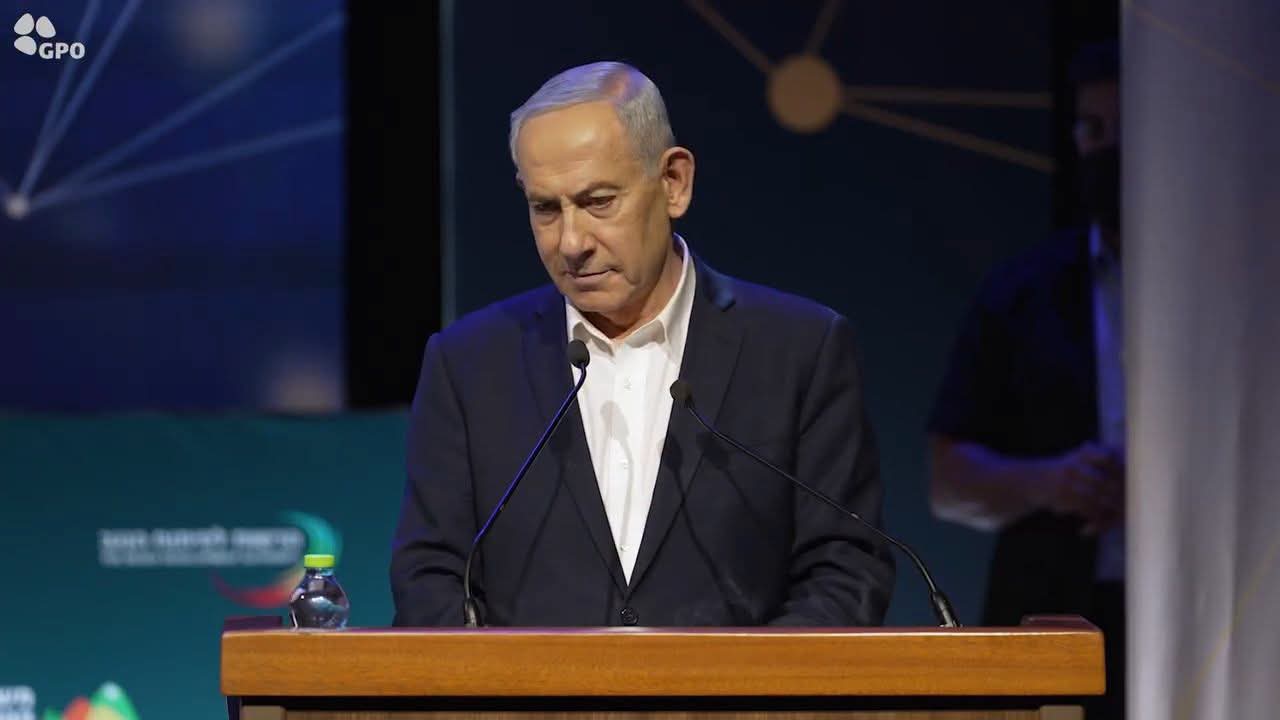
Israeli Prime Minister Benjamin Netanyahu on Wednesday outlined an ambitious vision for the future of the Negev, reaffirming his government’s commitment to strengthening security, accelerating infrastructure development and transforming southern Israel into a major economic and residential hub.
Addressing the 2026 Negev Conference in Dimona, organised by the Ministry for the Development of the Negev, the Galilee and National Resilience and the Negev Development Authority, Netanyahu said the government’s strategy is built on two key pillars—security and prosperity—which he described as essential for the region’s long-term development.
Joined by his wife Sara Netanyahu, senior ministers, Members of Knesset, mayors and regional council heads, the Prime Minister said the Negev has undergone a dramatic transformation over the past decade, citing rapid urban development, improved transportation infrastructure and increasing demand for housing.
“We have made a revolution here,” Netanyahu said, adding that his vision is to eliminate the notion of Israel’s “periphery” by ensuring that the Negev, Galilee and central Israel are equally connected through modern infrastructure and economic opportunities.
Focus on Development and Connectivity
Highlighting development in Dimona, Netanyahu praised local leadership for transforming the city into a thriving urban centre. He recalled that the town once struggled with abandoned buildings and vacant housing but has since witnessed significant growth through government investment.
He also referred to recent visits to Mitzpe Ramon, Yeruham, the western Negev and Kibbutz Nir Oz, saying the government remains committed to rebuilding communities affected by the October 7 attacks and strengthening the region’s economy.
According to Netanyahu, the Tekuma region, which has received billions of shekels in government investment, is now experiencing record population growth, with returning residents and new families contributing to its rapid expansion.
Security Remains Government’s Top Priority
Netanyahu said ensuring security remains the government’s foremost responsibility. He highlighted the construction of the more than 200-kilometre barrier along the Israel-Egypt border, describing it as a crucial measure that prevented illegal infiltration, smuggling and terrorism from the Sinai Peninsula.
He also outlined what he described as a new Israeli security doctrine, asserting that security threats would now be addressed beyond Israel’s borders rather than through a policy of containment.
The Prime Minister said Israel had fundamentally changed its strategic approach following the October 7 attacks, shifting towards proactive military operations and stronger deterrence.
Commenting on regional tensions, Netanyahu warned that Israel remains prepared for any scenario involving Iran.
“I can tell the leaders of Iran: Do not count on it being quiet if you attack us,” he said, adding that any future attack on Israel would receive a significantly stronger response than in the past.
He reiterated that Israel would continue to act decisively against what he referred to as the “Axis of Evil” and any group threatening the country’s security.
Major Infrastructure Projects Planned
Netanyahu announced several large-scale infrastructure initiatives aimed at accelerating development across southern Israel.
Among the projects highlighted were:
Expansion of transportation infrastructure, including new highways, bridges, interchanges and railway lines.
Development of an additional international airport in the Ziklag area to boost economic activity in the western Negev.
Further expansion of Ramon Airport near Eilat.
A long-term plan to establish a railway connection stretching from Kiryat Shmona in northern Israel to Eilat in the south, creating a continuous national transport corridor.
The Prime Minister said improved connectivity would significantly reduce travel times, encourage investment and strengthen economic integration across the country.
Call for Public Support
Netanyahu concluded by urging local leaders to highlight the government’s investments and development efforts in the Negev, saying residents should judge progress based on visible improvements in infrastructure, housing and economic opportunities.
He reaffirmed that the government’s commitment to the Negev would continue to grow, stressing that the region remains central to Israel’s national development strategy.
The 2026 Negev Conference brought together government officials, regional leaders and stakeholders to discuss policies aimed at strengthening development, resilience and long-term growth across southern Israel.