Meloni and Frederiksen Issue Joint Message on Europe, Migration and Security: ‘We Are United by Our Desire to Defend Europe’.
Rome/Copenhagen:
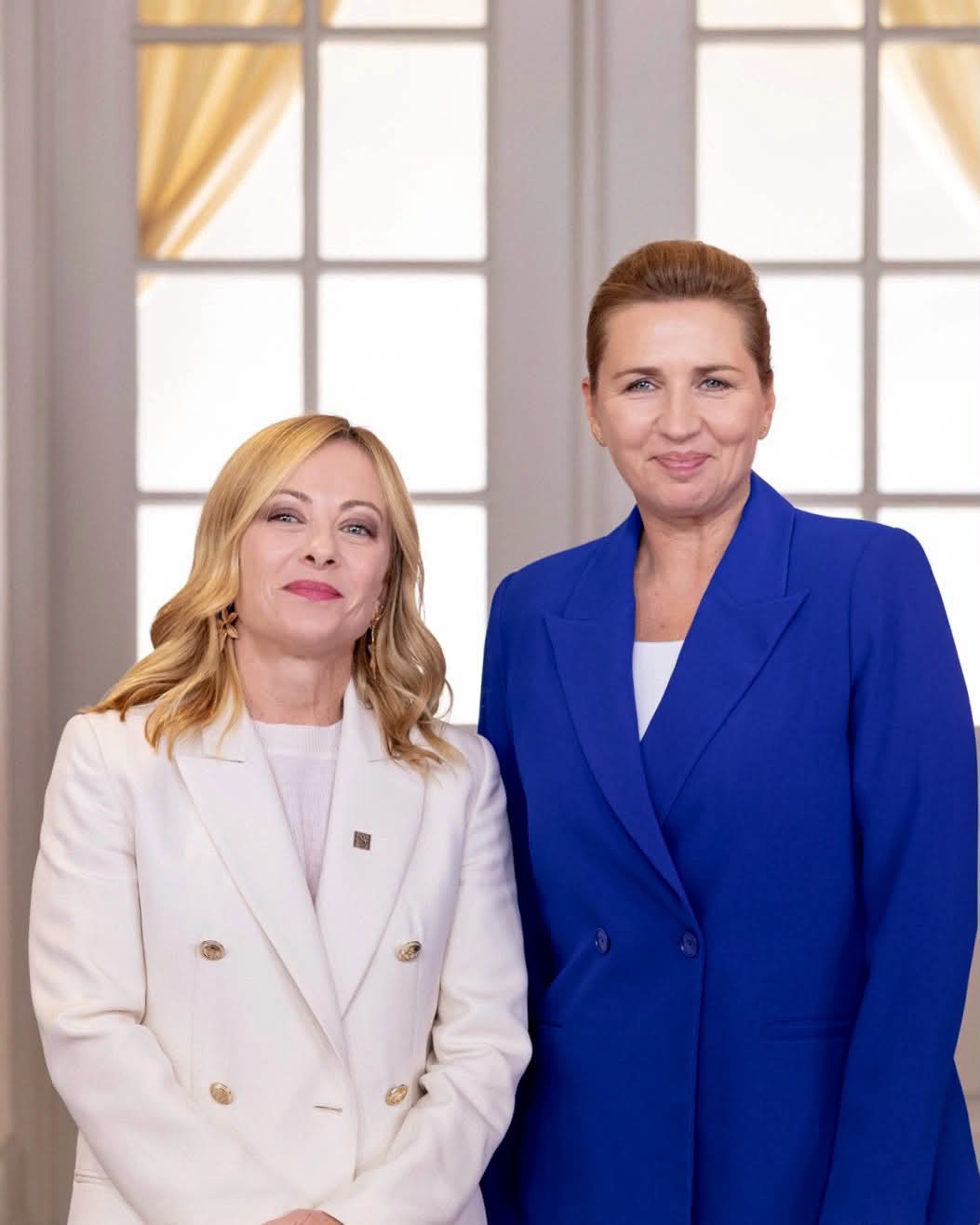
Italian Prime Minister Giorgia Meloni and Danish Prime Minister Mette Frederiksen have issued a joint message outlining their shared vision for Europe’s future, with a strong focus on migration, public security, European values and the protection of the continent’s cultural heritage.
Although the two leaders come from different political backgrounds and represent countries with very different geographical and demographic profiles, they said they were united by a common objective: strengthening and protecting Europe.
The joint intervention comes amid an ongoing European debate over migration policy, the enforcement of deportation decisions, border management and the balance between human rights obligations and public security.
Different political backgrounds, common European concerns
Addressing European citizens, Meloni and Frederiksen acknowledged that their political positions are considerably different and that they do not agree on every issue.
However, they emphasised that their cooperation is driven by a shared determination to defend Europe and its citizens.
They highlighted the contrast between their respective countries, describing Italy as a large southern European nation and Denmark as a smaller northern European country. Despite those differences, they argued that the challenges facing European societies increasingly require common responses.
A central theme of their message was the need for Europe to strengthen its ability to control migration while maintaining respect for the continent’s laws and values.
Call for stricter action against illegal immigration
Meloni and Frederiksen said they did not accept what they described as uncontrolled immigration to Europe and pointed to the adoption of stricter migration policies in both Italy and Denmark.
They argued that irregular migration can place pressure on public services and contribute to social insecurity and a loss of public confidence.
The two leaders particularly highlighted cases involving migrants without a legal right to remain who are convicted of serious offences. They referred to crimes including violence, drug trafficking and sexual offences, arguing that European governments must respond firmly when such crimes occur.
According to the joint message, European citizens expect their political representatives to provide concrete solutions rather than simply discuss the issue.
The leaders said that, for too long, ordinary citizens had borne what they described as the costs of uncontrolled migration. They stressed that governments have a responsibility to provide greater security and protection, particularly for vulnerable communities.
Push for more deportations and third-country return centres
Another major element of the message concerns the deportation of foreign nationals who have committed serious crimes or who do not have a legal right to remain in European countries.
Meloni and Frederiksen said they had worked together to change the balance in the application of the European Convention on Human Rights in cases involving foreign nationals convicted of serious offences.
They argued that the resulting legal and political developments should lead to an increase in deportations.
The two leaders also called for the establishment of return centres in third countries, along with other innovative arrangements outside Europe, as part of a broader strategy to make deportations more effective.
They said work on these proposals was already underway.
The idea of processing or facilitating returns outside European territory has become an increasingly prominent issue in European migration discussions, particularly as governments seek mechanisms to ensure that deportation decisions can actually be implemented.
Security must go together with European values
While calling for stronger enforcement of migration laws, Meloni and Frederiksen also stressed that respect for European laws must be accompanied by respect for European values.
They said this principle should apply not only to people entering Europe illegally but also to the millions of foreign nationals who legally live in European countries.
The two leaders argued that integration should involve respect for the laws, customs and fundamental principles of the countries in which people choose to build their lives.
Christian cultural heritage highlighted
The joint message also addressed Europe’s cultural and historical identity.
Meloni and Frederiksen said they were proud of Europe’s Christian cultural heritage and wanted to protect it.
They stressed that people who come to Europe and choose to make European countries their homes should respect the values of their host societies. They also rejected attempts to impose social models that, in their view, are incompatible with European values.
The leaders presented this as part of a broader argument for defending Europe’s identity while maintaining social cohesion.
‘We believe millions of Europeans share this conviction’
Concluding their message, Meloni and Frederiksen said they regarded stronger migration controls, respect for national laws, public security and the protection of European values as essential elements of Europe’s future.
They argued that these principles should form part of a broader effort to protect European societies and strengthen citizens’ confidence in their institutions.
The two leaders expressed the belief that millions of Europeans share their concerns and their desire for a Europe that is capable of controlling its borders, enforcing its laws and preserving its cultural and democratic identity.
The joint intervention underlines the growing political emphasis in Europe on migration enforcement and deportations, while also highlighting a continuing debate over how security policies should be balanced with European legal obligations and fundamental rights.