BRICS Leaders Raise Alarm Over Growing Nuclear Risks, Call for Nuclear Safety Amid Conflicts.
New Delhi:
BRICS leaders on Saturday voiced serious concern over the growing risks of nuclear danger and conflict, calling for strict adherence to nuclear safety and security standards, particularly during armed conflicts.
The concern was expressed in the New Delhi Declaration, adopted on the opening day of the two-day BRICS Summit being hosted by India. The declaration highlighted the need to protect civilian infrastructure and peaceful nuclear facilities from deliberate attacks and stressed that nuclear safety and security must be maintained under all circumstances.
The BRICS leaders expressed particular concern over what they described as “deliberate attacks” on civilian infrastructure and peaceful nuclear facilities operating under the full safeguards of the International Atomic Energy Agency (IAEA).
The leaders underlined that nuclear safety and security should never be compromised, including during periods of armed conflict. The statement comes amid heightened global tensions and growing concerns over the possibility that military confrontations could pose risks to nuclear installations and increase the chances of a wider nuclear crisis.
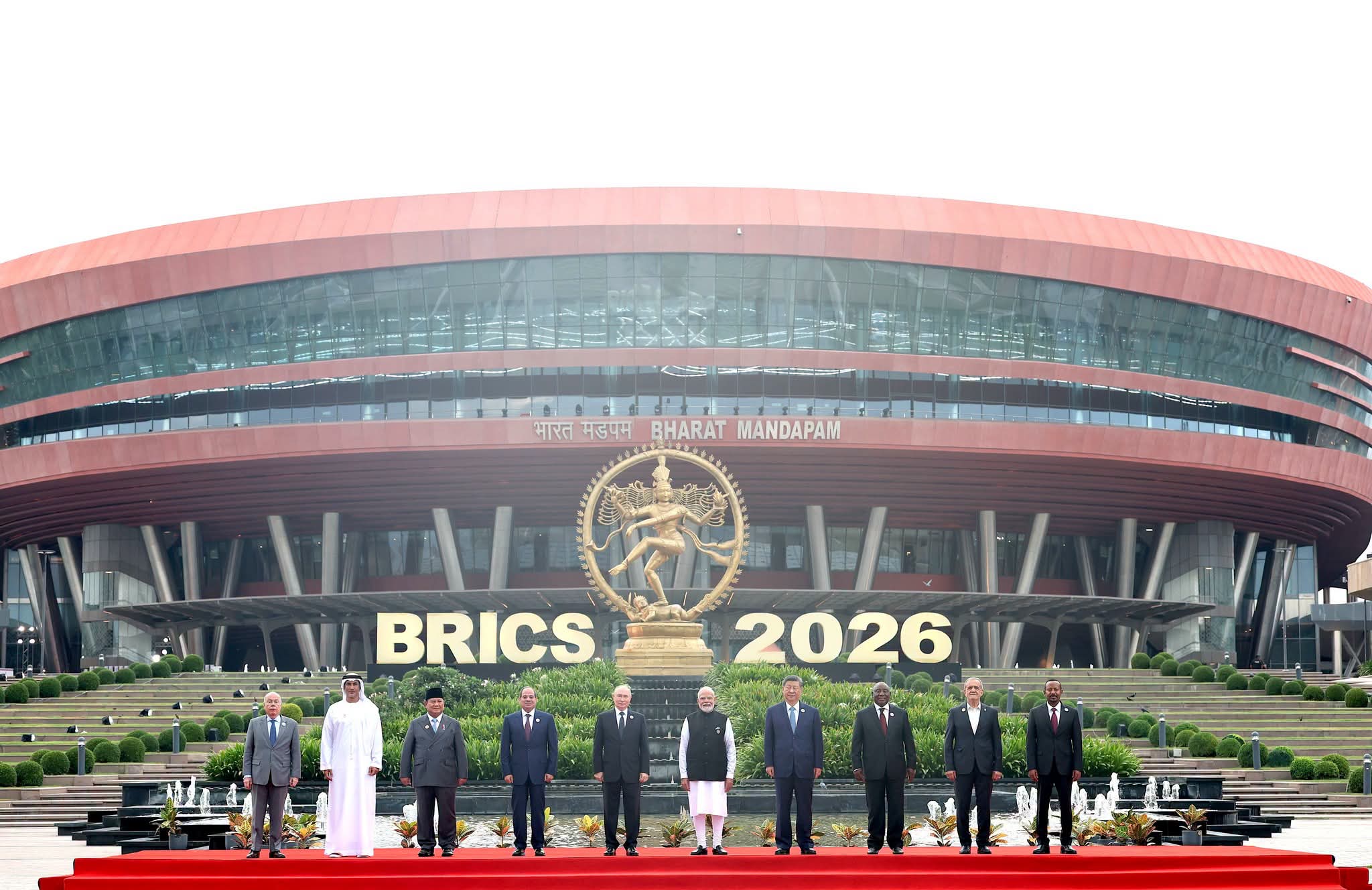
Prime Minister Narendra Modi announced the adoption of the declaration at the conclusion of the first day’s deliberations. The announcement was made in the presence of several prominent leaders attending the summit, including Chinese President Xi Jinping, Russian President Vladimir Putin, Iranian President Masoud Pezeshkian and Abu Dhabi Crown Prince Mohamed bin Zayed Al Nahyan, among other heads of government and senior representatives of BRICS countries.
Focus on Nuclear Safety
The BRICS declaration placed strong emphasis on the protection of nuclear facilities and the importance of maintaining international nuclear safety standards. Leaders stressed that peaceful nuclear facilities must remain protected even when countries are involved in armed conflicts.
The reference to facilities under IAEA safeguards underscores the bloc’s support for internationally recognised mechanisms designed to ensure that nuclear materials and facilities are used for peaceful purposes and remain subject to appropriate monitoring.
The leaders’ warning reflects broader international concerns that attacks or military activity around nuclear installations could have consequences extending well beyond the countries directly involved. Any damage to a nuclear facility could potentially create serious humanitarian, environmental and security risks.
Concern Over Escalating Global Conflicts
The BRICS leaders also highlighted their concerns about the “growing risks of nuclear danger and conflict.” The declaration comes against a backdrop of multiple geopolitical tensions and armed conflicts that have raised concerns about escalation, the security of strategic facilities and the potential for miscalculation between nuclear-armed or nuclear-capable states.
By highlighting the issue in the New Delhi Declaration, the BRICS grouping signalled the importance it attaches to preventing further escalation and ensuring that nuclear technology and infrastructure remain protected.
India Hosts Key BRICS Deliberations
India’s hosting of the summit brought together leaders from major emerging economies for discussions on international peace and security, economic cooperation and other global challenges.
The adoption of the New Delhi Declaration on the first day marked a significant outcome of the summit. The document reflects areas of common concern among BRICS members while calling for greater attention to issues that could have far-reaching consequences for global stability.
The leaders’ emphasis on nuclear safety and security is particularly significant as governments around the world grapple with increasing geopolitical tensions. Their call to uphold nuclear safety during armed conflicts adds to international appeals for restraint and the protection of critical civilian infrastructure.
The summit is expected to continue with discussions on a range of political, economic and strategic issues as BRICS leaders seek to strengthen cooperation among member countries and address emerging global challenges.