Global Health Leaders Meet in Vienna to Strengthen Radiation Safety in Medicine.
Vienna:
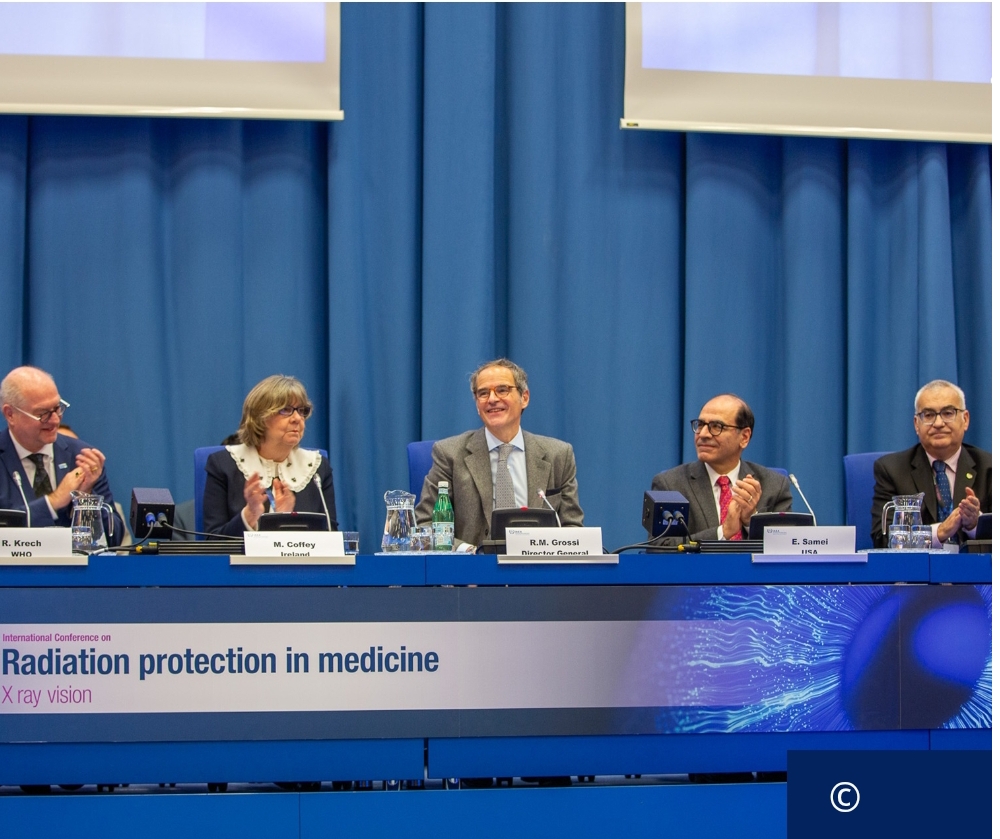
More than 650 global health experts, policymakers and specialists from over 120 countries have convened at the International Atomic Energy Agency (IAEA) headquarters in Vienna for the International Conference on Radiation Protection in Medicine: X Ray Vision, a major global gathering focused on advancing radiation safety for patients and healthcare workers. The event is organized by the IAEA and co-sponsored by the World Health Organization (WHO) and the Pan American Health Organization (PAHO).
Opening the conference, IAEA Director General Rafael Mariano Grossi emphasized that rapid technological breakthroughs are reshaping medical practice.
“New imaging technologies, radiopharmaceuticals, digital systems and AI are transforming clinical practice,” Grossi said. “These advances bring enormous benefits, but they also change exposure patterns and create new challenges for regulators and health professionals. We must keep up to ensure these advancements are employed safely.”
Grossi highlighted the IAEA’s Rays of Hope initiative, which aims to expand access to radiotherapy and imaging technologies while strengthening global capacity to use them safely.
Rising Global Demand for Medical Radiation Procedures
Medical imaging and radiotherapy are indispensable tools in patient care. Each year, healthcare providers worldwide perform over 4.2 billion radiological examinations and 6.2 million radiation therapy treatments, a trend that continues to rise. With this growth, experts stressed the importance of strong radiation protection standards to safeguard patients, medical workers and the public from the harmful effects of ionizing radiation.
A Decade After the Bonn Call for Action
The Vienna conference marks a key milestone in evaluating global progress since the 2012 Bonn Call for Action, which outlined ten priority actions to improve radiation protection in medicine. Over the past decade, international organizations, regulators and professional societies have worked to advance goals such as reducing unnecessary radiation exposure, optimizing doses, and strengthening training for health professionals.
The week-long event aims to shape a shared global vision for the next decade of radiation protection, culminating in a renewed call to action that reflects the evolving medical landscape.
AI, Safety Culture and Global Equity in Focus
Sessions and roundtable discussions throughout the conference will address modern challenges including appropriate medical use of radiation, enhanced protection for patients and staff, and the increasing role of artificial intelligence in diagnostics and treatment.
“Artificial intelligence and other emerging technologies are transforming radiation protection through faster data analysis, predictive modelling and real-time monitoring,” said Rüdiger Krech, WHO Director for Environment, Climate Change, One Health and Migration. “Yet our collective responsibility is to ensure these breakthroughs are equitably accessible so all regions can benefit.”
Participants will also examine lessons from accidental radiation exposures and explore strategies to strengthen safety culture across medical environments.
Regional Challenges
Representing PAHO, Pablo Jiménez, Senior Advisor in Radiological Health, stressed the rising demand for radiation-based medical services in the Americas.
“Robust quality assurance programmes, supported by well-trained medical professionals, are essential to maximize benefits and minimize radiation risks,” he said. “We must ensure new technologies translate into safer care and optimal health outcomes for all.”
IAEA’s Continued Role
The IAEA remains central to global radiation safety, developing international safety standards and providing guidance for radiotherapy, nuclear medicine and diagnostic imaging. The agency supports countries in implementing best practices that reduce unnecessary radiation exposure without compromising medical effectiveness.
As global reliance on radiological procedures grows, this conference represents a pivotal effort to ensure that technological advances are matched with strong safety frameworks that protect millions of patients and healthcare providers worldwide.