Floods in Mozambique Push Children Into Life-Threatening Crisis of Unsafe Water and Malnutrition: UNICEF.
Geneva:
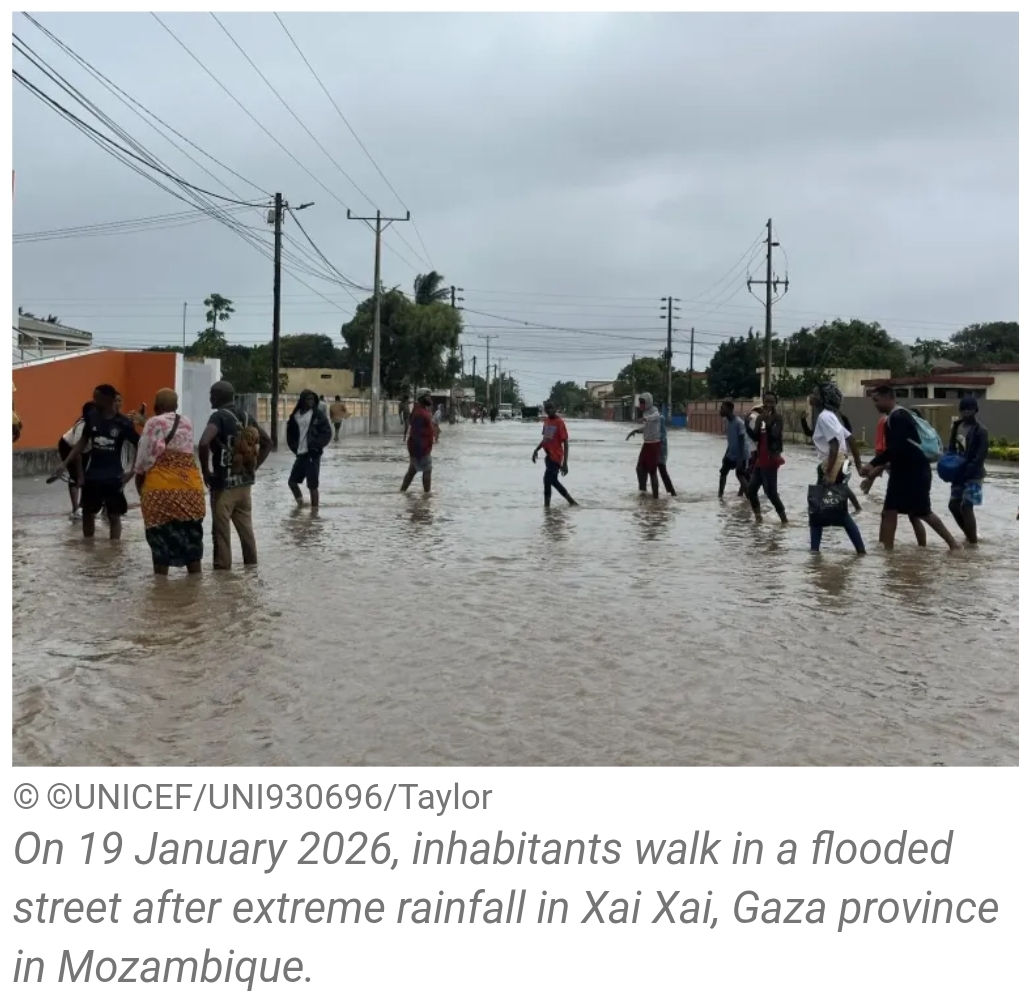
Severe flooding triggered by exceptionally heavy rainfall has plunged Mozambique into a rapidly escalating humanitarian emergency, placing hundreds of thousands of children at grave risk from unsafe water, disease outbreaks, and worsening malnutrition, UNICEF warned yesterday.
Addressing a press briefing at the Palais des Nations in Geneva, UNICEF Chief of Communication in Mozambique, Guy Taylor, said the floods are not only destroying homes, schools, health centres, and roads, but are also creating deadly conditions for children by disrupting access to clean water, healthcare, nutrition, and education.
“The flooding we are witnessing today in Mozambique is turning unsafe water, disease, and malnutrition into a deadly threat for children,” Taylor said. “The situation is worsening as the country enters its annual cyclone season, raising the risk of a double crisis that will hit the most vulnerable the hardest.”
According to preliminary government data, more than 513,000 people have been affected by the floods, with children accounting for over half of those impacted. More than 50,000 people have been displaced, seeking refuge in 62 temporary shelters, many of which are overcrowded and lack adequate basic services.
UNICEF warned that access to essential services such as clean drinking water, healthcare, nutrition, and schooling is either unsafe or severely limited in most flood-affected areas. In such conditions, children face heightened risks of waterborne diseases, interrupted education, and protection concerns—particularly girls and adolescents.
The crisis is compounded by Mozambique’s already alarming levels of malnutrition. Even before the floods, nearly four out of ten children in the country were suffering from chronic malnutrition. The renewed disruption to food systems, health services, and caregiving practices now threatens to push thousands of children into acute and severe acute malnutrition, the deadliest form of undernutrition.
“Waterborne diseases and malnutrition are a lethal combination,” Taylor cautioned, adding that the current conditions could lead to a dangerous spiral of illness and child deaths if urgent action is not taken.
In response, UNICEF, in coordination with the Government of Mozambique and humanitarian partners, has scaled up emergency operations. In Gaza Province, the worst-affected area, UNICEF teams are assessing needs and distributing essential supplies to children and families while working to restore critical services such as safe water, sanitation, healthcare, education, and child protection.
Further north in Sofala Province, UNICEF has already delivered water, sanitation, and hygiene supplies to the four most affected districts. These interventions are helping communities treat contaminated water at both household and community levels, reaching at least 13,000 households so far.
However, UNICEF warned that the threat to children continues to grow. River basins remain above alert levels, heavy rains persist in some regions, and the cyclone season has just begun. Damaged roads and infrastructure are also hampering access to affected communities, complicating relief efforts.
“Timely support is critical,” Taylor stressed. “With swift action, we can scale up life-saving services and prevent disease, deaths, and irreversible harm to children. But the window to act is narrowing.”
Mozambique is a young country, with more than 17 million children under the age of 18 and an average population age of just 17. UNICEF emphasized that repeated climate-related disasters disproportionately affect children—not only during emergencies but in the months and years that follow.
“For Mozambique’s children, what happens in the coming days will determine not just survival, but whether they can recover, return to school, and rebuild their futures,” Taylor said.
UNICEF has appealed for urgent international support to protect Mozambique’s children from a crisis that threatens to deepen unless immediate and sust Tained assistance is provided.