Middle East Crisis Deepens: UN Warns of Rising Civilian Impact and Global Economic Ripple Effects.
Geneva:
The United Nations human rights chief has raised serious concerns about the escalating humanitarian consequences of the ongoing Middle East crisis, warning that attacks on civilian infrastructure and the widening scope of the conflict are endangering millions of people across the region and affecting economies worldwide.
Volker Türk, the UN High Commissioner for Human Rights, said the increasing number of strikes targeting residential areas and vital civilian infrastructure—including hospitals, schools, water facilities, and energy systems—has significantly worsened the humanitarian situation.
Speaking in Geneva, Türk emphasized that under international humanitarian law, civilians and civilian infrastructure must be protected at all times during armed conflict. He warned that all parties involved in the conflict must adhere to the laws of war and could face accountability if they violate these rules.
Attacks on Critical Infrastructure
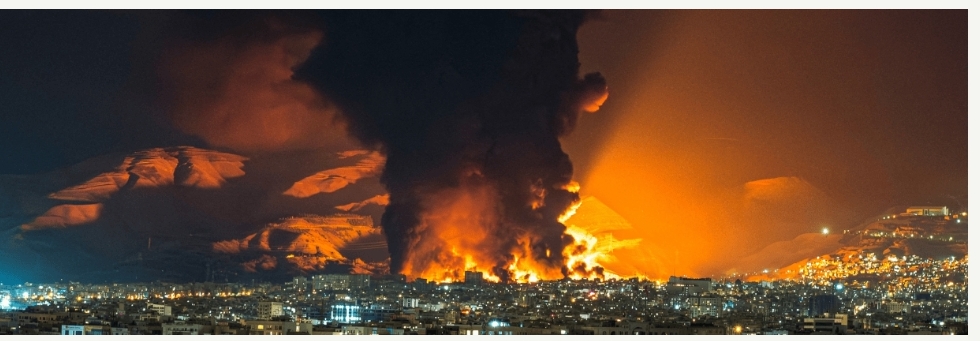
Recent attacks have severely damaged essential services in several countries across the Middle East. In Iran, a water desalination plant and fuel facilities were reportedly struck over the weekend, leading to oil spills in nearby streets and fires spreading along drainage lines.
On Qeshm Island in Hormozgan Province, an attack on a desalination facility disrupted the water supply to at least 30 villages, leaving thousands of residents struggling to access clean drinking water.
Authorities from the Iranian Red Crescent Society warned that the resulting oil fires could trigger dangerous environmental effects, including potentially acidic rainfall that could cause chemical burns and respiratory problems among local populations.
Türk expressed particular concern about the long-term health and environmental consequences of these incidents, noting that pollution and toxic fallout could affect communities for years.
Civilian Casualties and Regional Escalation
Across the region, additional strikes have reportedly resulted in civilian casualties and further damage to public infrastructure. In Bahrain, a desalination facility that provides water to large sections of the population was also affected.
Türk warned that the current “tit-for-tat” pattern of attacks targeting essential services risks creating a dangerous cycle of escalation, putting millions of civilians at greater risk and potentially destabilizing the entire region.
Impact Beyond the Middle East
The effects of the crisis are not limited to the immediate conflict zones. According to the UN, migrant workers in Gulf countries are among the most vulnerable groups. Several have already been killed or injured, while others remain stranded and unable to return to their home countries.
The disruption is also threatening remittance flows—an important source of income for families in many developing countries.
Global trade and energy supplies are also being affected. Commercial shipping through the strategic Strait of Hormuz has dropped sharply, raising concerns about the availability of oil, food, and fertilizers in global markets.
Economists warn that rising oil prices could destabilize already fragile economies, particularly in countries struggling with debt and inflation.
Call for Human Rights Protection
Türk also voiced concern over reports that some governments have detained or intimidated individuals for expressing opinions about the conflict.
He reminded states of their obligations under international human rights law to protect freedom of expression, especially during times of crisis. The UN human rights chief called for the immediate and unconditional release of anyone arbitrarily detained for their views.
Need for De-escalation
Türk concluded by urging all parties involved in the conflict to exercise restraint and respect international humanitarian law. He stressed that protecting civilian lives and infrastructure must remain the highest priority.
The UN also highlighted the growing importance of investment in renewable energy, noting that global dependence on fossil fuel supply routes—such as those passing through the Strait of Hormuz—makes economies vulnerable to geopolitical conflicts.
As tensions continue to escalate in the Middle East, international observers warn that without urgent diplomatic efforts, the humanitarian and economic consequences could intensify both regionally and globally.