
Indian Scientists Find the Cellular Signature of the Anesthetized State of Plant Consciousness.
Mandi:
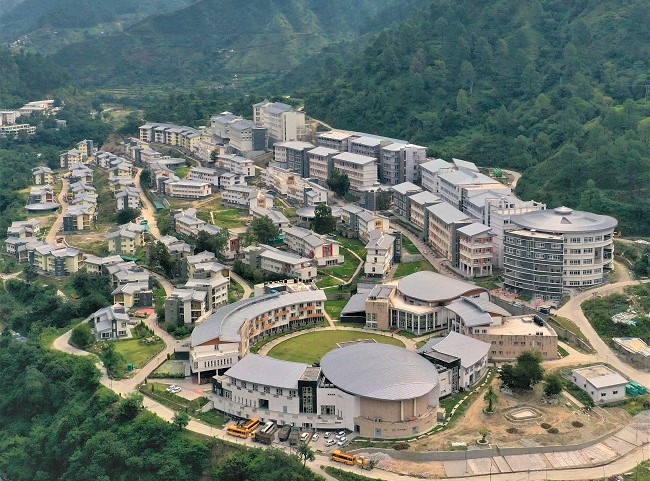
In a landmark series of studies, scientists at the Indian Institute of Technology Mandi, have achieved an important breakthrough in science that may advance our understanding of consciousness and how living beings react to anaesthesia.
In two recent seminal articles, published in internationally recognized journals, Advanced Biology and Chemical & Biomedical Imaging, they discovered that plants cellular world respond to anaesthesia through a remarkably synchronized manner and follow a hierarchical cascade mechanism for precise and sequential shutdown of intracellular components under anaesthetic stress, even though the plants do not possess either a brain or nervous system.
These findings are forcing the scientists to rethink fundamentally on the anesthetized state of consciousness. It further pushes to think whether the green world around us is far more sentient than we ever imagined.
Putting a Plant to Sleep
The scientists asked the questions whether the anaesthesia works in a similar fashion in a non-neuronal system as it does in species with neuronal system. Do any biomarkers at the cellular level are available to understand the conscious state in Plants? These are the questions that most scientists would not have thought to ask a decade ago.
The study, which was conducted under the leadership of Prof. Laxmidhar Behera, Director, IIT Mandi, and Prof. Chayan Kanti Nandi, with a group of scientists. With the help of state-of-the-art live cell microscopy techniques, the scientists were able to examine the impact of anaesthesia on the cells of tomato (Solanum lycopersicum) and brinjal (Solanum melongena) plants — two of the most widely grown vegetables in India.
The Root Brain Hypothesis
The most important compartment of plants is root apex, particularly the root cap, which perceive and process information. They also facilitate complex behaviors such as growth direction and resource allocation. The concept known as the “root brain” hypothesis proposes that the roots exhibit a form of decentralised intelligence, wherein the root meristem acts as a command centre, processing sensory inputs and guiding adaptive responses.
The cells in root apex possess transparent tissues and spatially organised organelles that are amenable to live-cell imaging. The root apex is considered the sensory and integrative hub of the plant, functionally analogous to a “brain,” making it a biologically relevant system for studying integrative subcellular behaviour.
A Precise, Ordered Shutdown — and Recovery
The researchers in their first paper in Advanced Biology showed a precise and sequential shutdown of different cellular components under anaesthetic stress; they called this as “hierarchical cascade of organellar silencing”. The findings represent the first comprehensive model of sequential causal structure and hierarchical cascade of organelle collapse such as mitochondria (the cell’s power generators), lysosomes (the waste disposal units), vesicle trafficking (material transport units), Chloroplasts (the photosynthesis units) and nuclear architectures (the Cell’s command centre) under anaesthesia in plants.
The team observed that shut down occurs in a specific, predictable order with nucleus at last. When the anaesthetic was removed, recovery happened in the reverse sequence. Crucially, the nucleus was identified as the master controller of this recovery: the organelle that co-ordinates the return of the entire cell to normal functioning. This is the behaviour not of a passive system reacting to a chemical, but of a system that responds in an organised, purposive way.
The Most Astonishing Discovery: Nuclei That Move Together
The most astonishing discovery was made in a consecutive second experiment. The researchers describe as a “strikingly non-local” phenomenon — and it is the finding that has drawn the most attention.
Inside each plant cell sits a nucleus, within which the cell’s DNA is packaged in two forms: euchromatin (genetically active, loosely packed DNA) and heterochromatin (inactive, tightly packed DNA). The research found that under normal conditions, the nuclei are randomly oriented and moved across plant cells.
Under anaesthesia, they are highly organized and response in a co-ordinated manner. Further, the euchromatin inside each nucleus moved simultaneously to the outer periphery of the nucleus. The heterochromatin stayed put.
“This happened in all the cells at the same time — even though those cells have no neurons connecting them, no known rapid-communication pathway between them. Yet every nucleus reorganised itself identically, simultaneously.”
The discovery points to a highly synchronised nucleus-to-nucleus communication in cellular response mechanism that operates even in organisms without brains or nervous systems. The scientists proposed that the outcome of nuclear-chromatin reorganisation may be conserved as a biomarker of the anaesthetised state across neuronal and non-neuronal systems.
Ancient Wisdom, Modern Evidence
Prof. Laxmidhar Behera, Director of IIT Mandi, sees in this finding a profound resonance with ancient Indian philosophical thought:
“The IKS view of the non-local nature of consciousness is particularly seen in the simultaneous reorganisation of nuclei and the circumambulation of the nuclear periphery by euchromatins. The fact that euchromatins have emerged as consciousness biomarkers means that more research work is necessary to establish the non-locality of conscious interactions at the cellular level.”
The IKS — Indian Knowledge Systems – have long held that consciousness — chetana in Sanskrit — is not a product of the brain alone, but a fundamental and non-local property of all living matter. From gross matter to subtle life-force to awareness, the Vedic tradition describes a hierarchy of manifestation in which consciousness pervades every level of existence.
What the microscope is now revealing at the level of the cell nucleus — a spontaneous, co-ordinated response that defies simple chemical explanation — maps strikingly onto what Indian philosophical thought has long maintained about the pervasive, non-local nature of consciousness.
- What Comes Next
Building on these findings, the research group has already extended its investigation to other biological systems, examining whether similar patterns of nuclear reorganisation appear in different species. The team is currently studying anaesthetic effects in C. elegans, a microscopic roundworm whose simple nervous system sits between plants and animals in biological complexity. If the same euchromatin response is observed there, the evidence for a universal, non-local cellular signature of consciousness will be considerably stronger.
The plants were always there. We just did not know they could feel us looking.