Prime Minister Narendra Modi Interacts with Students at Pariksha Pe Charcha 2026, Urges Holistic Learning and Fear-Free Exams.
New Delhi:
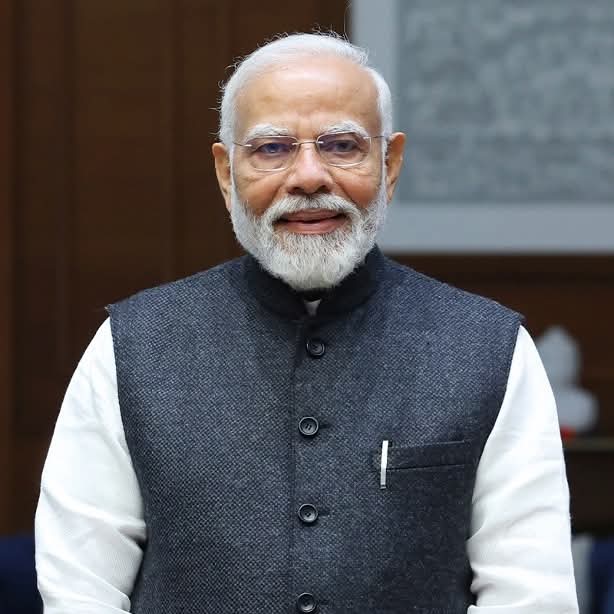
Prime Minister Narendra Modi on Thursday interacted with students during the 9th edition of Pariksha Pe Charcha (PPC) 2026, offering wide-ranging guidance on exams, life skills, confidence, technology, and personal growth. The informal interaction with “Exam Warriors” was held at the Prime Minister’s residence in Delhi and focused on reducing exam stress while redefining education as a lifelong journey.
Advising students to develop their own learning styles, the Prime Minister said that while it is important to listen to everyone’s advice, one should change their study pattern only when they feel it is right. Drawing parallels from daily life, he said that just as people have different eating habits, students too have different study rhythms—some prefer mornings, others nights—and enjoyment comes from following one’s own natural pattern honestly.
He stressed that goals should always be within reach but not easily achievable, encouraging students to “aim and act” with perseverance. Addressing concerns about keeping pace with teachers, the Prime Minister advised educators to remain just one step ahead of students to spark curiosity without discouragement. He suggested that teachers should inform students in advance about upcoming chapters so that curiosity is created, understanding deepens, and classroom learning becomes more effective.
Using a metaphor, he said, “Plough the mind first, then connect the mind, and then place the subjects of study—this is the path to success.” He added that revision strengthens wisdom and collaborative learning helps everyone improve.
Highlighting the need for balance, the Prime Minister said that managing studies, skills, rest, sports, and hobbies together is the key to overall growth. He emphasized that books impart knowledge, but only practice builds professional skills. Education, he said, is not only meant for exams but for life itself, and exams are simply a way to examine oneself.
Urging students not to remain stuck in the past, he said that time should be spent thinking about what lies ahead. “The present is God’s greatest present—live here and now,” he remarked, adding that deeper involvement in any moment ensures longer-lasting memories.
During the interaction, students showcased their talents, including patriotic songs, poetry, and music. The Prime Minister praised the creativity of students and encouraged them to turn hobbies into practical products, share them freely, and use feedback as fuel for innovation and success.
Responding to questions on skills versus marks, the Prime Minister said both are equally important and must coexist in balance. He explained that skills begin with knowledge and observation, and professional excellence requires continuous practice and adaptation. Life skills such as discipline, confidence, and adaptability, he said, are just as important as academic achievements.
On exam preparation, he cautioned against focusing only on past question patterns, stressing that holistic learning of the full syllabus builds true understanding and confidence. He noted that obsession with marks creates pressure, while genuine learning leads to long-term success. “Aspire not to be, but to do,” he said, encouraging students to focus on action rather than comparison.
Addressing stress and distraction, the Prime Minister advised students to stay fully involved in the present, as involvement leads to lasting memory. He promoted peer learning, suggesting students teach those who are less confident and also learn from brighter peers, creating a cycle of shared growth.
Speaking to parents, he urged them to allow children to blossom according to their capacity, ability, and interest. On competitive exams, he advised students to strengthen their school foundation first, stating that competitive success will naturally follow.
The Prime Minister also addressed modern challenges, encouraging students to use technology positively. He described technology as a great teacher and said Artificial Intelligence enhances human capabilities when used wisely. He urged students to harness AI to boost wisdom and learning, not merely for shortcuts or entertainment.
Sharing a vision for the future, the Prime Minister spoke about building a developed India by 2047 and emphasized the role today’s youth will play in realizing this goal. He called for cleanliness, self-discipline, pride in indigenous products, and personal responsibility as foundations of national progress.
Concluding the session, the Prime Minister encouraged students to dream big, fear less, read biographies for inspiration, and remain true to themselves. “Real confidence comes from inner truth,” he said, reminding students that comfort zones do not shape life—one’s way of living does.
The interaction left students inspired, motivated, and reassured, reinforcing the message that exams should be celebrated like festivals and learning should be joyful, meaningful, and lifelong.