IIT Mandi Summit Calls for Unified Strategy Against Himalayan Climate Disasters.
Shimla:
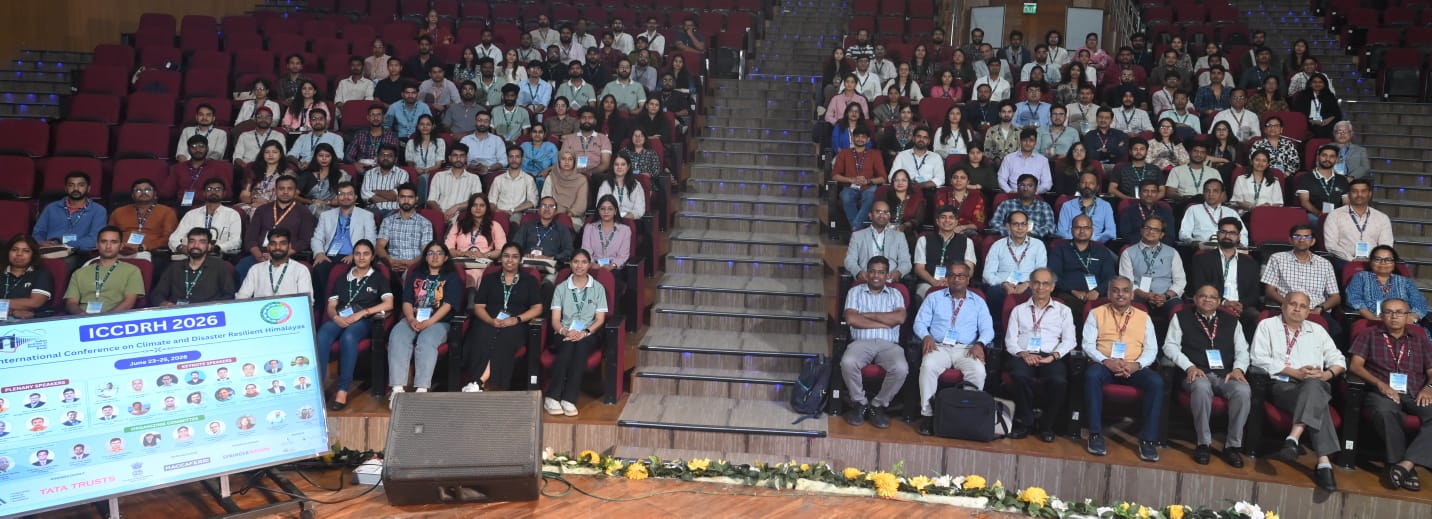
A strong call for an integrated and coordinated approach to tackle the escalating climate and disaster risks in the Himalayan region emerged from the inaugural International Conference on Climate and Disaster Resilient Himalayas (ICCDRH 2026), which concluded at the Indian Institute of Technology (IIT) Mandi on Thursday.
Held from June 23 to 25 at IIT Mandi’s Kamand campus, the three-day international conference brought together leading scientists, engineers, policymakers, disaster management experts and practitioners from across the globe to deliberate on the growing challenges posed by climate change and natural hazards in the Himalayan ecosystem.
Organised by the Centre for Climate Change and Disaster Management (C3DAR), the conference focused on developing science-based strategies and policy interventions to strengthen resilience across the Indian Himalayan Region. Experts participating in the summit emphasized that the Himalayan states are increasingly vulnerable to a range of interconnected hazards, including floods, cloudbursts, landslides, glacial lake outburst floods (GLOFs), earthquakes and infrastructure failures.
The conference highlighted that climate change is intensifying the frequency and severity of extreme weather events, making traditional single-hazard approaches ineffective. Delegates stressed the urgent need for a unified strategy that recognizes the cascading nature of disasters in mountainous regions, where one event can trigger multiple hazards within a short period.
“Challenges facing the Himalayas can no longer be addressed in isolation,” experts noted during the concluding sessions. They called for integrated risk assessment frameworks that combine climate science, disaster management, engineering solutions and community preparedness.
The event featured plenary lectures by internationally renowned scholars, including Prof. J. David Frost from the Georgia Institute of Technology and Prof. Safeeq Khan from the University of California Merced. Distinguished speakers from Imperial College London, Michigan State University, various IITs, the National Institute of Hydrology, the National Centre for Seismology, CSIR-National Geophysical Research Institute (CSIR-NGRI), and government agencies also shared their expertise.
Discussions over the three days covered a broad spectrum of themes such as climate projections, hydrological and glacial hazards, earthquake resilience, critical infrastructure protection, multi-hazard risk assessment, and the use of artificial intelligence and machine learning for disaster prediction and early warning systems. Community-centred disaster management and local resilience-building strategies also featured prominently in the deliberations.
A pre-conference workshop on disaster-resilient critical infrastructure, supported by the Coalition for Disaster Resilient Infrastructure (CDRI), was held on June 22, providing participants with insights into safeguarding essential services and infrastructure in vulnerable mountain regions.
One of the key outcomes of the conference was the consensus on strengthening collaboration between scientific institutions, government agencies and local communities. Participants recommended greater investment in resilient infrastructure, improved data sharing and risk mapping mechanisms, enhanced early warning systems and policies that place communities at the centre of disaster preparedness efforts.
The conference also underscored the importance of translating scientific research into actionable policies. Delegates stressed that innovations and research findings must reach villages, towns and critical lifelines that remain highly exposed to climate-induced disasters.
The summit was held under the patronage of IIT Mandi Director Prof. Laxmidhar Behera and chaired by Prof. Kala Venkata Uday of C3DAR. Organising Secretary Prof. Vivek Gupta coordinated the event. The conference received support from the Anusandhan National Research Foundation (ANRF), Tata Trusts and the Ministry of Earth Sciences, while Maccaferri served as the technical partner and Springer Nature as the publishing partner.
The conference concluded with a shared commitment to fostering scientific collaboration, policy innovation and community engagement to build a safer, more climate-resilient Himalayan future.